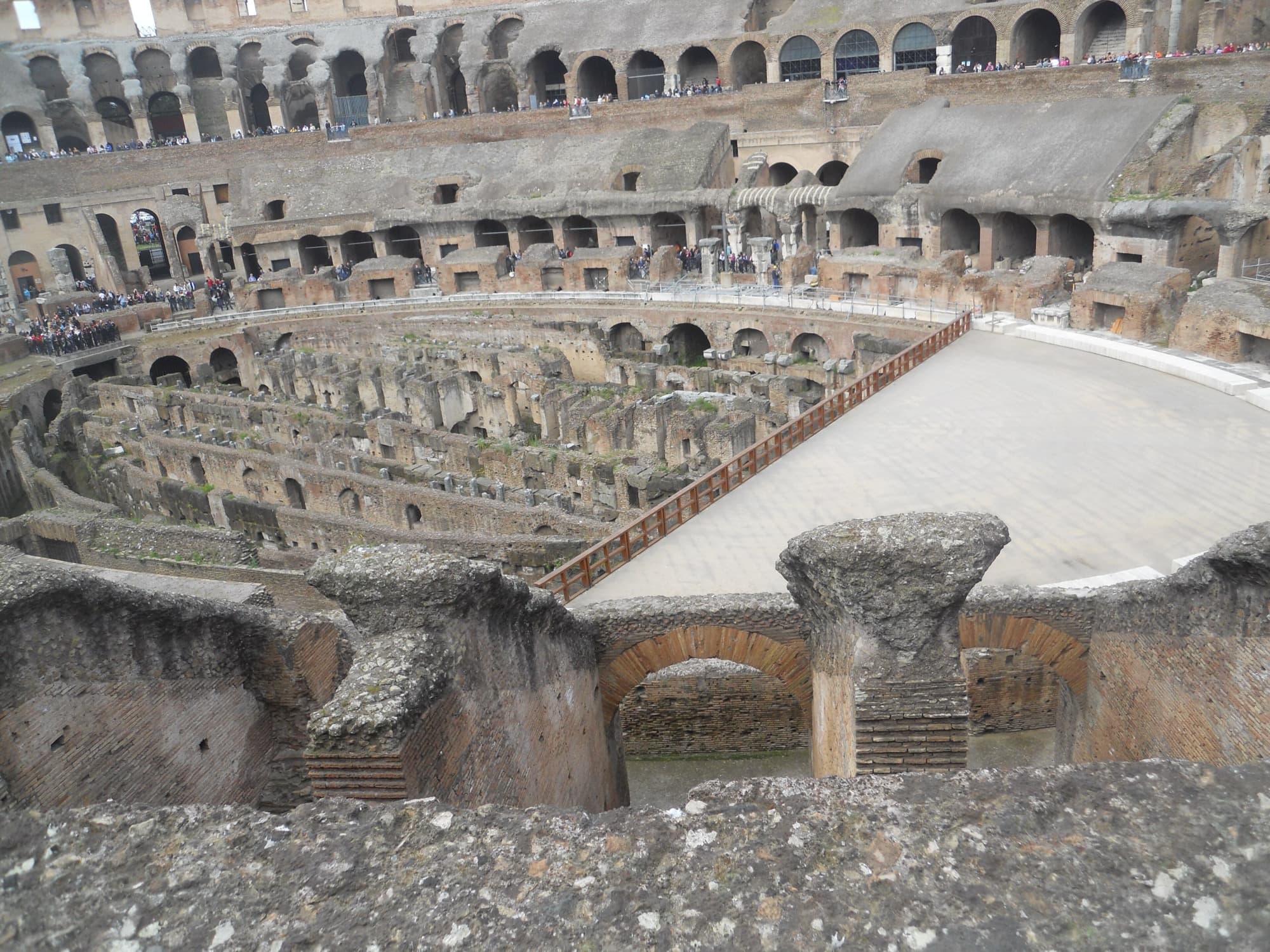
Beneath the floor of the Colosseum there was a second, hidden building. A two-level basement of brick tunnels, animal cages, and storage rooms called the hypogeum, threaded with around sixty vertical shafts. In them sat wooden lifts, hauled up by ropes, pulleys, and sweating crews of workers, that could send a lion, a bear, or an armed gladiator rising through a trapdoor and bursting into the arena as if conjured out of the ground.
That is the thing people forget about the Colosseum. It was not just a big stone bowl. It was an entertainment machine, engineered down to the last pulley to move tens of thousands of people and tons of men, animals, and scenery in and out at speed. It has been copied, in spirit, by every stadium since.
What you're looking at
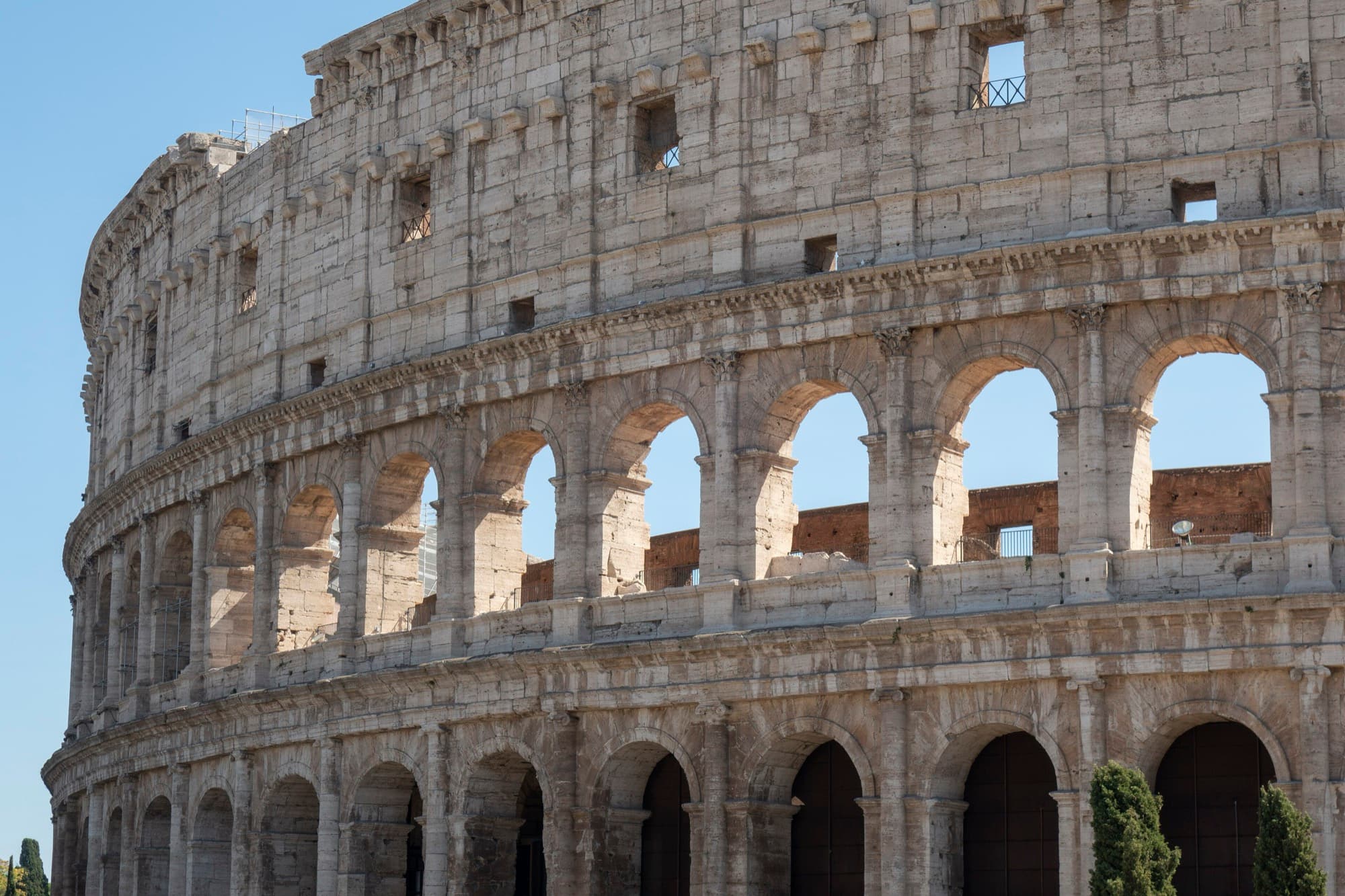
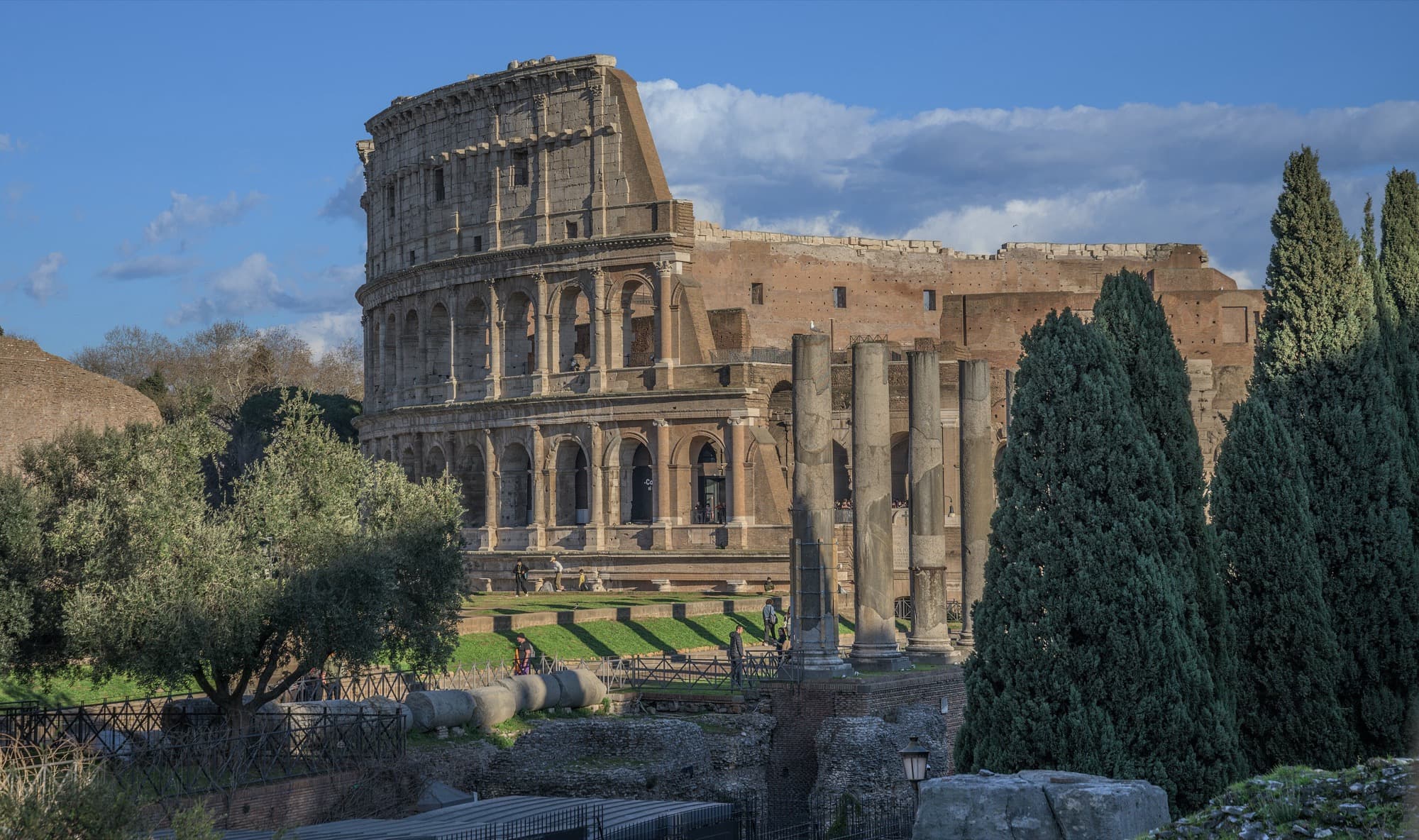
A giant oval of stone and concrete, roughly 189 meters long and 48 meters tall, built between about 72 and 80 AD by the emperors Vespasian and his son Titus, with later work by Domitian. Its real name is the Flavian Amphitheatre, after their family; "Colosseum" came later, from a giant statue, the Colossus of Nero, that once stood nearby. The outer wall rises in three tiers of arches with a solid story on top, and inside, steep banks of seating once wrapped around a wooden arena floor covered in sand. It held somewhere around fifty thousand spectators, sorted strictly by rank, with the emperor at the center and the poorest Romans at the top.
What makes it special
It is built almost entirely from arches. Eighty arched entrances ring the ground floor, feeding a honeycomb of vaulted corridors, stairs, and ramps. This is Roman engineering at its most confident: the arch and the vault, combined with Roman concrete, let them build something vast, hollow, and crowd-friendly in a way that simple stone columns and beams never could.
It was designed for crowd control before anyone had the words for it. Those eighty entrances were numbered, and spectators held tokens matching a specific gate, section, row, and seat. The system of corridors funneled huge numbers to their places and back out again with an efficiency that modern stadium designers genuinely still study. The Romans called the fast-emptying passages by a word that survives in English: the vomitoria.
It could change its own weather. A vast retractable awning, the velarium, could be unfurled over the crowd to provide shade, worked from the top of the structure by a detachment of sailors hauling on ropes, because they were the only ones with the rigging skills. A stone building with a convertible roof, two thousand years ago.
The story behind it
The Colosseum was, in part, a political gift. Vespasian built it on the drained lake of Nero's hated private palace, handing a pleasure ground back to the Roman public. Its opening under Titus in 80 AD was marked by a hundred days of games. For centuries it hosted gladiatorial combat, staged animal hunts, public executions, and elaborate mythological spectacles. The human and animal death toll across its working life was enormous, though the exact figures are guesses rather than records. The arena floor itself is named for the Latin word for sand, harena, which was spread to soak up blood.
As Rome declined, the games stopped, and the building began a second life as a quarry. Earthquakes cracked it, and for over a thousand years Romans hauled away its cut travertine and iron clamps to build palaces, churches, and bridges, including parts of St. Peter's. The gap-toothed ruin we admire is less the work of time than of centuries of recycling.
One detail most people miss
Look closely at the standing outer wall and you will see it is pockmarked with thousands of holes. Those are not weathering or battle damage. The Colosseum's great stone blocks were originally pinned together with iron clamps, and in the medieval period those clamps were dug out of the walls for their metal, one by one, leaving the pitted scars you still see today. The building was not only quarried for its stone but mined for its staples.
Where to see it
The Colosseum still stands at the heart of Rome, beside the Roman Forum, one of the most visited monuments on Earth. Buy a ticket that includes the arena floor and the underground, so you can walk the hypogeum where the lifts once ran and stand where the sand used to be. Go early or late to beat both the heat and the crowds, and look up: imagine the awning overhead and fifty thousand Romans roaring around you.