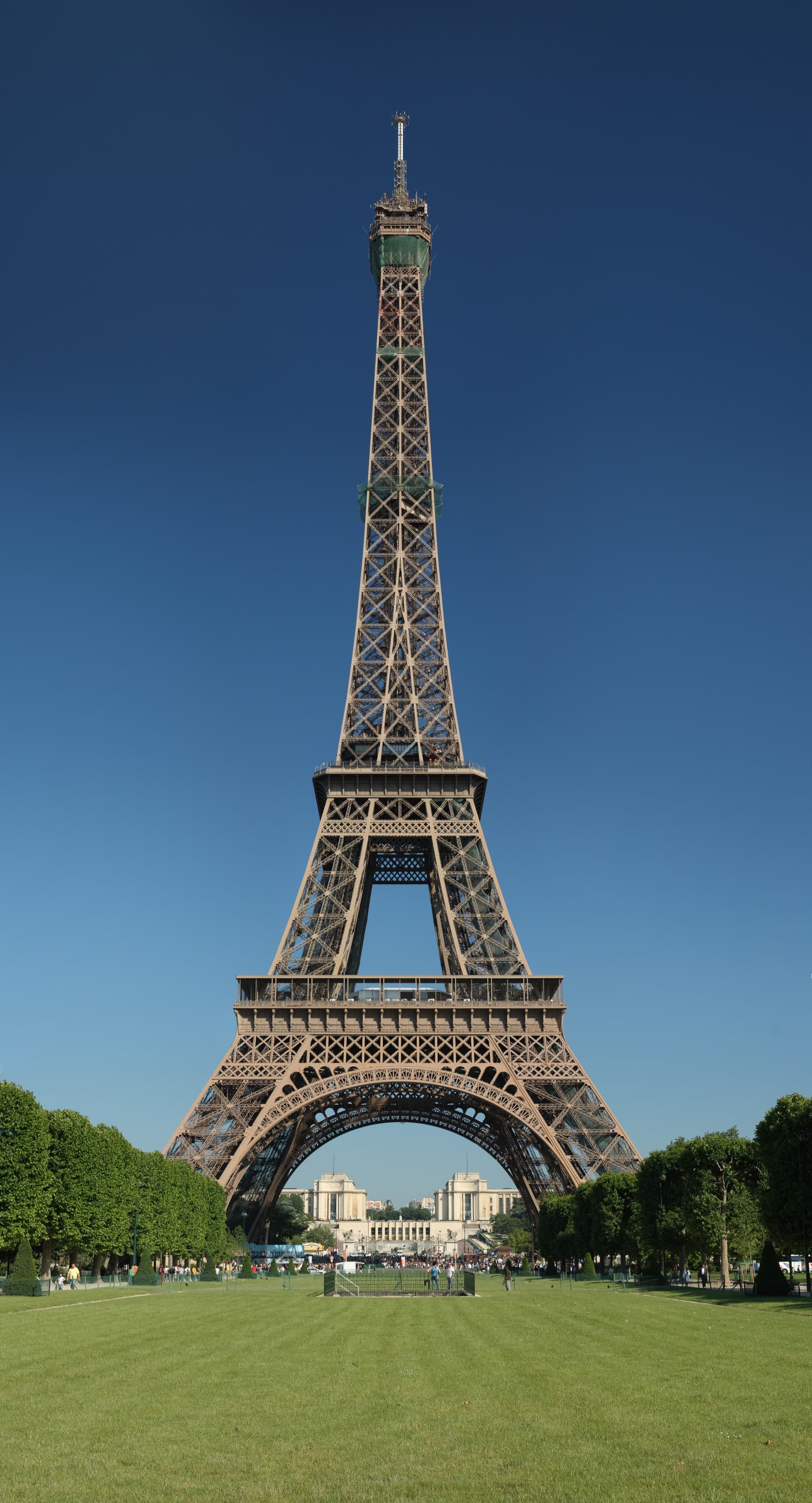
The Eiffel Tower was never meant to last. It was built as a temporary attraction for the 1889 World's Fair in Paris, and the deal was explicit: it would stand for twenty years, and then, in 1909, it would be dismantled and sold for scrap iron. The most recognized structure in Europe was designed to be thrown away.
What saved it was not love or beauty. It was a radio antenna. In the early 1900s the tower proved to be a superb mast for the new science of wireless telegraphy, useful to the French military, and that usefulness, not its looks, is why it was allowed to keep standing. A monument to engineering was spared because it was good engineering.
What you're looking at
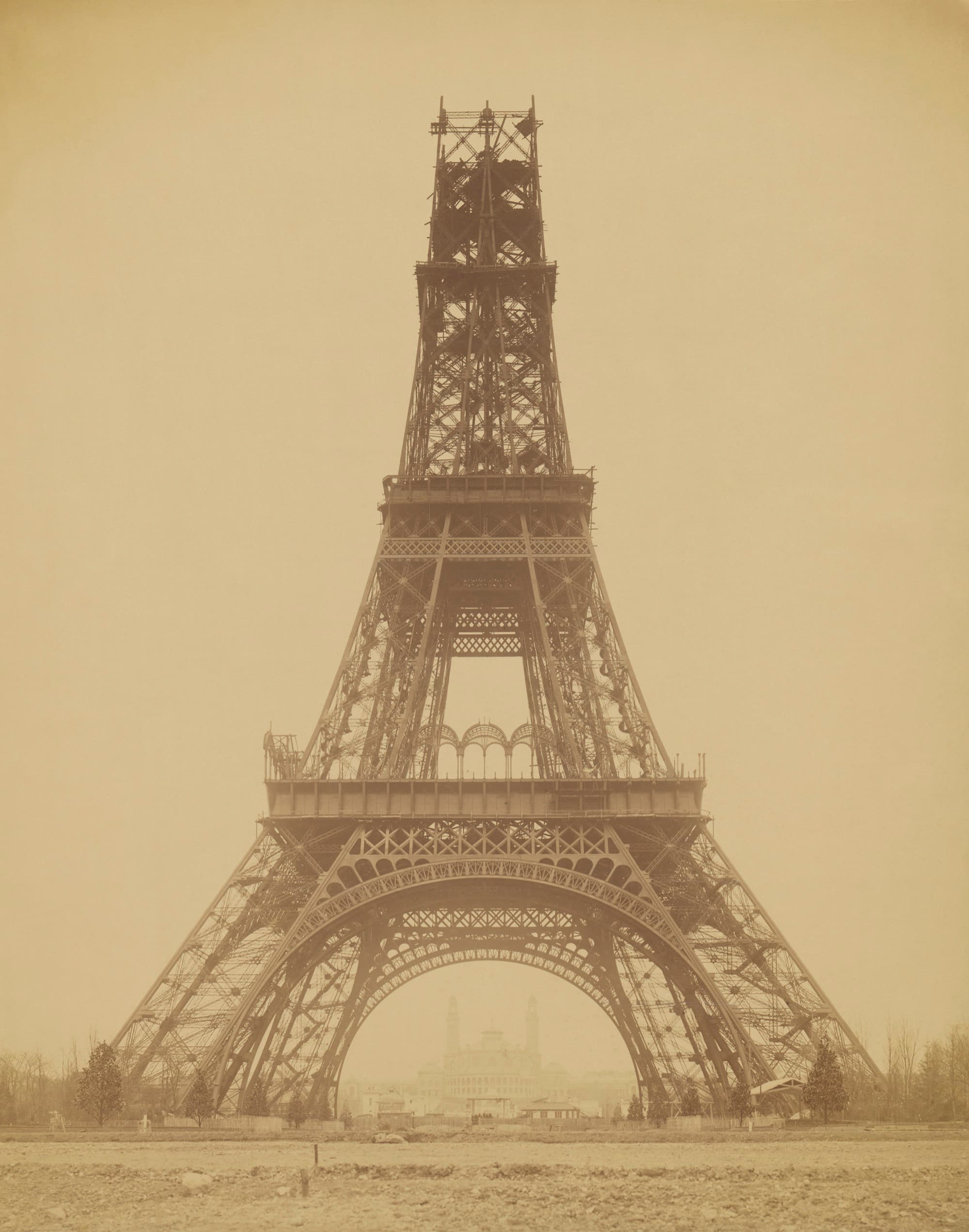
A tower of wrought iron, about 300 meters tall, rising from the Champ de Mars beside the river Seine. It was built between 1887 and 1889 to mark the hundredth anniversary of the French Revolution and to crown the Paris World's Fair. It is made of roughly eighteen thousand individual iron pieces held together by about two and a half million rivets, and for over forty years, until New York's Chrysler Building passed it in 1930, it was the tallest man-made structure on Earth. It carries the name of the engineer and contractor Gustave Eiffel, though the design grew from the work of his engineers Maurice Koechlin and Émile Nouguier, with decorative touches by the architect Stephen Sauvestre.
What makes it special
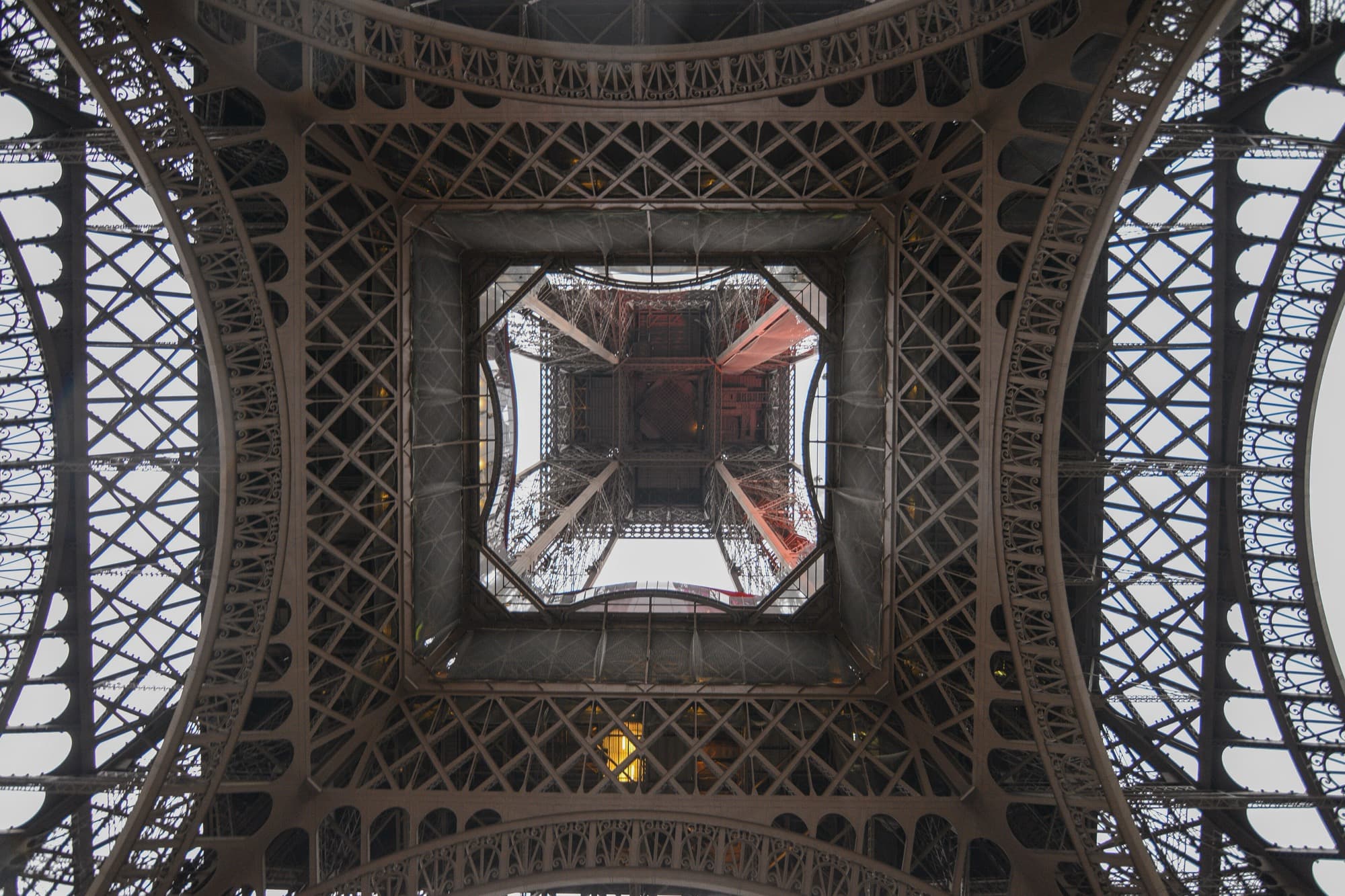
It is mostly empty air. Up close, the tower is not a solid thing at all but an open lattice, a lace of crisscrossing iron. That design is doing real work: it gives enormous strength for very little material, and it lets the wind blow straight through instead of shoving against a flat wall. The famous flaring curve of the legs was shaped to resist wind, not to please the eye.
It was the tallest thing humanity had ever built. When it opened, it roughly doubled the height of the previous record holder. For a generation, nothing people had ever made reached so high, and simply standing beneath it was a new kind of experience.
It was hated before it was loved. In 1887, while it was still going up, a group of about three hundred prominent French artists and writers published a furious protest calling it a useless, monstrous iron eyesore that would disfigure Paris. There is a famous story that the novelist Guy de Maupassant often ate lunch in the tower's restaurant because it was the one spot in the city from which he could not see the thing he hated.
The story behind it
Eiffel's company built it astonishingly fast, in about two years and two months, and astonishingly safely for the era, with only one death during the entire project. It went up as a showpiece of French industrial confidence, a giant advertisement for what iron and precise engineering could do. After the 1889 fair, as its demolition date approached, its new role as a radio and telegraph tower gave it a reason to survive. During the First World War it even helped intercept enemy wireless messages. To keep it from rusting, it is repainted roughly every seven years, by hand, using around sixty tons of paint, applied in three subtly different shades so that the whole tower looks a single even color from the ground.
One detail most people miss
Run your eye along the edge of the first platform, under the great arches, and you will find names. Gustave Eiffel had the names of seventy-two French scientists, engineers, and mathematicians engraved in large gold letters around the tower, a permanent honor roll of the minds behind France's age of science. For much of the twentieth century the names were painted over and forgotten, until a restoration brought them back. Most visitors crane upward and never notice that the tower is also a monument to the people who made such towers thinkable.
Where to see it
The Eiffel Tower stands on the Champ de Mars in central Paris and is almost impossible to miss. You can climb the stairs to the second level or ride the lifts all the way to the top for a view across the whole city. See it by daylight to appreciate the ironwork, the lattice, and the engraved names, and look closely at the lace of iron that, two years after people signed petitions to stop it, became the symbol of Paris itself.