The man who wrote what many call the first modern novel had one of the hardest lives imaginable. Miguel de Cervantes fought as a soldier at the great sea battle of Lepanto in 1571, where he was wounded and permanently lost the use of his left hand. Years later, sailing home, he was captured by pirates and spent five years as a slave in Algiers, surviving several failed escape attempts, before his family finally scraped together a ransom. Back in Spain he worked as a tax collector, fell into trouble over his accounts, and landed in prison, where, by tradition, he began dreaming up a deluded old knight.
Out of that battered, unlucky life came one of the funniest and most humane books ever written.
What you're reading
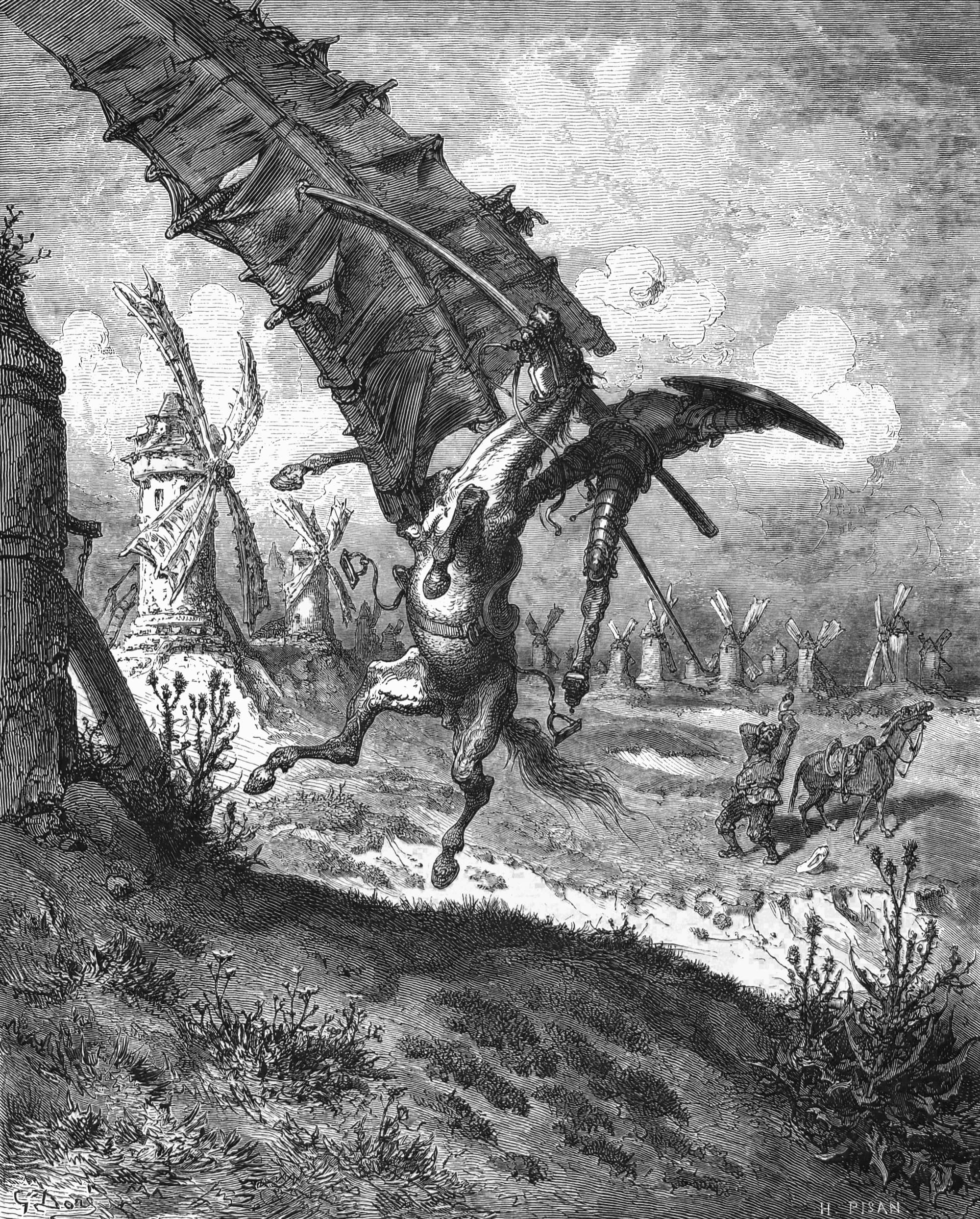
Don Quixote tells the story of an aging country gentleman who has read so many romances about brave knights that he loses his grip on reality and decides to become one. He polishes up some rusty armor, renames himself Don Quixote, picks a farm girl to worship from afar as the lady Dulcinea, recruits a down-to-earth peasant named Sancho Panza as his squire, and rides out to right wrongs that mostly exist only in his head. He attacks windmills believing they are giants, mistakes roadside inns for castles, and charges a flock of sheep thinking it is an army. The book came out in two parts, in 1605 and 1615.
What makes it special
It invented the modern novel. Before Don Quixote, long prose stories tended to be flat fantasy or stiff allegory. Cervantes gave us something new: characters who feel real, who argue, change, and contradict themselves, in a world that pushes back against them. Quixote and Sancho grow and deepen over hundreds of pages, and nearly every novel since has been built on the ground Cervantes broke.
It is about the danger and the glory of stories. Don Quixote is undone by fiction, driven mad by the books he loves, and yet his mad idealism is also strangely noble. The novel never fully decides whether he is a fool or a kind of saint, which is why his name gave us the word "quixotic," for hopeless, beautiful, impractical dreams.
It was centuries ahead on self-awareness. This is metafiction long before the term existed. In Part Two, the characters have actually read Part One, which is now famous within their own world, and people recognize Don Quixote as a celebrity from a book. The novel is constantly winking at its own existence.
The story behind it
Part One, in 1605, was a huge success, so popular that a rival writer, hiding behind the name Avellaneda, cashed in by publishing a fake, unauthorized sequel. Cervantes was furious, and his revenge is one of literature's great jokes: in his own genuine Part Two, his characters cross paths with the fraud, read the counterfeit book, and loudly denounce it as a lie, pulling the impostor into the real novel just to humiliate him. Cervantes died in 1616, poor and not fully aware of how immortal his knight would become. Today "tilting at windmills" is a phrase in many languages for fighting imaginary enemies.
One detail most people miss
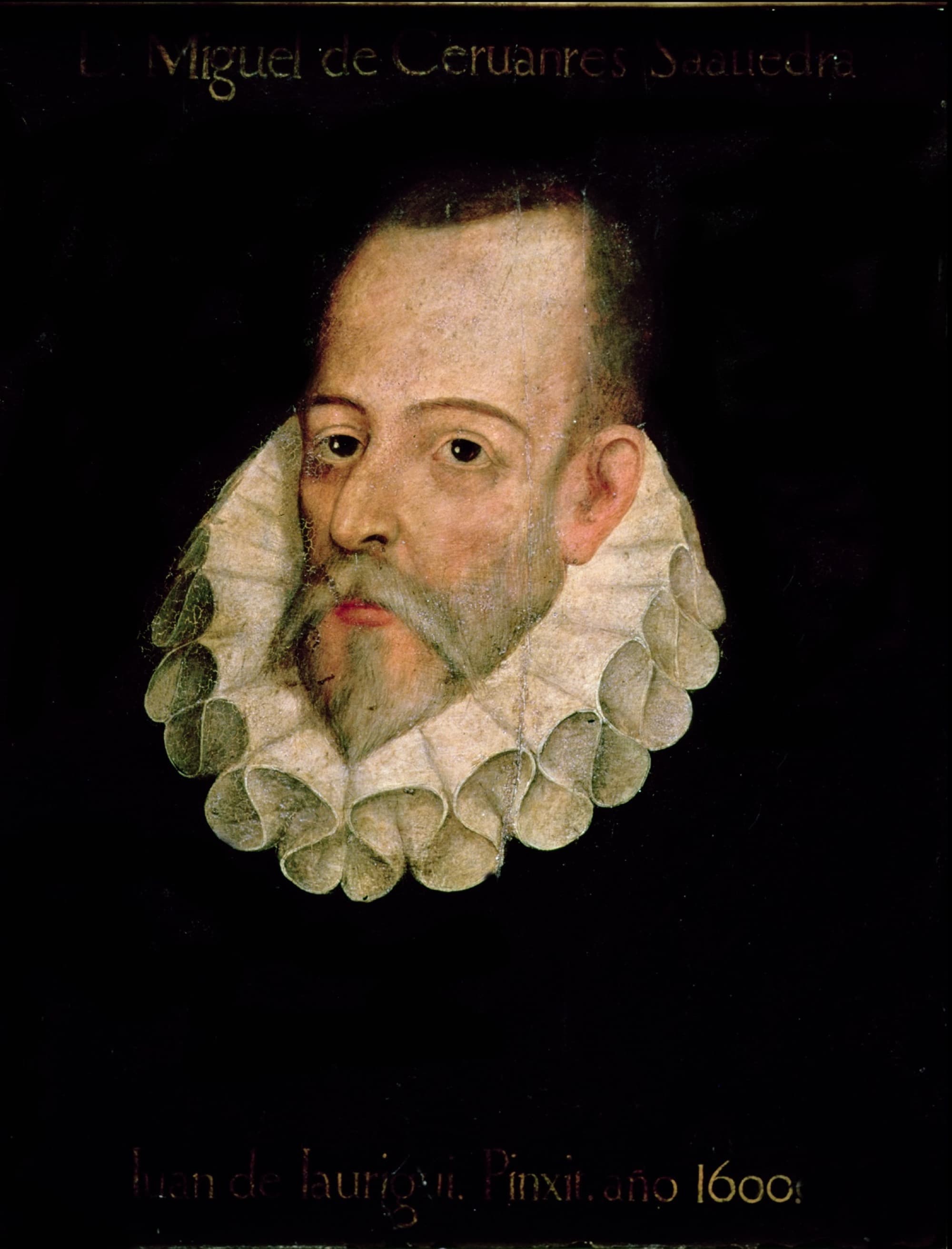
We do not actually know what Cervantes looked like. The dignified portrait so often printed with his name, including the one shown here, is only attributed to the painter Juan de Jáuregui, and most scholars doubt it is genuine. No verified likeness of him survives. The father of the modern novel, one of the most influential writers who ever lived, has a face that is itself a kind of fiction, pieced together from guesswork and wishful thinking.
How to read it
Don Quixote is in the public domain and free online, in the original Spanish and in many translations, through Project Gutenberg and similar libraries. It is long, so do not feel you must sprint through all of it; start with Part One and the famous windmill episode in chapter eight. If you can, choose a lively modern translation, such as Edith Grossman's acclaimed English version, and read it for the thing that keeps it alive after four centuries: the bickering, loyal, oddly tender friendship between a madman and his squire.