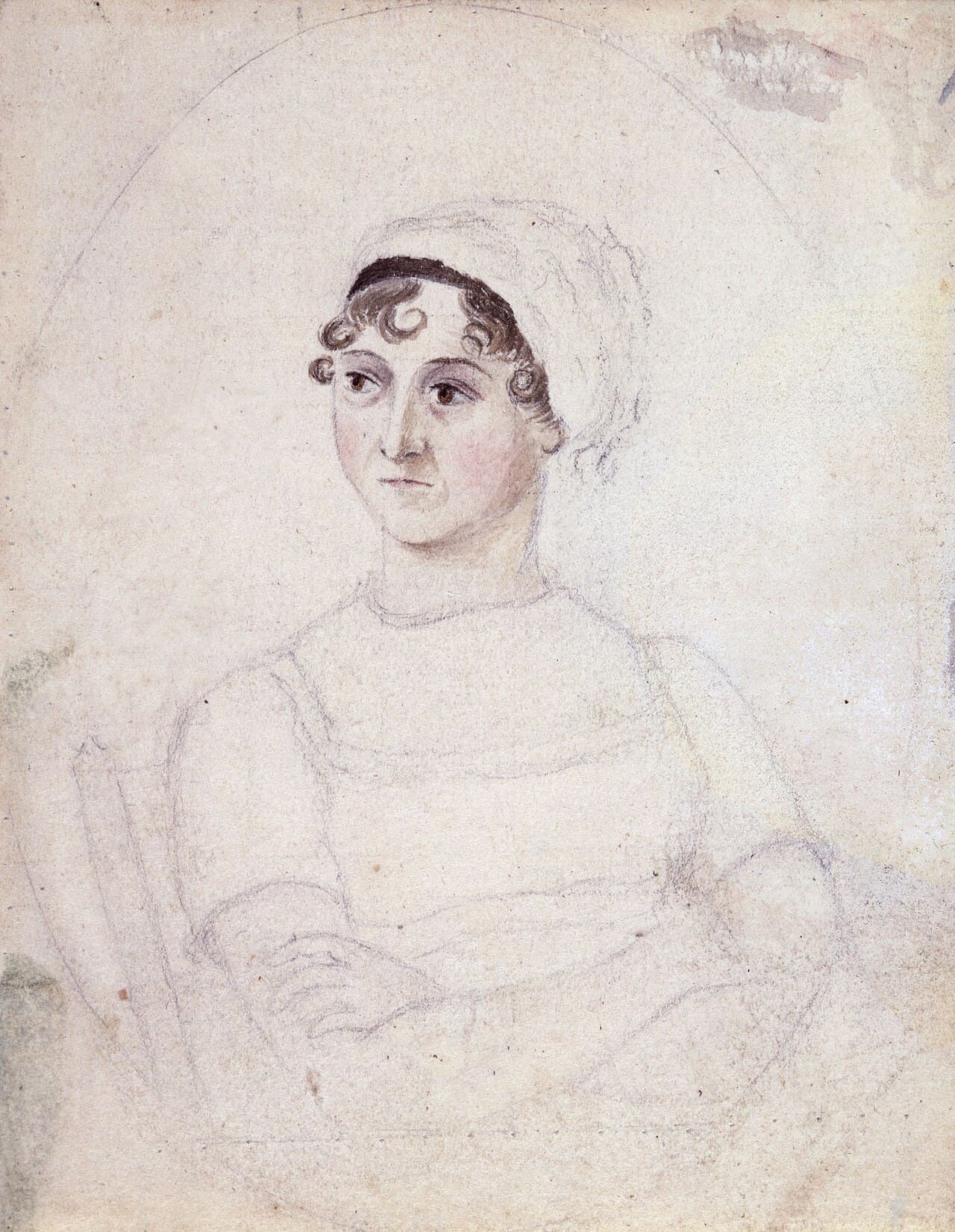
"It is a truth universally acknowledged, that a single man in possession of a good fortune, must be in want of a wife." It may be the most famous first sentence in the English language, and it is a trap. It sounds like a statement of fact; it is actually a joke, and a quiet act of war. By the end of the sentence Austen has told you everything about the world of her novel: that marriage here is a marketplace, that women's futures depend on it entirely, and that she, the author, finds the whole arrangement absurd, and is going to spend three hundred pages saying so with a straight face.
What you're reading
Pride and Prejudice follows the five Bennet sisters, genteel but not rich, whose family estate will pass, by law, to a distant male cousin, leaving the girls with nothing unless they marry well. Into their quiet county arrive two wealthy young men: the amiable Mr. Bingley and his proud, forbidding friend Mr. Darcy. The novel's heart is the collision between the second Bennet daughter, the sharp and independent Elizabeth, and Darcy, who insults her within minutes of meeting her. She decides he is arrogant. He decides she is beneath him. They are both, of course, completely wrong about each other, and the pleasure of the book is watching two intelligent, stubborn people be forced, slowly and against their will, to see clearly.
What makes it special
The wit still lands. Most comedy from 1813 needs footnotes. Austen's does not. Her characters are recognizable people, the pompous clergyman, the silly mother, the charming liar, and her jokes about them are as sharp now as the day she wrote them.
She invented a modern way of telling a story. Austen perfected free indirect discourse, letting the narration drift into Elizabeth's thoughts so smoothly that you experience the story through her judgments, including her wrong ones. You are fooled about Darcy because she is fooled about Darcy. When she realizes her mistake, so do you, in the same instant. No novelist before had trusted a reader to live that deep inside a character's blind spots.
It is an argument disguised as a romance. Under the courtship plot, Austen is making a serious case: that first impressions lie, that pride and prejudice are the same failure wearing two faces, and that growing up means having the courage to revise your certainties. The love story is the sugar. The lesson is the medicine.
The story behind it
Austen wrote the first version, called First Impressions, in her early twenties. Her father offered it to a London publisher in 1797, who declined it by return of post, without reading the manuscript. It sat for over fifteen years. She revised it heavily and it was finally published in 1813, anonymously, credited only to "the Author of Sense and Sensibility," because a respectable woman putting her name on a novel was not quite done. She had sold the copyright outright for 110 pounds, which means she never earned another penny from it no matter how many copies it sold, and it has since sold in the tens of millions.
She died in 1817, aged only 41, modestly known and far from celebrated. The towering fame came later, and kept growing: Pride and Prejudice is now one of the most adapted, most quoted, most beloved novels ever written, and Elizabeth Bennet one of the most cherished characters in fiction. The woman who was rejected unread and paid a flat fee built, without knowing it, one of the most valuable pieces of intellectual property in the language.
One detail most people miss
Go back to that famous first line and read it once more, carefully. It says a rich single man "must be in want of a wife." But in the story, it is not the men who are hunting; it is the mothers of unmarried daughters, desperate to secure their futures, who have decided this "truth" and impose it on every new arrival. Austen states the town's fantasy as if it were universal law, and lets you hear, underneath, the anxiety driving it. The most quoted sentence she ever wrote is not really about a man wanting a wife at all. It is about women with no other options, and the polite fictions they must tell to survive.
How to read it
Pride and Prejudice is in the public domain, free everywhere, including Project Gutenberg and Standard Ebooks. It is about 120,000 words, a few evenings. Read the first chapter tonight; it is almost entirely dialogue, a tiny comic play, and by its last line you will know whether you are in Austen's hands for good. Most people find that they are.