Charles Eames said he wanted his most famous chair to have "the warm, receptive look of a well-used first baseman's mitt." Not sleek, not futuristic, not cold: he wanted it to look like something you had already owned for years and loved, the moment it left the factory. It was conceived partly as a one-off gift for the couple's friend, the film director Billy Wilder, a comfortable throne for a hard-working man to collapse into.
That is an unusual goal for a modernist design icon, and it is exactly why the Eames Lounge Chair has never gone out of style. It was engineered, from the start, to feel like an old friend.
What you're looking at
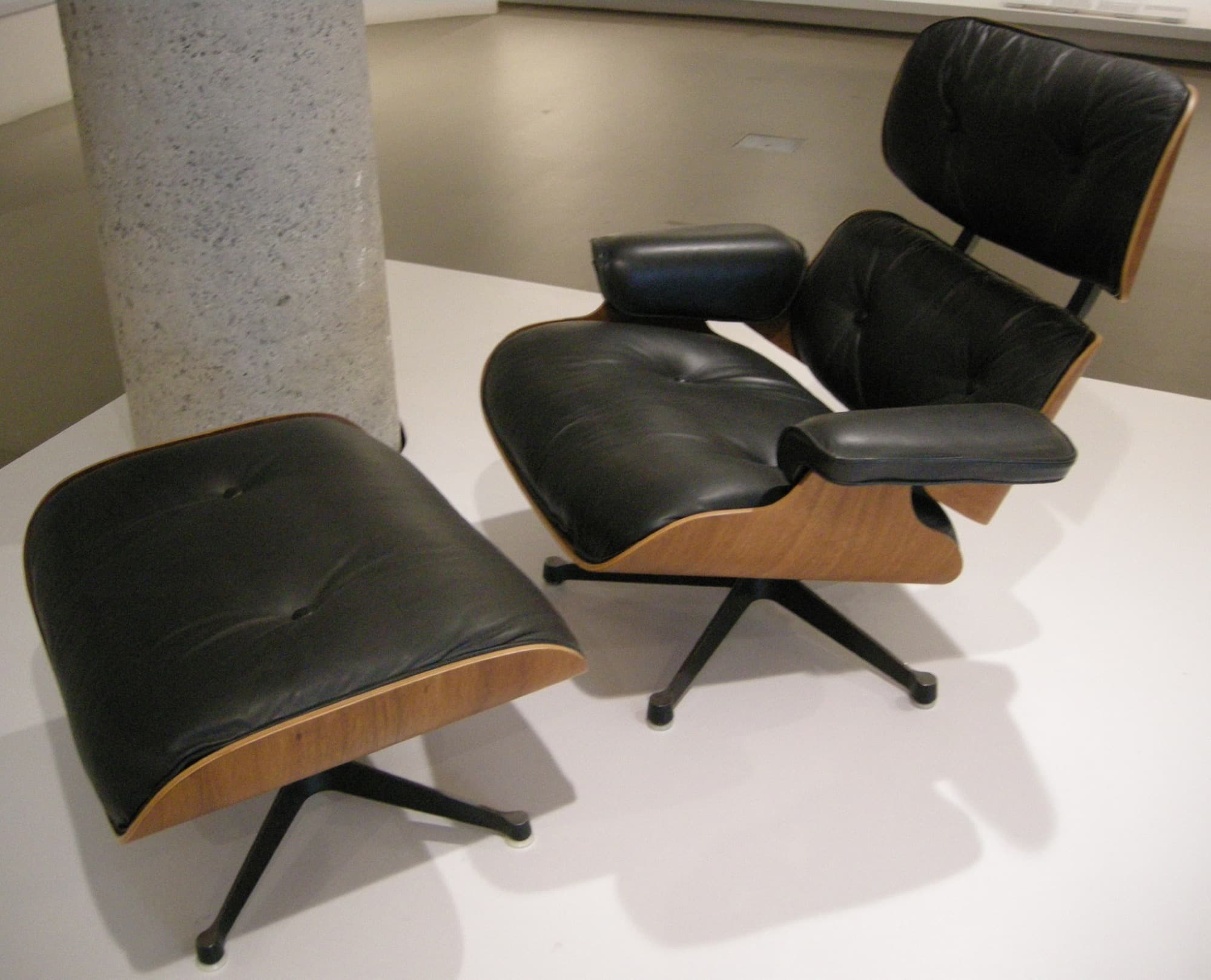
A low lounge chair and a matching ottoman, made of three curved shells of molded plywood, originally faced in rich rosewood veneer, cradling thick leather cushions, all resting on a swiveling base of cast aluminum. Designed in 1956 by Charles and Ray Eames and manufactured by Herman Miller, it reclines slightly, invites you to put your feet up, and has been in continuous production, almost unchanged, ever since. It is in the permanent collection of the Museum of Modern Art, and it is probably the single most recognizable piece of twentieth-century furniture.
What makes it special
It was deliberate luxury from a couple famous for the opposite. The Eameses had built their reputation on affordable, democratic, mass-produced furniture, good design for ordinary budgets. The lounge chair was their conscious exception: a premium object, expensive then and now, made for comfort rather than thrift. They proved they could do indulgence as well as economy.
Its comfort came out of a war. During World War II, the Eameses had been asked to design a molded plywood leg splint for wounded American servicemen, something light, strong, and shaped to the body, produced in the thousands. Solving that problem turned them into the world's leading experts at bending plywood into compound curves, and that hard-won skill is exactly what shapes the chair's body-hugging shells a decade later.
It was designed to look old on day one. That baseball-mitt goal shaped every choice: the soft, deep cushions, the warm wood, the slightly slouched posture. Where much modern furniture announces how new and advanced it is, this one whispers that it has always been here.
The story behind it
It is important to say both names: Charles and Ray Eames. Ray Eames, born Ray Kaiser, was Charles's wife and an equal creative partner, a trained abstract painter with a powerful eye for form and color. For decades the public assumed "Eames" meant a man working alone, or even two brothers, and Ray's role was quietly erased. In truth the studio's work, including this chair, came out of their genuine partnership. The chair made its public debut on American television in 1956, became an instant status symbol, and has been copied endlessly, which is why cheap imitations now fill offices and waiting rooms worldwide.
One detail most people miss
Look for the name under the fame. The design world spent years crediting "Charles Eames" for work that was just as much Ray's. She co-shaped the forms, drove much of the studio's sense of color and composition, and remained Charles's full collaborator until his death, after which she spent a decade preserving and organizing their shared legacy. When you admire the easy, human warmth of this chair, remember that half of the mind behind it belonged to a woman the credits kept leaving out.
Where to see it
You can see an original in design collections like the Museum of Modern Art in New York or the Vitra Design Museum in Germany. But the best part is that the chair is still made, so you can also simply sit in a genuine one at a Herman Miller or Vitra showroom and feel the broken-in comfort firsthand. If you are buying, learn to tell the real thing from the flood of knockoffs: the authentic version is still built, shell by shell, from the same molded plywood the Eameses perfected.