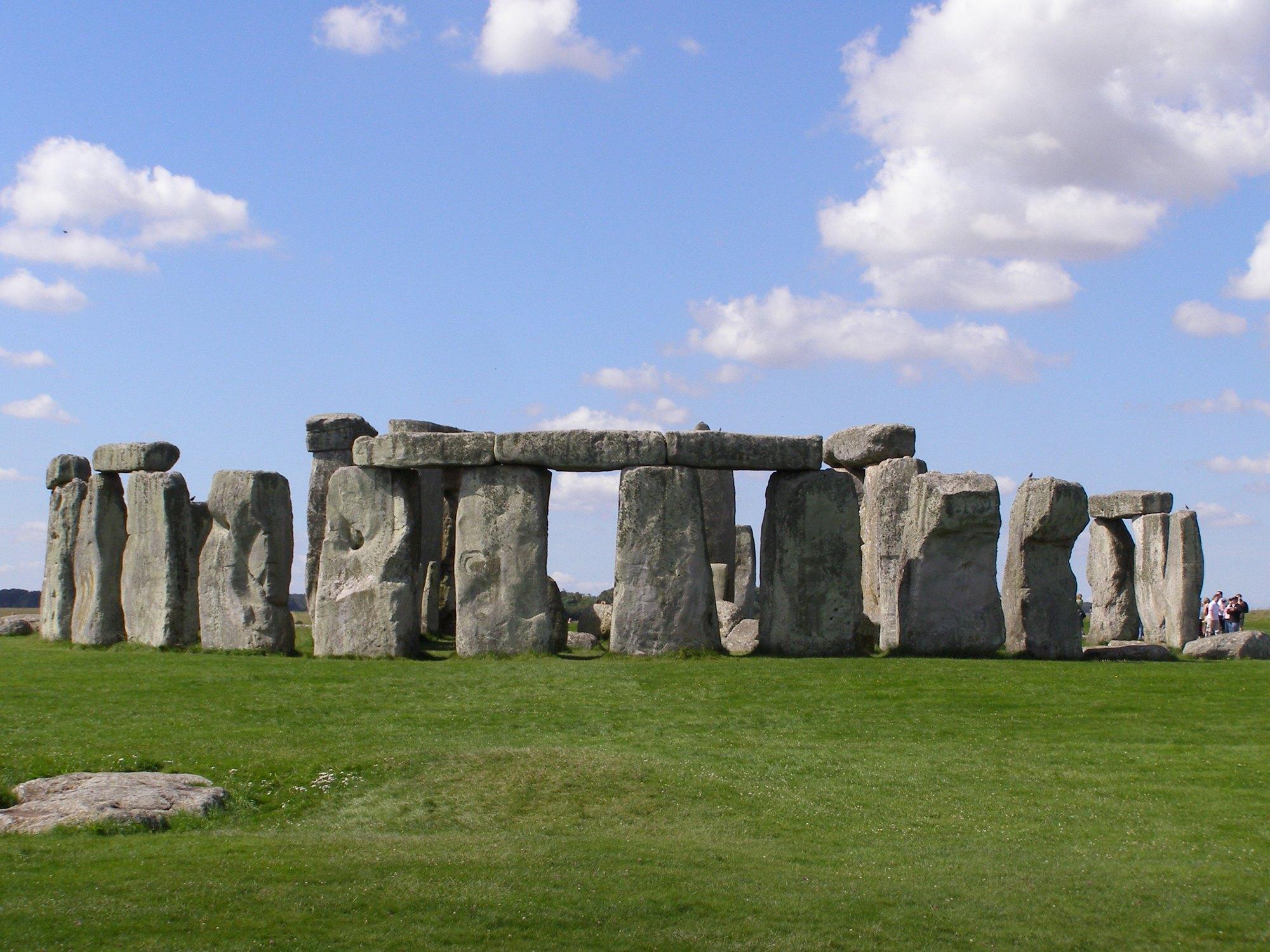
The biggest stones at Stonehenge weigh around 25 tonnes each, about as much as four African elephants. In 2020, a chemical analysis showed that most of them came from West Woods, about 25 kilometers to the north. They were moved without wheels, without metal tools, and without draft animals strong enough to help much, most likely on wooden sledges hauled over timber rails by hundreds of people.
The smaller stones are even more puzzling. Known as bluestones, they weigh two to five tonnes each, and they come from the Preseli Hills in Wales, more than 200 kilometers away. In 2024, researchers found that the large flat Altar Stone at the center came from northeast Scotland, roughly 700 kilometers away. Someone, around 4,500 years ago, decided these particular stones were worth that journey.
What you're looking at
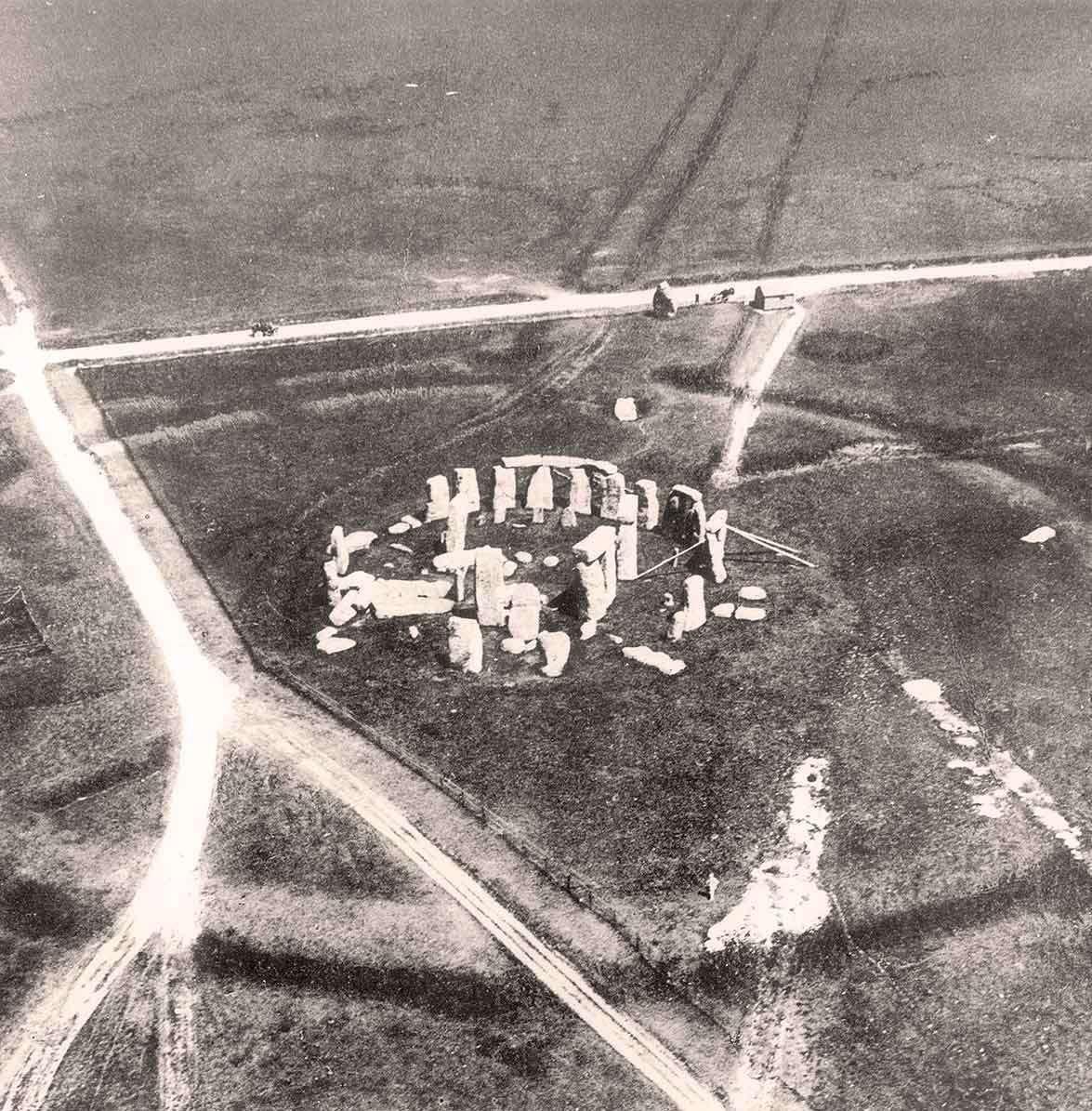
A ring of huge grey standing stones on Salisbury Plain in southern England. The outer circle was once made of 30 uprights topped by a continuous ring of lintels. Inside stands a horseshoe of five giant trilithons, the tallest rising more than seven meters. Between them are the smaller bluestones. Around it all runs a low circular ditch and bank, the oldest part of the monument, dug around 3000 BC.
What makes it special
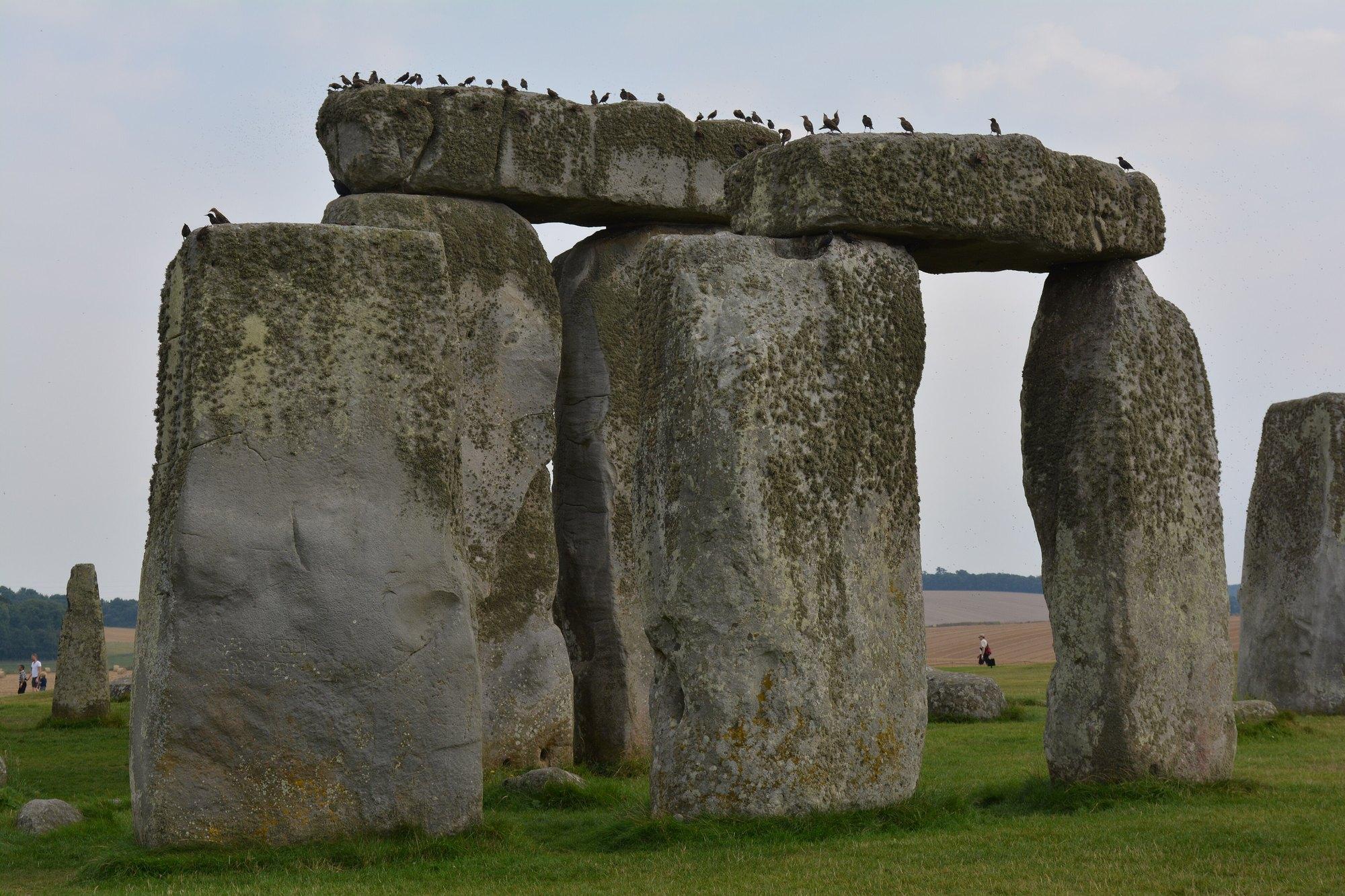
It is woodwork in stone. The lintels are not simply balanced on top. Each upright has a knob carved on top that fits into a hollow on the underside of the lintel, and the lintels of the outer ring lock into each other end to end. These are joints a carpenter would use. They suggest the builders first developed their skills in timber.
It is aimed at the sky. The main axis lines up with the sunrise on the summer solstice and the sunset on the winter solstice. Many archaeologists think the midwinter sunset was the more important moment, perhaps marking the turn of the year.
It took longer to build than most civilizations last. Stonehenge was not built at once. The ditch came first around 3000 BC, the great sarsen stones were raised around 2500 BC, and the bluestones were rearranged several times until around 1500 BC. Generation after generation kept working on it.
The story behind it
Nobody left a written record explaining Stonehenge, which is why it attracts so many theories. Medieval legend claimed the wizard Merlin flew the stones over from Ireland. Later writers credited the Romans, the Danes, or the Druids, who in fact came along some 2,000 years after the stones were raised. What archaeology does show is that it was also a place for the dead: the cremated remains of many people were buried there, especially in the early centuries.
In 1915, the site was sold at a local auction. A barrister named Cecil Chubb bought it for 6,600 pounds, reportedly on impulse, and three years later gave it to the nation.
One detail most people miss
The lintels on the outer circle are not straight. Each one is gently curved, so that together they follow the line of the circle. Shaping stone that precisely with stone hammers, and then lifting it into place six meters off the ground, is an achievement easy to overlook when you see the monument from a distance.
Where to see it
Stonehenge is about 15 kilometers north of Salisbury in Wiltshire and is managed by English Heritage; tickets are booked by time slot and include the visitor center and a shuttle. Most visitors walk a path around the circle rather than among the stones. On the summer and winter solstices, English Heritage usually opens the inner circle to the public, and thousands gather to watch the sun rise or set along that ancient axis.