The Alhambra has no pumps. Every fountain, pool, bath and channel in the palace runs on gravity. The water comes from the River Darro through a canal about six kilometers long, the Acequia Real, dug in the 1200s along the hillside at a slope so gentle that the water arrives at the top of the hill above the city. Seven centuries later, the same canal still feeds the gardens.
That is the engineering. The effect is a palace where you hear water before you see anything else: trickling in marble channels along the floors, dropping from a fountain into a pool, running down the handrail of a staircase. The builders of the Alhambra lived in a dry land and used water the way other architects used gold.
What you're looking at
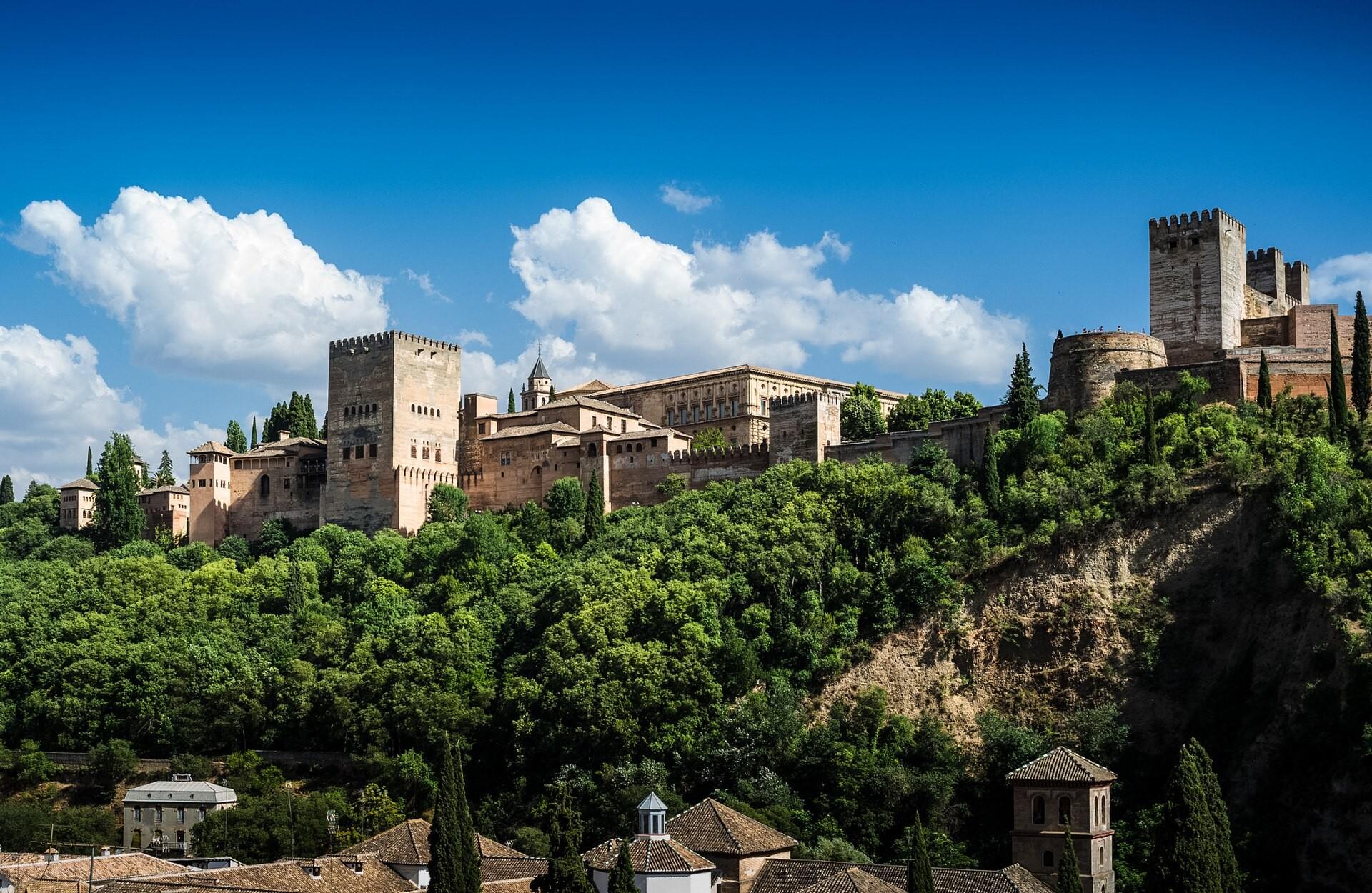
A walled hill above Granada, in southern Spain, with the snow of the Sierra Nevada behind it. The name comes from the Arabic al-Qal'a al-Hamra, the red fortress, after the color of its rammed-earth walls. Inside are three things: a military citadel at the western tip, a group of royal palaces built by the Nasrid dynasty in the 1300s, and the Renaissance palace that the Emperor Charles V plonked in the middle in 1527. Across a ravine sits the Generalife, the summer palace with its long garden pools.
The Nasrid palaces are the heart of it. From the outside they are plain. Inside, every wall is covered in carved plaster, glazed tiles and inscriptions, every ceiling is wood or honeycombed stucco, and every courtyard is organized around water.
What makes it special
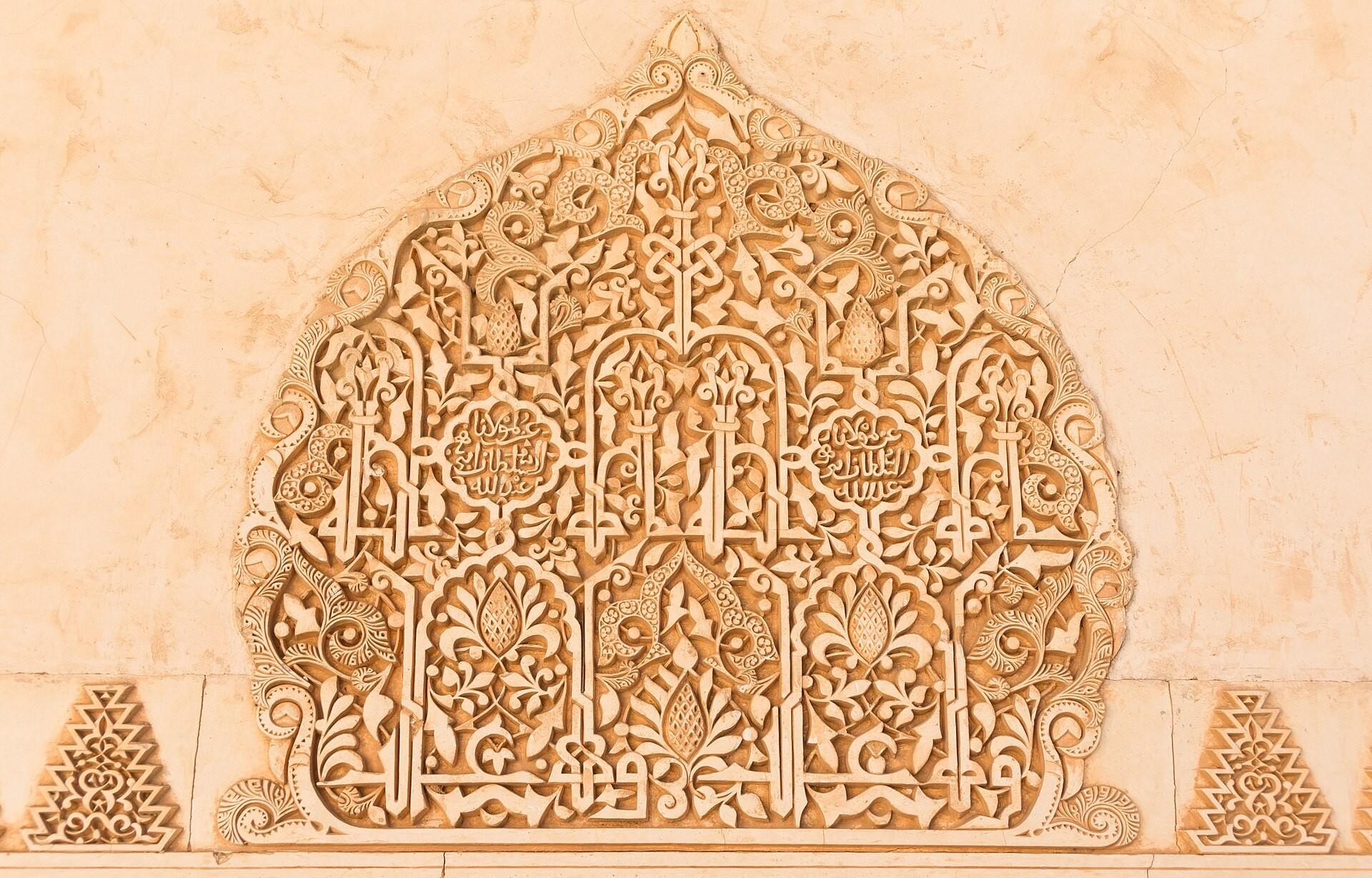
It was built to be read. The walls carry thousands of inscriptions in Arabic: verses from the Koran, poems written for specific rooms by court poets, and one phrase repeated more than any other, "Wa la ghaliba illa Allah," there is no victor but God. It was the motto of the Nasrid kings, and you can see it in the carved window frame in the gallery above. Educated visitors in the 1300s would have walked through the palace reading it like a book.
It is made of almost nothing. The dazzling decoration is plaster, wood and tile over brick. The Nasrids were a small kingdom paying tribute to the Christian kings of Castile, and they could not afford marble palaces. So they built cheaply and carved extravagantly, covering humble materials with patterns of a complexity nobody has matched. The columns in the Court of the Lions are marble; nearly everything else is gypsum and paint.
It is the last chapter of a 700 year story. Muslims ruled parts of Spain from 711. By the time the Nasrids founded their kingdom in 1238, Granada was all that was left. The Alhambra is the final flowering of Islamic art in Western Europe, built by a dynasty that knew it was living on borrowed time.
The story behind it
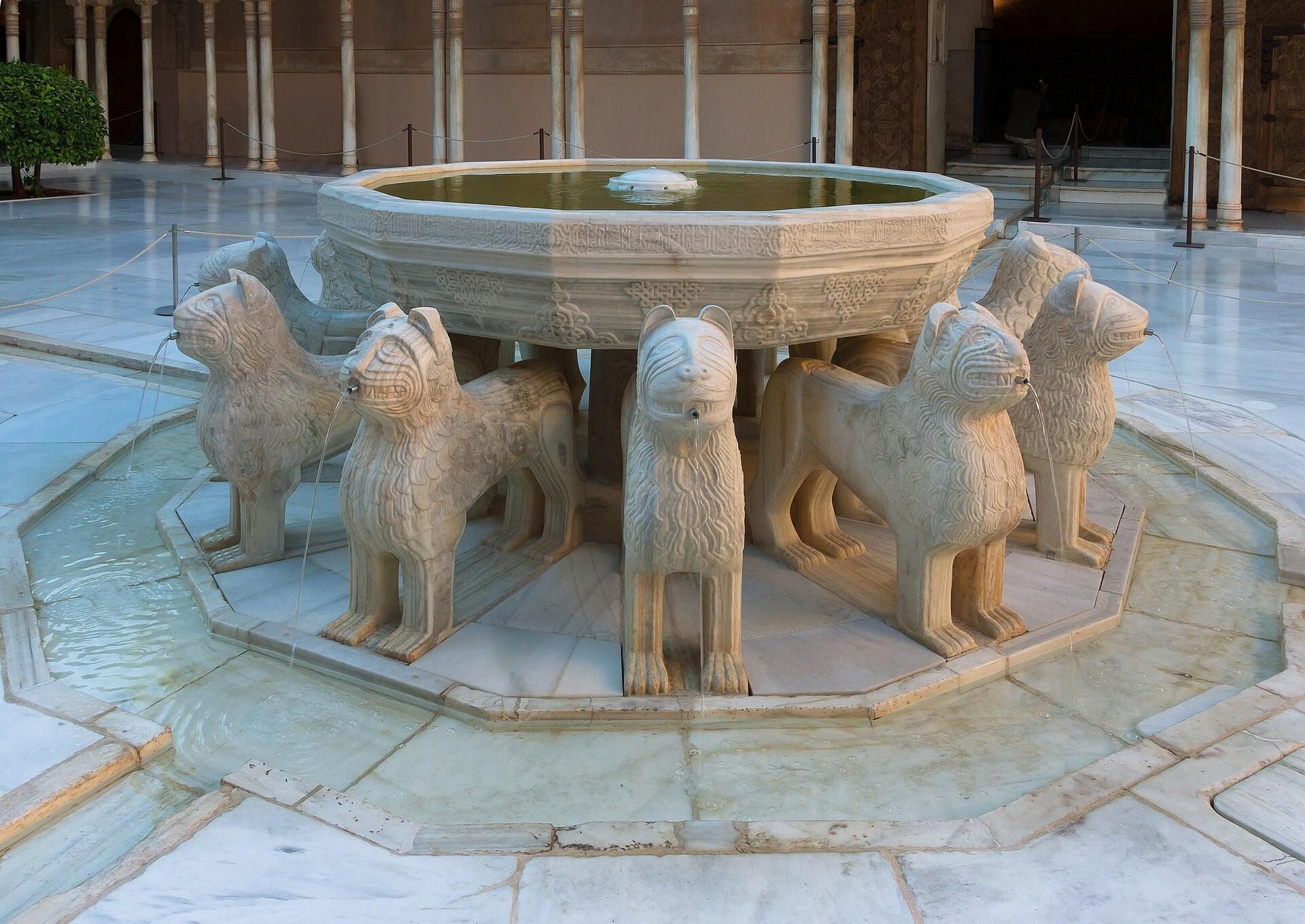
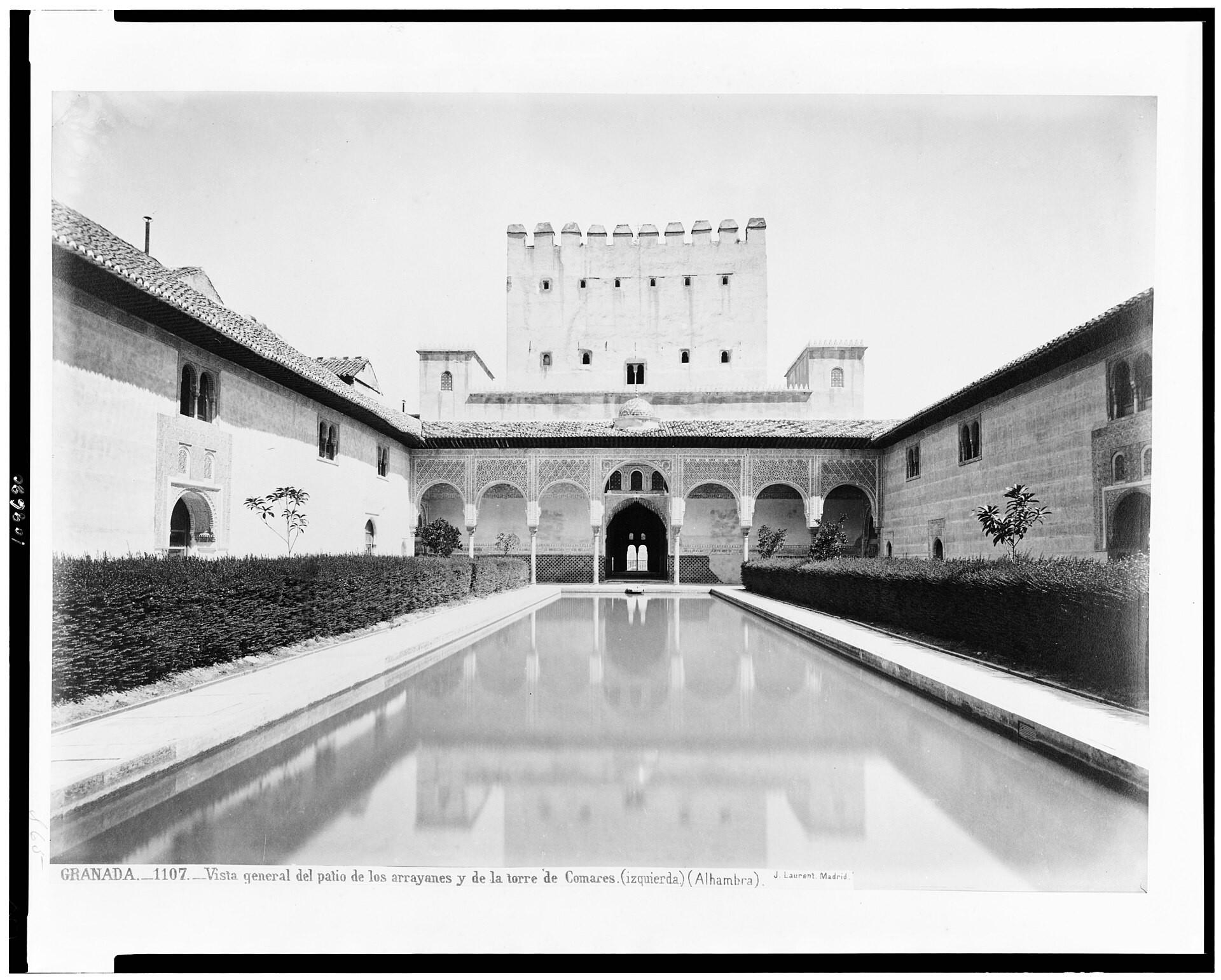
Muhammad I began the fortress in 1238. The palaces that visitors queue for were built mostly by two kings, Yusuf I and his son Muhammad V, between 1333 and 1391: the Court of the Myrtles with its reflecting pool and the Comares Tower, then the Court of the Lions with its fountain carried by twelve marble lions.
On 2 January 1492, the last Nasrid king, Muhammad XII, known in Spain as Boabdil, handed the keys to Ferdinand and Isabella. The Catholic monarchs moved in. A few months later, in Santa Fe, a few kilometers away, they signed the agreement that sent Christopher Columbus west.
Then the Alhambra was slowly forgotten. Charles V tore down part of the palaces for his own; later kings let the rest decay. In 1812, Napoleon's retreating troops blew up several towers and had mined the rest; according to local tradition a Spanish soldier cut the fuse. In the 1820s, travelers and artists rediscovered the ruin. The American writer Washington Irving lived in the empty palace for several months in 1829 and published Tales of the Alhambra, which made it famous across Europe and started the restoration that continues today. UNESCO listed it in 1984. It now receives well over two million visitors a year, with daily tickets to the Nasrid palaces strictly capped.
One detail most people miss
The fountain in the Court of the Lions has a poem carved around the rim of its basin, written by the court poet Ibn Zamrak. The verses praise the fountain by pretending to be puzzled by it: the water looks solid, the marble looks liquid, and the lions seem to hold back their roar out of respect for the king. It is a 650 year old caption explaining the trick the fountain plays on your eyes. Also, look at the floor around it: the water runs out from the basin in four straight channels into the surrounding rooms, so the fountain is the source of four rivers, an image of paradise from the Koran.
Where to see it
The Alhambra is in Granada, Andalusia, about an hour's flight from Madrid. Tickets sell out weeks in advance in high season; book on the official site, alhambra-patronato.es, and note that the entry time printed for the Nasrid palaces is enforced to the minute. Go early or take an evening visit, when the palaces are lit and nearly empty. The free view from the Mirador de San Nicolas in the Albaicin, the hillside quarter opposite, is the one in the main photo, and it is best at sunset.