It begins with one low, warm note, and then the cello simply keeps unfolding: waves of notes rising and falling, the same shape over and over, slightly different every time. No melody you could hum, no orchestra, no words. Two and a half minutes later it resolves onto one final chord, and you feel as if something has been quietly put right in the world.
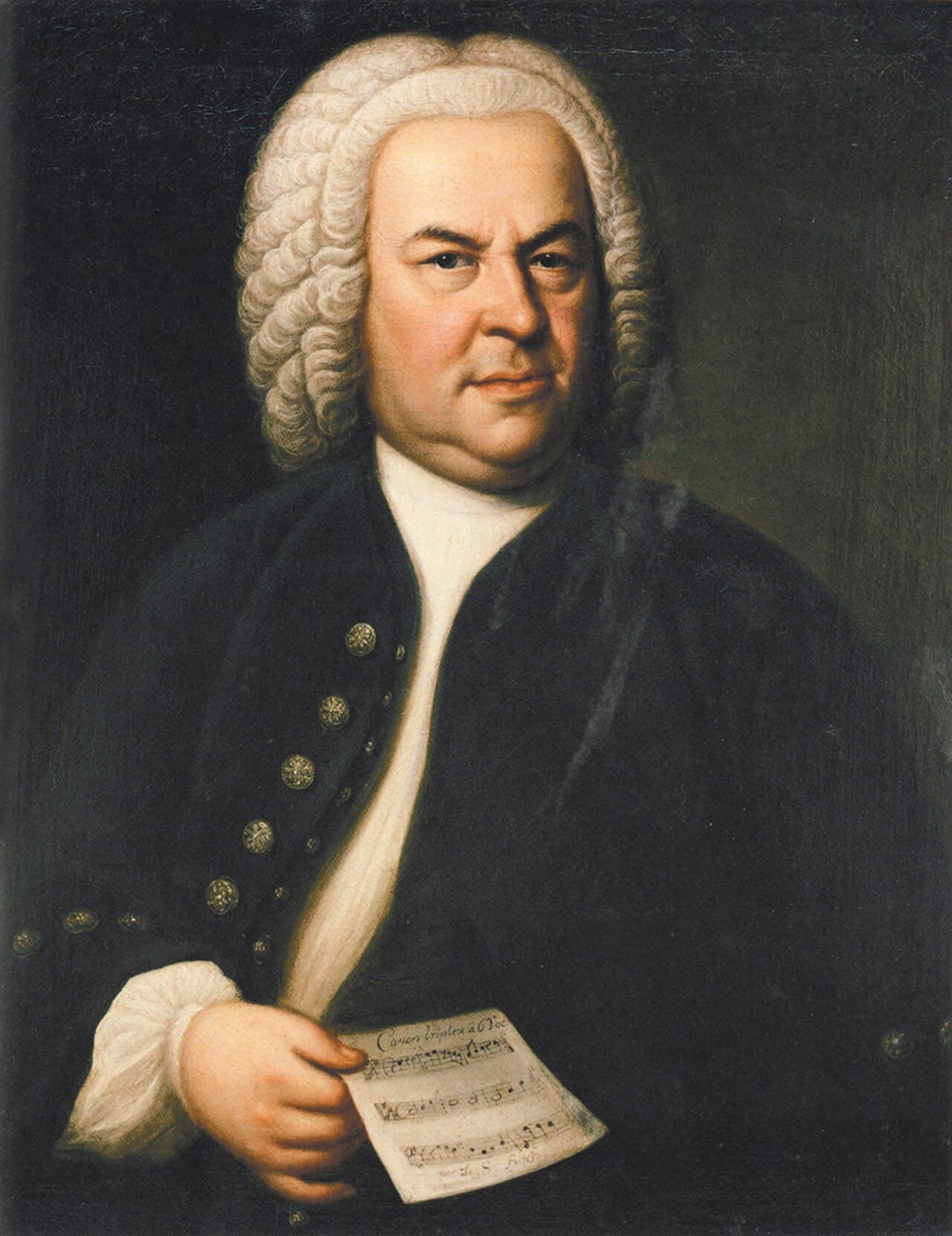
Johann Sebastian Bach wrote his six suites for solo cello around 1720, while working as a court musician in the small German town of Köthen. Nobody knows exactly who they were for. What we know is what happened to them afterward, which is almost nothing, for a very long time.
What you're listening to
A prelude: the opening movement of a suite of baroque dances. The cello plays almost continuously, sixteen notes to a bar, arpeggios that outline changing chords. Underneath the ripple, a slow harmonic story unfolds: home, departure, tension that gathers around a long, growling pedal note near the end, and a homecoming. Think of it as a tide chart disguised as a warm-up.
What makes it special
One voice does the work of four. The cello can realistically sound one or two notes at a time, and Bach wanted rich, full harmony. His solution: break every chord into moving water, and let the listener's memory hold the notes together. The music happens partly in your head, which is why it feels intimate in a way orchestral music cannot.
It hides its architecture behind simplicity. The Prelude sounds improvised, almost casual. It is in fact rigorously symmetrical: phrases balance, tensions resolve on schedule, and the climax lands with mathematical placement. Musicians spend lifetimes on these two and a half minutes precisely because nothing in them is filler.
It made the cello a soloist. In 1720 the cello was furniture: the bass line, the accompanist in the back. Bach wrote it a monologue, the first great one it ever received. Every unaccompanied cello piece since, and every film scene scored with a lone cello, descends from this decision.
The story behind it
Bach's original manuscript is lost; the suites survived in his wife Anna Magdalena's copy, and after his death they were shelved as technical studies, exercises for students, played by almost no one. In 1890, a thirteen-year-old Catalan cello student named Pablo Casals was browsing a secondhand shop near the harbor in Barcelona with his father when he found a worn copy of the score. He later said he could not believe no one played them. He practiced the suites daily for twelve years before performing one in public, and did not record them until his sixties. Those recordings, made in the late 1930s while Europe collapsed, turned two centuries of neglect into the cello's sacred text.
One detail most people miss
The whole Prelude, all that motion, sits on top of astonishingly few bass notes; for the final third it is essentially one sustained pitch, a drone, while the harmonies above it tighten and struggle and finally give in. Listen just to the lowest notes once. The piece is a long exhale, and the bass line is the breath.
How to listen
Above, Yo-Yo Ma, who has recorded the complete suites three times across his life, in his twenties, his forties and his sixties, calls them the music he returns to for every occasion, from mourning to celebration. Two and a half minutes: once while reading, once with eyes closed. Notice that it never hurries, and never stalls. That balance is the entire lesson.