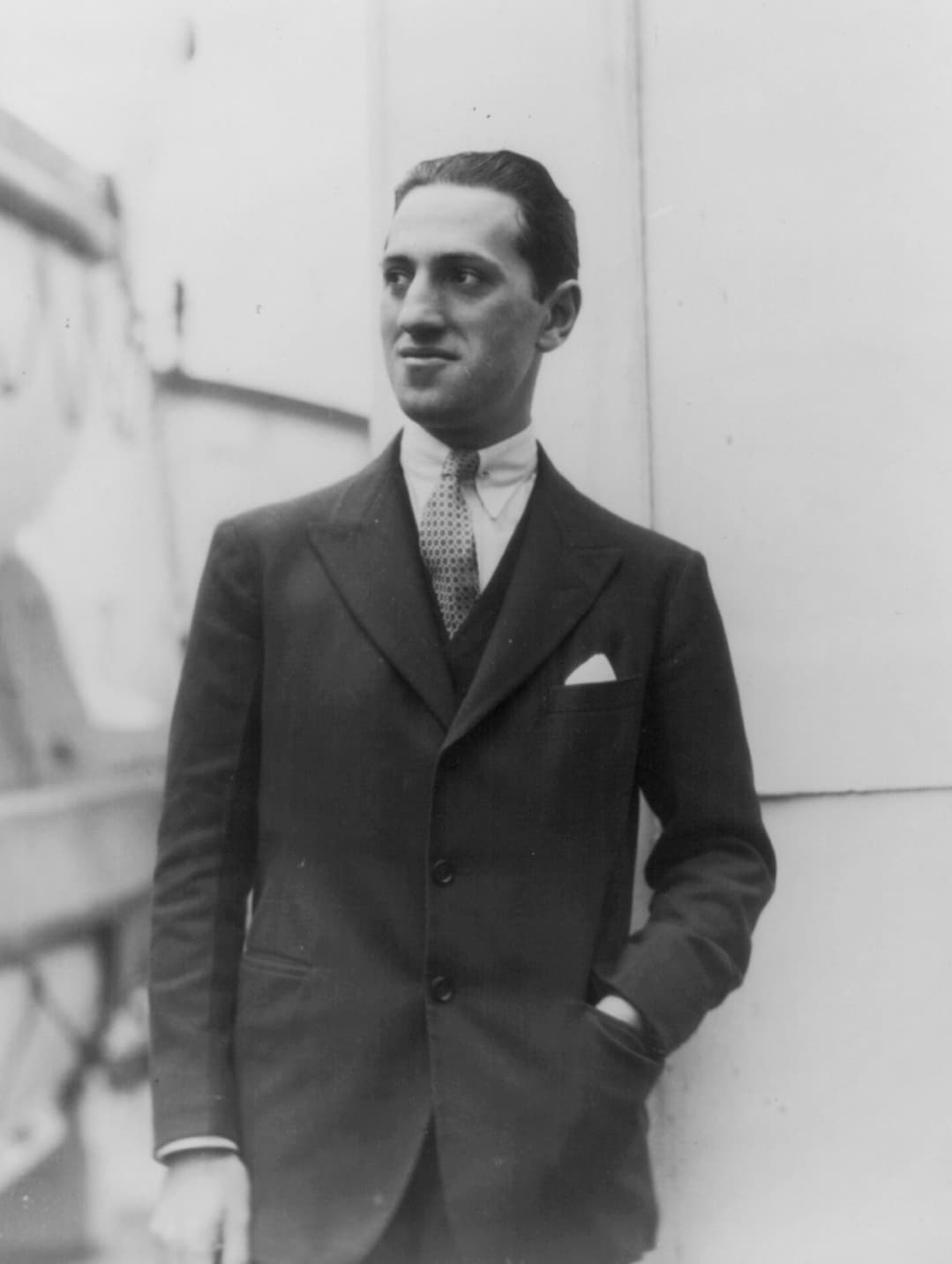
On the afternoon of January 3, 1924, George Gershwin was 25 years old, a successful Broadway songwriter, and completely unaware that he was about to write the most famous American concert work of the century. The next day, his brother Ira, reading the New York Tribune, found an announcement: bandleader Paul Whiteman would present "An Experiment in Modern Music" on February 12, featuring a new jazz concerto - by George Gershwin.
Nobody had asked George.
Whiteman had floated the idea with him casually months earlier; the newspaper made it a public commitment with a date. Gershwin had five weeks, a Broadway show in rehearsals at the same time, and no experience writing for a concert orchestra. He said yes anyway.
What you're listening to
About seventeen minutes of music that refused to choose between the concert hall and the dance hall. A solo piano - Gershwin himself at the premiere - trades themes with an orchestra that swings, wails, and struts. The piece opens with that clarinet: a trill, then a smear rising two and a half octaves that has become one of the most recognized openings in all of music. From there it is a parade of tunes - jittery, bluesy, wisecracking - capped by a broad, glowing melody that Americans have since heard in everything from airline commercials to Olympic ceremonies.
Because the deadline was absurd, Gershwin wrote the piece for two pianos and handed the pages to Whiteman's arranger, Ferde Grofé, who orchestrated it as fast as they arrived - the score was finished days before the concert, and at the premiere, some piano passages were not written down at all. Gershwin improvised them and nodded to the conductor when it was time for the orchestra to come back in.
What makes it special
The opening was a joke that became immortal. Gershwin wrote the clarinet intro as an ordinary seventeen-note scale. At rehearsal, Whiteman's clarinetist Ross Gorman, clowning, slurred the top of it into one long wail. Gershwin stopped him - not to complain, but to ask him to do it that way every time, "with as much of a wail as possible." The single most famous clarinet moment in history is a preserved piece of goofing off.
It gave concert music an American accent. European critics and composers had been asking what American music would sound like when it grew up. Gershwin's answer: it already grew up, in Harlem clubs and Tin Pan Alley - it just needed a ticket to the concert hall. Ravel, Rachmaninoff, and Stravinsky all paid attention; classical music's borders were never fully closed again.
It is a portrait of a city in sound. Gershwin said much of the piece came to him on a train to Boston, in the "steely rhythms" and rattle of the ride - he heard it, he said, as "a sort of musical kaleidoscope of America." The trains, traffic, and swagger of 1920s New York are audible a century later.
The story behind it
The premiere, at Aeolian Hall on February 12, 1924, was a strange marathon: Whiteman programmed over twenty pieces to demonstrate jazz's respectability, and by the time Rhapsody arrived, second to last, the hall was hot and the audience was wilting. The clarinet wail snapped everyone awake. In the seats were Rachmaninoff, the violinist Jascha Heifetz, and the conductor Leopold Stokowski - Broadway and Carnegie Hall in one room, watching the walls between them crack.
The reviews split, and the split itself was the story: some critics heard formless patchwork, others heard the future. The public voted with records and tickets: Rhapsody made Gershwin wealthy and world-famous, and its opening became shorthand for New York itself - Woody Allen built the opening of Manhattan on it, and United Airlines bought it as a corporate anthem, a fate Gershwin the ad-jingle survivor might have found hilarious.
Gershwin never stopped being slightly embarrassed that he could not orchestrate the piece himself in 1924 - so he learned, rigorously, and by 1928 he was orchestrating An American in Paris alone. He died of a brain tumor at 38, leaving open one of music's great what-ifs.
One detail most people miss
Listen to what the piano does the very first time it enters: it does not introduce itself politely with a theme. It barges in mid-thought, fast and talky, like someone joining a conversation while taking off their coat. Classical concertos of the era announced their soloists like royalty. Gershwin's piano enters like a New Yorker.
How to listen
Press play above - Leonard Bernstein conducting and playing, the most beloved recording of the piece. Front-load your attention on the first ninety seconds: the wail, the strut, the interruption. Then let it run while you work; it was written by a man doing three jobs at once, and it thrives in company.