For about six minutes, a flight of stone steps in the city of Odessa becomes the most studied, most imitated piece of film ever made. Rows of Tsarist soldiers march down in pitiless lockstep, rifles firing into a fleeing crowd. A mother is shot. A baby carriage, let go, bounces down the steps alone through the chaos. A woman's face is hit, her glasses shattering. Filmmakers have been copying and quoting this sequence for a hundred years.
Here is the strange part: the massacre on those steps, as Eisenstein filmed it, never actually happened. There was real bloodshed in Odessa in 1905, but the specific slaughter on the staircase is a cinematic invention, staged so powerfully that much of the world now half-remembers it as a documented historical event.
What you're watching
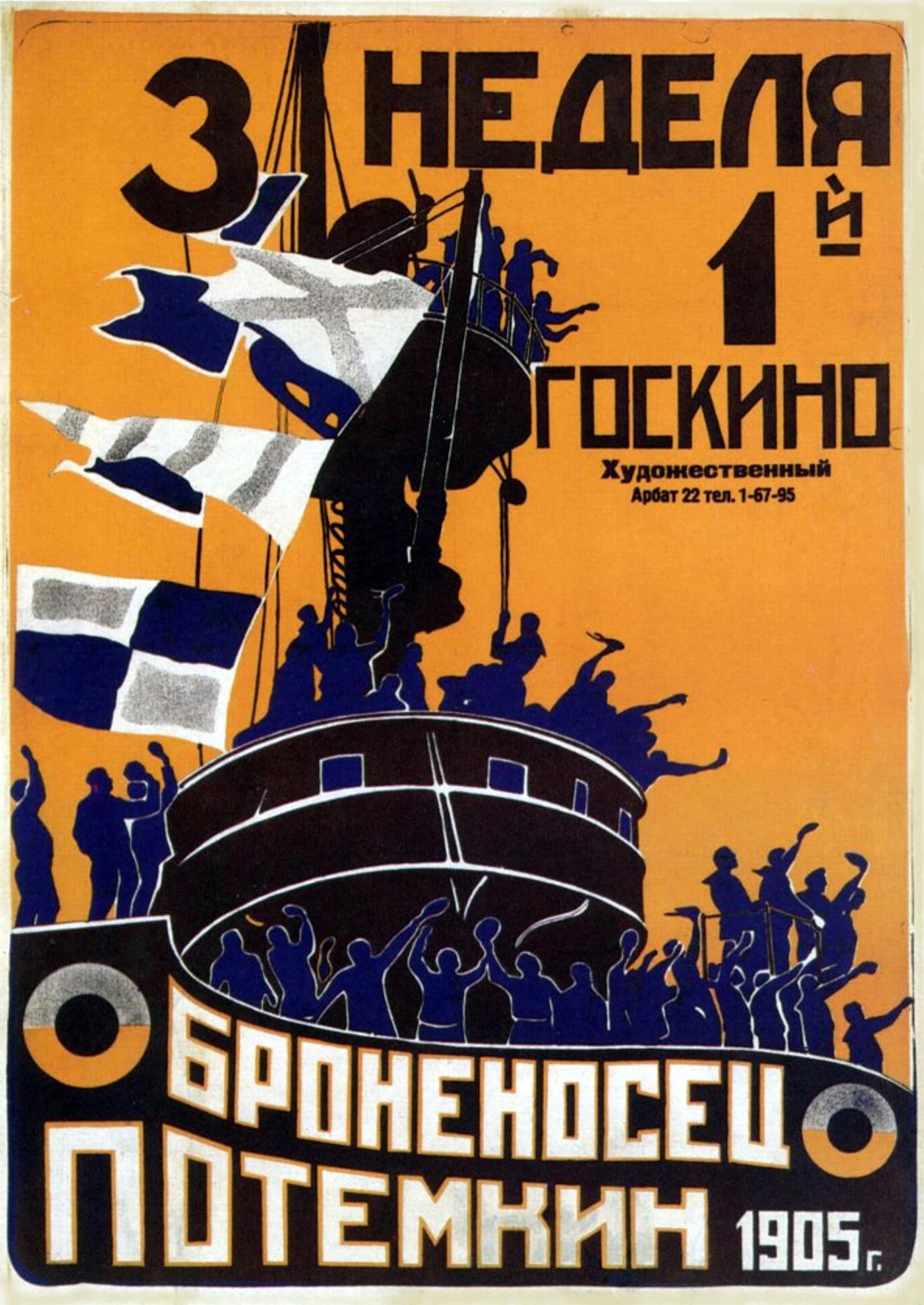
Battleship Potemkin is a Soviet silent film from 1925, made to mark the twentieth anniversary of the failed Russian Revolution of 1905. It dramatizes a real event from that year: the mutiny aboard the battleship Potemkin, where sailors, pushed past breaking point by cruel officers and a ration of maggot-ridden meat, rose up and seized the ship. When the people of Odessa gather on shore to support the rebel sailors, the Tsar's forces respond with the famous massacre. The whole film runs a little over an hour.
What makes it special
It was a laboratory for a new idea about editing. Eisenstein believed that cinema's real power was not in what you film but in how you cut it together. He called this montage, and Potemkin was his great proof: a film built to show that slamming two images against each other could create emotion and meaning that neither image held on its own.
The Odessa Steps rewrote the grammar of film. The sequence combines rhythm, scale, and terror in a way nobody had seen: wide shots of the advancing boots, sudden close-ups of panicked faces, the long diagonal of the steps, the unbearable detail of the runaway pram. Directors from around the world have copied it so often that even people who have never seen Potemkin have seen its echoes.
Even the statues come alive in the cutting. In one famous moment, Eisenstein splices together three shots of stone lions, one sleeping, one waking, one rising, so that the single edit makes a statue appear to leap to its feet and roar. It is montage as pure magic: three still objects, cut together, become one furious living thing.
The story behind it
The film was commissioned by the Soviet state as propaganda, and Eisenstein, still in his twenties, delivered propaganda that happened to also be a masterpiece. He took the real 1905 mutiny and compressed, heightened, and partly invented it for maximum emotional force, most famously in the Odessa Steps. Several countries banned the film for years, frightened that it might actually incite revolution. Over time it stopped being seen mainly as propaganda and became a permanent fixture near the top of nearly every list of the greatest films ever made, and a standard text in every film school.
One detail most people miss
The thing to carry away is how completely a fiction can overwrite memory. The Odessa Steps massacre feels like history because Eisenstein's craft makes it feel true, but it is essentially staged drama. That is both the glory and the warning of the film: montage is so persuasive that it can install an event in the collective memory of the world, vivid and detailed, even when that exact event never took place. Potemkin is a demonstration of cinema's power and, quietly, of its danger.
How to watch
Battleship Potemkin is in the public domain and freely available; you can press play above and watch the whole thing. It is silent, so it is usually paired with a musical score, and the experience changes a lot depending on which one. If you only have a few minutes, skip to the Odessa Steps sequence, but watch it twice: once to feel it, and once to notice how every bit of that feeling is built in the editing, shot slammed against shot.