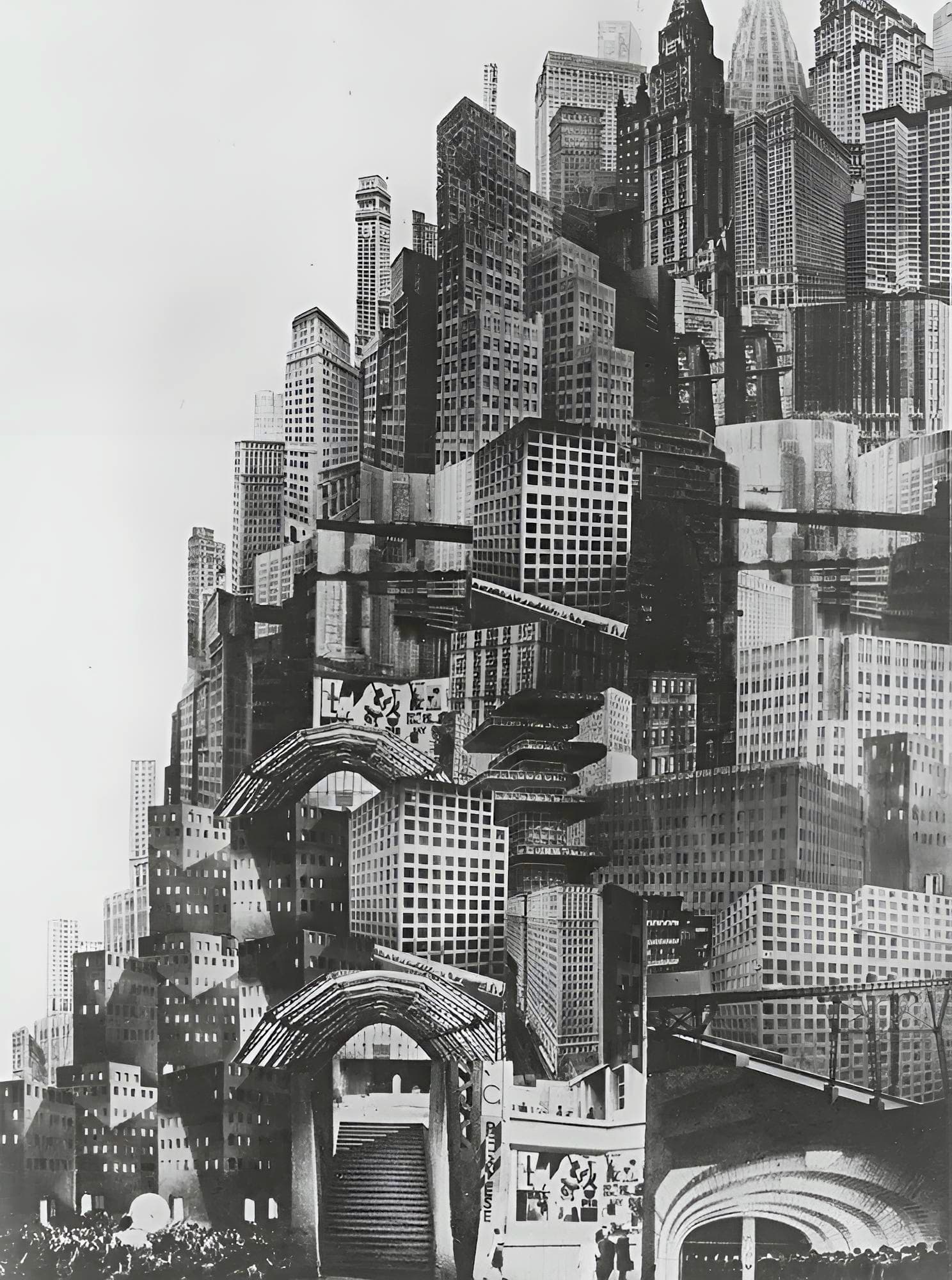
Every skyline in science fiction - Blade Runner's towers, Star Wars's city-planet, Batman's Gotham, the anime megacities - descends from one film that its own studio considered a disaster. Metropolis cost around five million Reichsmarks, several times its budget, employed crowds of extras by the tens of thousands, took about seventeen months to shoot, and came close to sinking UFA, the biggest studio in Europe. On release in 1927 it underperformed; within months, distributors were hacking it shorter, and for eighty years, a quarter of the film was considered destroyed forever.
Then, in 2008, a curator in Buenos Aires found something in the archive of the Museo del Cine: a battered 16mm print, scratched and dupey - and nearly complete. The missing quarter of the most influential science fiction film ever made had spent the century in Argentina.
What you're watching
A city of the future, vertically segregated: the rich play in gardens and stadiums above, the workers march in gray columns to underground machines below. The son of the city's master falls for Maria, a saintly organizer of the workers' children - so the master commissions the inventor Rotwang to give his robot Maria's face, and sends the double below to corrupt the movement from inside. The robot's transformation scene - rings of light climbing a metal woman - became the ancestor of every android in cinema, and the false Maria's dance sets the city on the road to flood and fire.
What makes it special
The effects rewired what film could show. The Schüfftan mirror trick, miniature cities animated frame by frame, the first iconic movie robot - audiences in 1927 were seeing images no one had ever seen. Directors have been quoting them ever since: C-3PO's design is the robot Maria with the gender switched.
The scale was real, and it shows. No digital crowds: when thousands of workers flood the machine halls, those are thousands of actual people, choreographed like architecture. Lang, a famously merciless director, kept extras standing in cold water for the flood scenes take after take. The film's grandeur has a documentary weight because everything on screen physically existed.
Its politics made everyone angry - which kept it alive. The film's naive moral, "the mediator between head and hands must be the heart", was mocked by critics of the left and right alike; the writer H. G. Wells called the film silly. And the argument never ended, because the images beneath the slogan - machine as devouring god, worker as component - kept describing every industrial century since.
The story behind it
The film's own biography is its darkest subplot. UFA, wounded by the cost, fell under the control of the nationalist press baron Alfred Hugenberg, whose media empire soon helped normalize Hitler. Joseph Goebbels admired the film; Lang's wife and co-writer Thea von Harbou joined the Nazi Party. Lang - whose mother was born Jewish - left Germany in 1933-34, divorced Harbou, and rebuilt his career in Hollywood as a master of film noir. The film about a city splitting in two was made by a marriage about to do the same, in a country doing the same.
The mutilation began immediately: for the American release, a playwright recut the film, simplifying the plot and discarding footage; Germany followed with its own shorter versions. The original premiere cut existed for a few months in one city. For decades, restorers reassembled what they could - including a 1984 version with a pop soundtrack by Giorgio Moroder - but roughly a quarter stayed missing until the Buenos Aires print of 2008. The 2010 restoration, premiered simultaneously in Berlin and at the Brandenburg Gate on live television, runs two and a half hours: the closest the world has come to the film of 1927, with the Argentine footage visibly scarred, like recovered memory.
One detail most people miss
Watch the machine-hall explosion early in the film: for a few seconds, the machine becomes Moloch, a temple mouth swallowing marching workers. It looks like metaphor, and it is - but Lang built the metaphor physically: the shot required rebuilding the set as a staircase-altar and marching lines of extras into it. In Metropolis, even the hallucinations are load-bearing.
How to watch
Press play above for the full film. If two and a half hours is too much for one sitting, watch the first thirty minutes tonight - the machines, Moloch, and Maria's entrance - and treat the rest as episodes. Then look at any modern sci-fi city on screen and start counting the quotations.