Some music impresses you. This piece does something to you, and it does it with almost nothing: one note, repeated, in a rhythm simple enough to tap on a table. Long, short-short, long, long. That's it. That's the engine of one of the most moving pieces of music ever written.
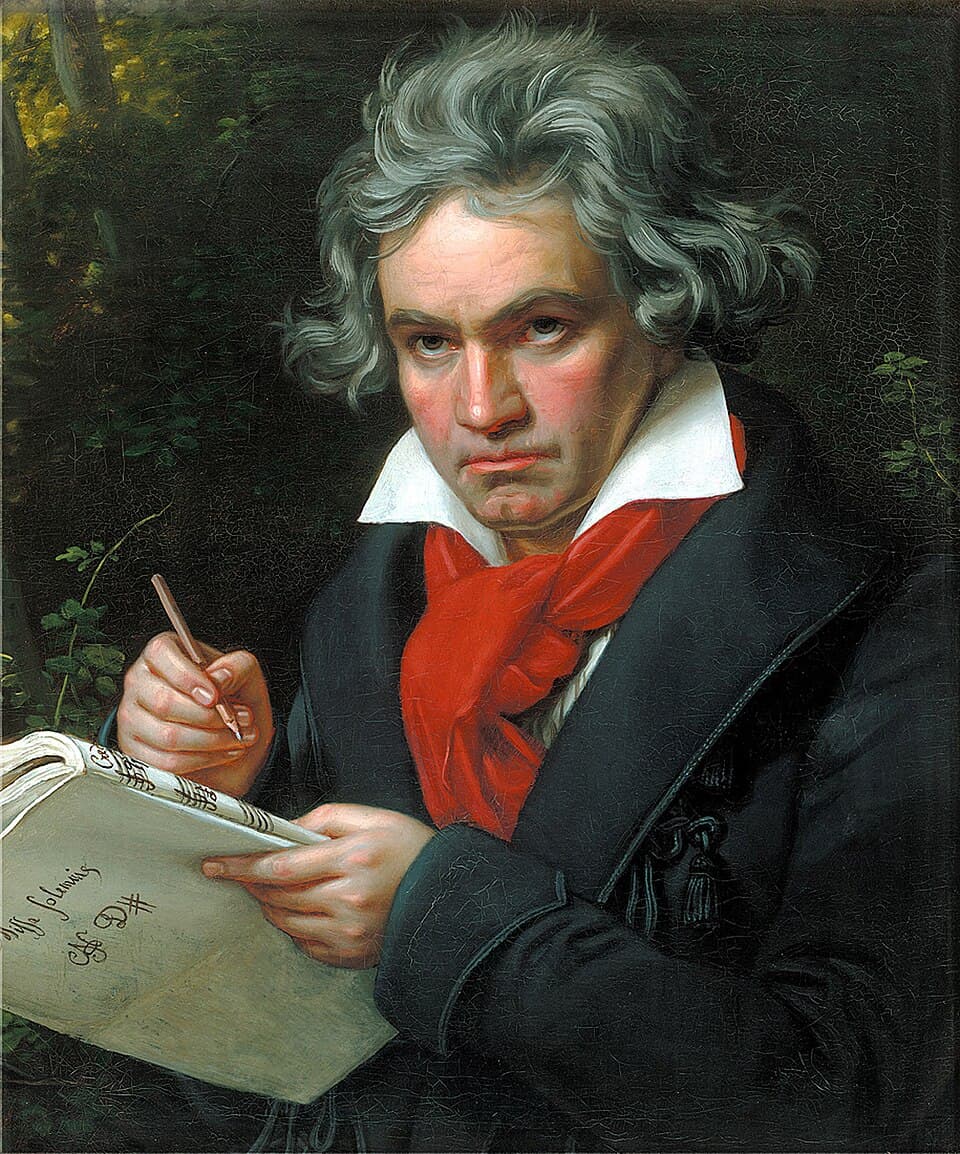
Beethoven wrote his Seventh Symphony in 1812, when he was 41 and already seriously deaf. The second movement - the Allegretto - premiered in Vienna in 1813 at a charity concert for soldiers wounded at the Battle of Hanau. The audience demanded it be repeated on the spot, before the symphony could even continue. It has never really stopped being encored since; two hundred years later it is the piece filmmakers reach for when words give out - you may know it from the climax of The King's Speech.
What you're listening to
The movement opens with a single dark chord, like a door opening. Then the low strings begin the pattern: dum, da-da, dum, dum. It barely qualifies as a melody - it is closer to a heartbeat, or footsteps in a procession. What happens next is the whole trick: the pattern never stops, but layer upon layer is stacked on top of it. A second melody threads through. More instruments join, wave after wave, until the whole orchestra is carrying the same rhythm like a crowd walking together - and then it thins out again, and ends almost where it began.
What makes it special
Maximum emotion from minimum material. Most composers build drama by inventing new themes. Beethoven does the opposite: he changes nothing and everything at once. The rhythm stays identical for eight minutes; only the weight around it grows. It is the musical equivalent of watching a single candle become a torchlit procession.
It sits exactly between sadness and strength. Musicians have argued for two centuries about whether this is a funeral march. It is in A minor, it walks at a mourner's pace - and yet it never collapses into grief. It keeps moving forward. That balance, sorrow that refuses to stop walking, is why it works at both funerals and triumphs.
You can hear it once and remember it forever. Try it. The rhythm will still be in your head tomorrow. Very little in classical music is this immediate - no training required, no patience required. It meets you at the door.
The story behind it
By 1812 Beethoven could no longer hide his deafness, and had just written (but never sent) a desperate letter to the woman he called his "Immortal Beloved." At the 1813 premiere he conducted it himself - a colleague described him crouching at the quiet passages and leaping into the air at the loud ones, hearing much of it only in his head. The concert was such a success that the whole symphony was repeated days later. Beethoven called the Seventh one of his best works.
One detail most people miss
Listen to the very first and very last chord of the movement. They are the same chord - a doorway in, a doorway out. Whatever happened in between, Beethoven closes the door quietly behind you, and the procession continues somewhere out of earshot.
How to listen
Once through while you read this, once with your eyes closed. In the recording above, Leonard Bernstein conducts the Vienna Philharmonic. Follow one instruction only: notice each time a new layer enters. That is all the music theory you need today.