This is the one piece in our collection we cannot show you. Constantin Brancusi died in 1957, which means his works stay under copyright in Europe until January 1, 2028, and unlike almost every artist we cover, there is no legal photograph we can print today. It is strangely fitting - because the most famous thing that ever happened to this sculpture was, precisely, an official refusing to see it.
In October 1926, the steamship Paris docked in New York carrying a bronze by Brancusi: a slender, tapering curve, taller than a person, polished to a mirror, called Bird in Space. It had no wings, no beak, no feathers. And when it reached customs, an inspector looked at it and made a decision that would drag the definition of art itself into a federal courtroom.
What you're looking at
Imagine a flame of bronze, or a single feather stretched and smoothed until it is almost pure line - about 1.3 meters of gleaming metal, swelling gently and narrowing to a slanted tip, standing on a slim cylinder and a rough stone base. That is Bird in Space. Brancusi made more than a dozen versions in bronze and marble over three decades, chasing the same idea each time: not the look of a bird, but the sensation of flight, with everything else stripped away. He polished the bronze for hours so it would catch and throw light, dissolving its own edges. Stand near one, and it seems less like an object than like something the air is doing.
What makes it special
It put appearances on trial and won. US customs let genuine art enter duty-free, but classified manufactured metal at a 40% tariff. The inspector saw no bird, so he filed the sculpture under "Kitchen Utensils and Hospital Supplies" and charged the duty. Brancusi, backed by wealthy collectors, sued the United States government. The 1928 verdict is a landmark: a court officially accepted that a thing can be art even when it looks nothing like what it is named.
It is subtraction as a life's work. Most sculptors add - clay, detail, muscle, drama. Brancusi removed, for years, until only the essential gesture was left. He briefly worked in Rodin's studio, the most famous sculptor alive, and quit within weeks, saying "nothing grows under big trees." His whole art is the opposite of Rodin's storming surfaces: silence, polish, one perfect curve.
The polish is the point, and the trap. That mirror finish is why customs saw industrial metal, and it is also the entire meaning: the shine makes the bronze disappear into reflected light, so the eye reads flight instead of mass. The quality that nearly got it taxed as a kitchen utensil is the quality that makes it soar.
The story behind it
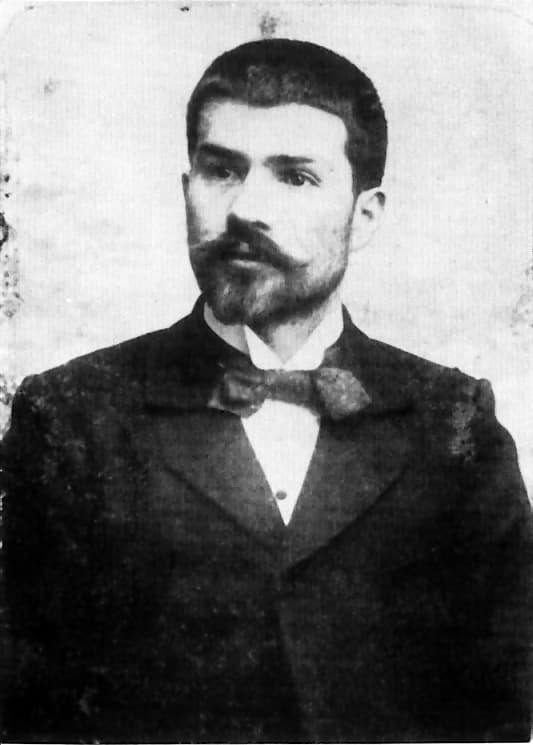
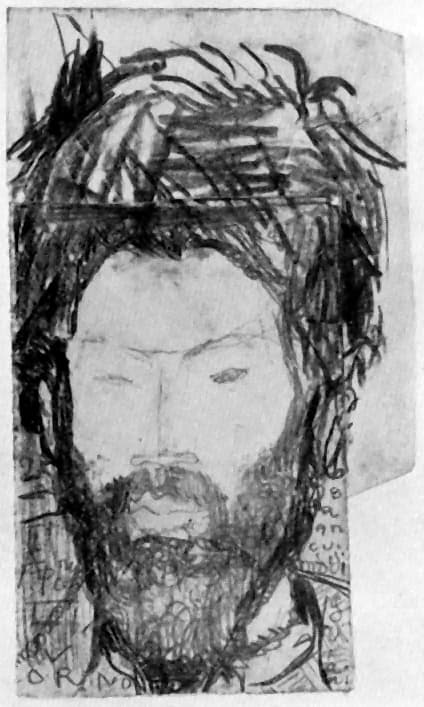
Brancusi came about as far from the New York courtroom as a person could start. Born in 1876 in Hobita, a village in the Romanian countryside, he was a shepherd's son who carved wood, ran away from home as a boy, and in 1904 traveled much of the way to Paris on foot, arriving penniless. He built a studio that was itself a kind of sculpture, made his own furniture and tools, and slowly became one of the most quietly radical artists of the century, admired by Modigliani, Duchamp, and the poets around them.
The 1926 shipment was arranged with the photographer Edward Steichen, who had bought a Bird, and Marcel Duchamp, who was moving Brancusi's work to a New York exhibition. When customs demanded the tariff, the art world mobilized. At the 1927-28 trial, Brancusi v. United States, witnesses testified for days on an impossible question: what makes something a work of art? The government's side argued that a bird must look like a bird. Brancusi's side argued that a trained eye, a title, and an artist's intent were enough. In November 1928 the court ruled for Brancusi, noting that a "school of art" now existed devoted to the abstract, and that this object, however unusual, belonged to it. Art had been legally permitted to stop resembling things.
Brancusi spent his last decades in that Paris studio, endlessly refining a handful of forms - the bird, the kiss, the endless column. He left the entire studio and its contents to the French state on the condition it be rebuilt exactly; you can walk through the reconstruction today, in front of the Pompidou Centre.
One detail most people miss
Brancusi cared as much about the base as the bird. He carved the rough stone and wood pedestals himself, by hand, leaving them deliberately crude - so that the raw, earthbound block below makes the polished flight above look even lighter, as if it is about to leave the plinth entirely. Many museums, for decades, treated these bases as mere supports and swapped or discarded them. They were throwing away half the sculpture: the ground the bird is escaping.
Where to see it
Versions of Bird in Space live at the Museum of Modern Art in New York, the Met, the Guggenheim, the Kunsthaus Zurich, and the Centre Pompidou in Paris, where Brancusi's whole studio has been rebuilt outside. We cannot legally print a photograph of any of them until 2028 - so this is the rare piece you will have to go and see with your own eyes. Which, for a sculpture about the act of looking, may be the most honest ending of all.