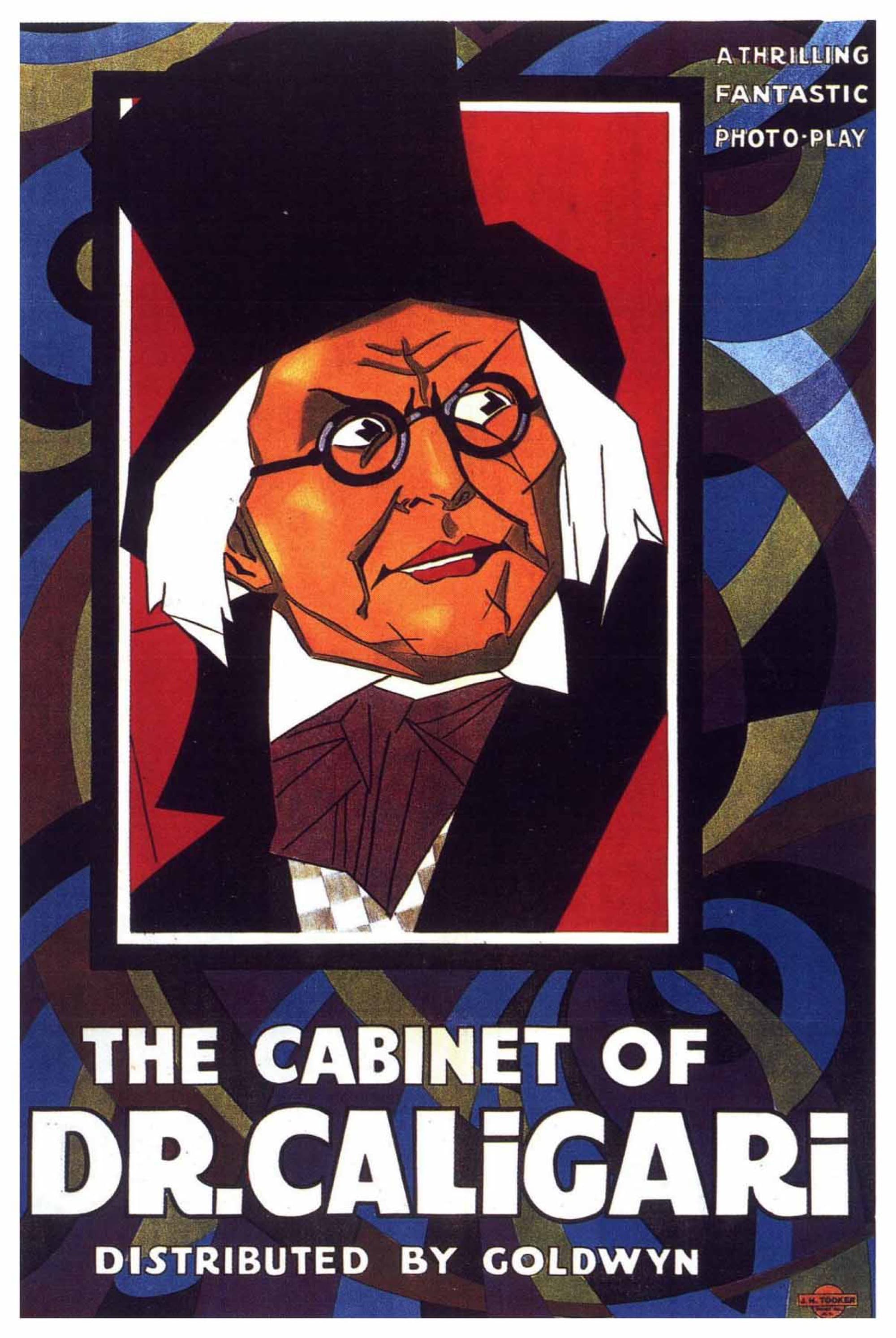
Everything in this film is wrong on purpose. The buildings lean at impossible angles. Windows are stretched into jagged daggers. Streets twist like something out of a nightmare, and the shadows are not real shadows at all; they are hard black shapes painted directly onto the walls, the floors, and the actors' faces. Nothing is level, nothing is natural, nothing can be trusted.
That is not a budget problem or a quirk of an old movie. It was a deliberate design, built inch by inch to make you feel you are looking at the inside of a disturbed mind. More than a century later, almost every creepy, crooked, shadow-drenched film you have ever seen owes something to this one.
What you're watching
A German silent film from 1920, and the founding monument of what is called German Expressionism in cinema. The story, told in flashback by a young man named Francis, concerns a sinister showman, Dr. Caligari, who travels the fairgrounds exhibiting Cesare, a pale, hollow-eyed sleepwalker he keeps in a coffin-like cabinet. Caligari wakes Cesare to perform, and a string of murders follows. Cesare, gaunt and black-clad, drifting through those painted sets, became one of the first great images of movie horror.
What makes it special
The sets do the acting. Before a single character speaks, the world itself tells you something is deeply off. By warping the architecture and painting the light and shadow onto the scenery, the filmmakers externalized madness, turning a state of mind into a place you could walk through. This is mise-en-scène as pure storytelling.
It invented the look of film horror. The heavy shadows, the sense of dread baked into the environment, the feeling that the world is conspiring against the hero: all of this flows out of Caligari and into film noir, into classic monster movies, and straight through to directors like Tim Burton, whose crooked, gothic visual style is practically a love letter to it.
It made the camera lie. The film treats its own images with suspicion. What you see is filtered through a narrator you cannot rely on, which means the spooky, distorted world may not be reality at all. That instability, the sense that the picture itself might be deceiving you, was a genuinely new idea.
The story behind it
Caligari came out of a defeated, unstable Germany just after the First World War, a country full of anxiety, and that unease seeps through every frame. Decades later, the critic Siegfried Kracauer famously argued, in a book titled From Caligari to Hitler, that films like this one revealed a national readiness to submit to tyranny, reading the hypnotist who controls a helpless sleepwalker as a dark premonition of the dictator and the obedient masses. Whether or not you accept that grand theory, the film's imagery of control, madness, and authority has never stopped feeling charged.
One detail most people miss
Stay for the ending, because it contains one of cinema's first great twists, and the fight behind it is part of film history. In the final minutes, the story turns inside out: Francis, the narrator, is revealed to be an inmate in an asylum, and "Caligari" is its kindly director. The whole terrifying tale may have been a madman's delusion. According to the screenwriters, this framing device was added against their wishes, softening a story they intended as a pointed attack on blind authority. Audiences have argued ever since about whether the twist deepens the film or defangs it.
How to watch
The Cabinet of Dr. Caligari is in the public domain and freely available, including restored versions in high definition; press play above to watch the whole thing. It is silent, so the experience changes a lot with the score, and it runs a little over an hour. Watch it in the dark, give your eyes a few minutes to accept a world with no straight lines, and notice how quickly painted shadows start to feel like real ones.