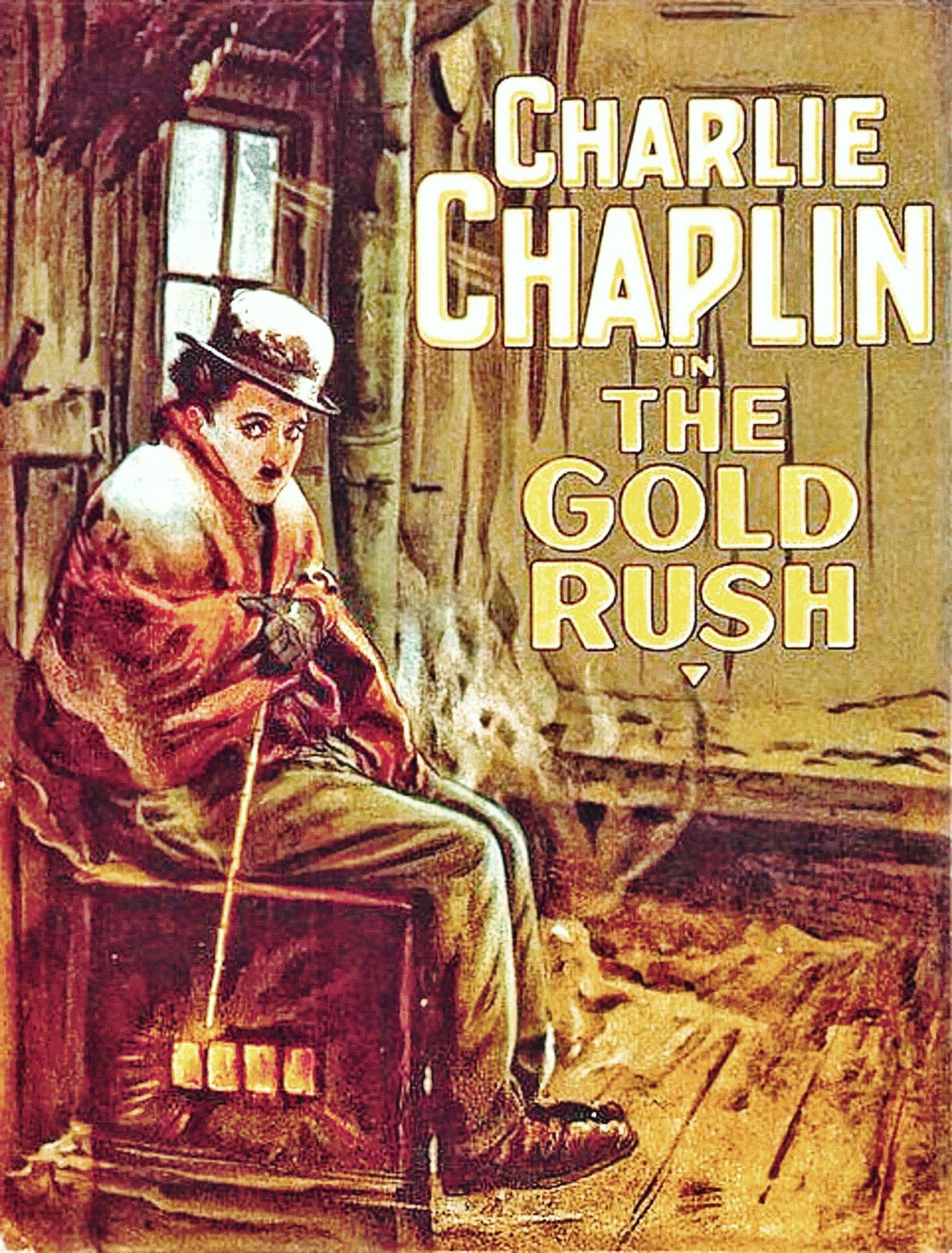
The most famous meal in movie history is a boot. Snowed into a cabin in Alaska, with nothing left to eat, the Little Tramp boils his own shoe, carves it like a Sunday roast, twirls the laces on his fork like spaghetti, and sucks the nails as if they were tender bones.
The scene is hilarious. It is also built on something grim. Chaplin found the idea in two real stories: photographs of the Klondike gold rush of the 1890s, where thousands of prospectors struggled over frozen mountain passes, and the tragedy of the Donner Party, American settlers trapped by snow in 1846 who ended up eating their shoes, and worse. In his autobiography Chaplin wrote that, paradoxically, tragedy stirs up the spirit of ridicule. This film proves it.
What you're watching
A silent comedy, released in 1925, about a lone prospector (Chaplin's Little Tramp, with bowler hat and cane) who heads to the Yukon to find gold. He survives a blizzard, shares a cabin with a huge, hungry miner called Big Jim (Mack Swain), falls hopelessly in love with a dance hall girl named Georgia (Georgia Hale), and ends up in a cabin teetering on the edge of a cliff. It runs about an hour and a half.
What makes it special
The jokes come from despair. Hunger, cold, greed, and rejection are the raw materials of every big scene. When Big Jim, delirious with hunger, starts to see the Tramp as a giant chicken and chases him with a gun, the laughter is real, but so is the fear underneath.
It contains the most quoted bit of business in silent film. In the dance of the rolls, the Tramp sticks two forks into two bread rolls and makes them perform a little dance on the table, like a pair of legs in shoes. It lasts less than a minute and has been copied, honored, and parodied ever since.
The physical comedy is engineering. The cabin sliding toward the cliff edge, tipping each time someone moves, is a carefully built set piece of balance and timing. Chaplin combined a full size tilting set with miniatures of the cabin and the cliff to get it right.
The story behind it
Chaplin wanted epic scale. In early 1924 he took his crew to the snow near Truckee, California, and hired hundreds of extras to recreate the famous line of prospectors climbing the Chilkoot Pass. In the end, most of the film was shot on elaborate sets in Hollywood, with tons of salt, flour, and plaster standing in for snow. The production cost close to a million dollars, a huge sum for the time.
The boot was made of licorice. The scene needed many takes, and the story goes that Chaplin and Mack Swain both ended up sick from eating so much of it.
Chaplin often said this was the film he most wanted to be remembered for. In 1942 he re-released it with music and his own spoken narration, and that version earned two Academy Award nominations.
One detail most people miss
Watch the ending carefully. When the Tramp, now rich, poses for newspaper photographers on a ship, he is asked to put his old ragged prospector's clothes back on. Success, the film suggests, is just another costume. In the 1925 original the final shot ends with a kiss, which spoils the photograph; in the 1942 version Chaplin cut the kiss.
How to watch
The original 1925 version of The Gold Rush is in the public domain in the United States, and you can press play above to watch the full silent film. If you only have five minutes, jump to the boot dinner and the dance of the rolls. The official Charlie Chaplin channel on YouTube also posts restored clips, and the Criterion Collection publishes both versions, the 1925 original and the 1942 narrated release, so you can compare them.