Some pieces of music feel like being spoken to, gently, by someone who means it. This is four minutes of that. A melody rises over a softly swaying left hand, pauses, breathes, and returns, each time wearing a few more ornaments, like a singer growing more confident with every verse. You have heard it in films, in cafés, in a hundred arrangements. It survives them all.
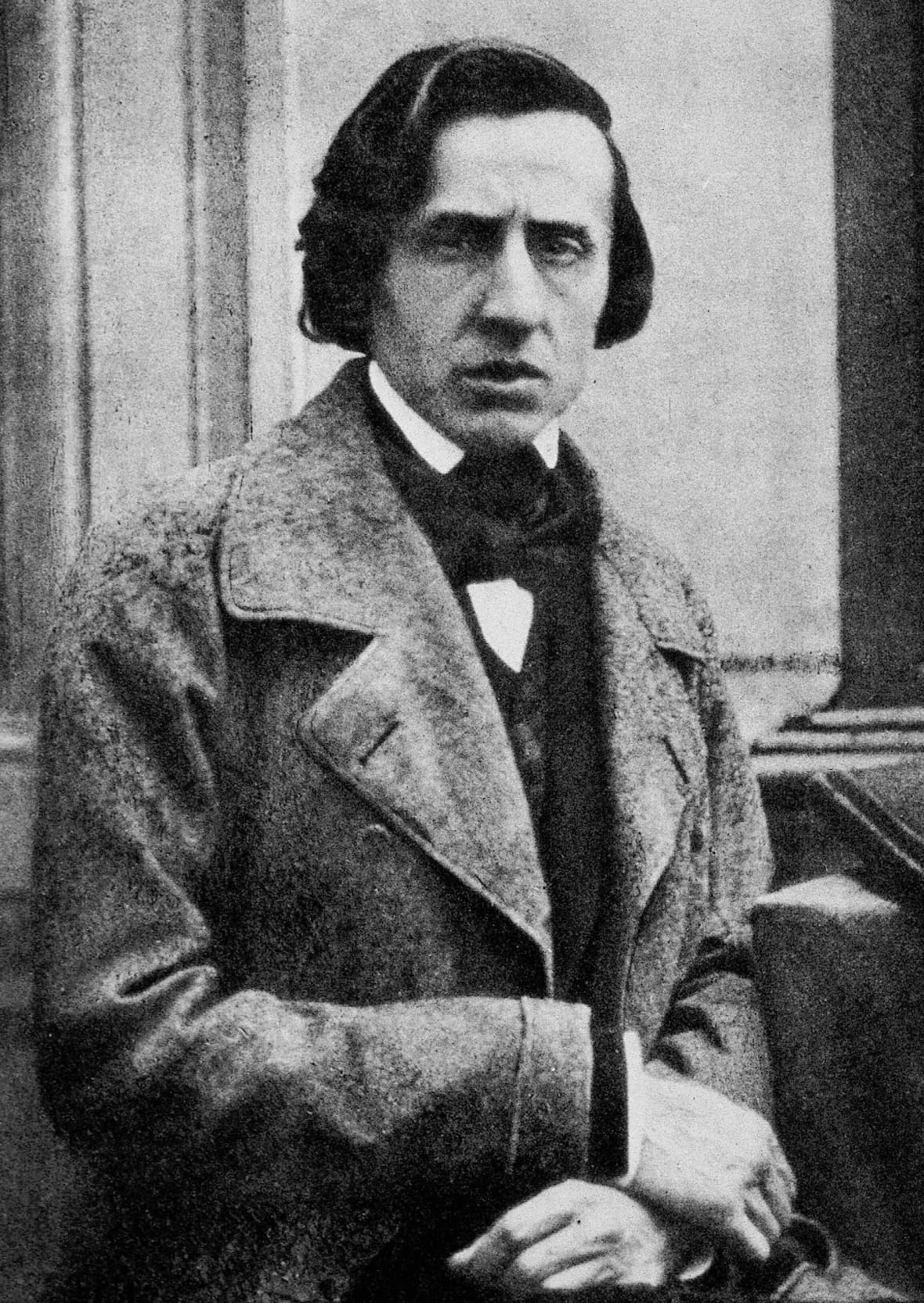
Frédéric Chopin wrote it around 1831, at about 21, newly arrived in Paris. He had left Warsaw just before an uprising against Russian rule was crushed; he would never see Poland again. The nocturne was published in 1832 in a set dedicated to one of his pupils, and it made his name in the salons of Paris almost immediately.
What you're listening to
The structure is a song without words. The right hand carries one long melody, returning three times; the left hand rocks steadily beneath, a slow twelve-beat sway that never breaks. Between returns come two contrasting episodes, and at the end a small cadenza, a brief unaccompanied flourish, like a singer holding the room for one last phrase before the final chords settle.
What makes it special
The melody is decorated, never replaced. Chopin's variation method here is jeweler's work: each return of the tune adds trills, turns, runs of small notes between the main ones, the way a great singer embellishes a repeated verse. The skeleton never changes; the skin grows richer. It teaches, in four minutes, the difference between ornament and substance, by keeping both in view at once.
It is vocal music smuggled onto a keyboard. Chopin worshipped opera singers, especially the Italian bel canto style, and told students to go hear singers if they wanted to learn phrasing. The piano cannot sustain or swell a note the way a voice can; Chopin fakes it, with ornaments, timing, and the pedal, so convincingly that the instrument seems to breathe. Every lyrical piano ballad since owes him the trick.
It is intimacy as a public art. Chopin disliked big concert halls and gave barely thirty public concerts in his life; his natural habitat was a drawing room with forty listeners and low light. The nocturne is that room, printed. Played in a stadium it still sounds like a confidence shared at close range, which may be why films reach for it whenever a scene needs privacy made audible.
The story behind it
Chopin's Paris life was glamour over grief: friendships with Liszt and Delacroix, a famous decade-long liaison with the novelist George Sand, fashionable pupils, chronic illness, and permanent homesickness for a Poland that no longer existed on any map. He kept a silver cup of Polish soil, brought from home, and asked that it be sprinkled on his coffin. He died of tuberculosis in 1849, at 39. At his request, his heart was carried back to Warsaw, where it rests, sealed in a pillar of a church, in a jar of what is believed to be cognac.
One detail most people miss
The tempo marking is Andante, walking pace, and the accompaniment is marked to stay quiet throughout, but Chopin's real signature hides in a single word found across his scores: rubato, stolen time. The left hand, he taught, should keep time like a clock while the right hand bends freely around it. Listen for the places where the melody arrives a heartbeat late, then catches up. That small human lateness is the entire style.
How to listen
The recording above is a remastered classic performance; for contrast, find Arthur Rubinstein's, unhurried and aristocratic, the reference for generations. Once while reading, once in the dark, and note the moment near the end when the music hesitates before the final phrase, like someone deciding whether to say the last thing. He says it.