In the autumn of 1929, two skyscrapers were racing for the title of tallest building on Earth, and one of them was cheating beautifully. At 40 Wall Street downtown, the Bank of Manhattan tower topped out at 283 meters - a couple of meters higher than the Chrysler Building's announced height - and its team celebrated victory. What they did not know: inside the Chrysler Building's unfinished crown, architect William Van Alen had been assembling a secret in five pieces - a 38-meter steel spire, hidden in the fire shaft.
In late October 1929, in roughly an hour and a half, the spire was hoisted through the roof and riveted into place. The Chrysler Building suddenly stood 319 meters tall, past its rival and - sweeter still - past the Eiffel Tower, making it the tallest structure humans had ever built. Van Alen later described the reveal like watching a butterfly emerge. His rival architect at 40 Wall Street, a former partner turned enemy, had lost to a magic trick.
What you're looking at
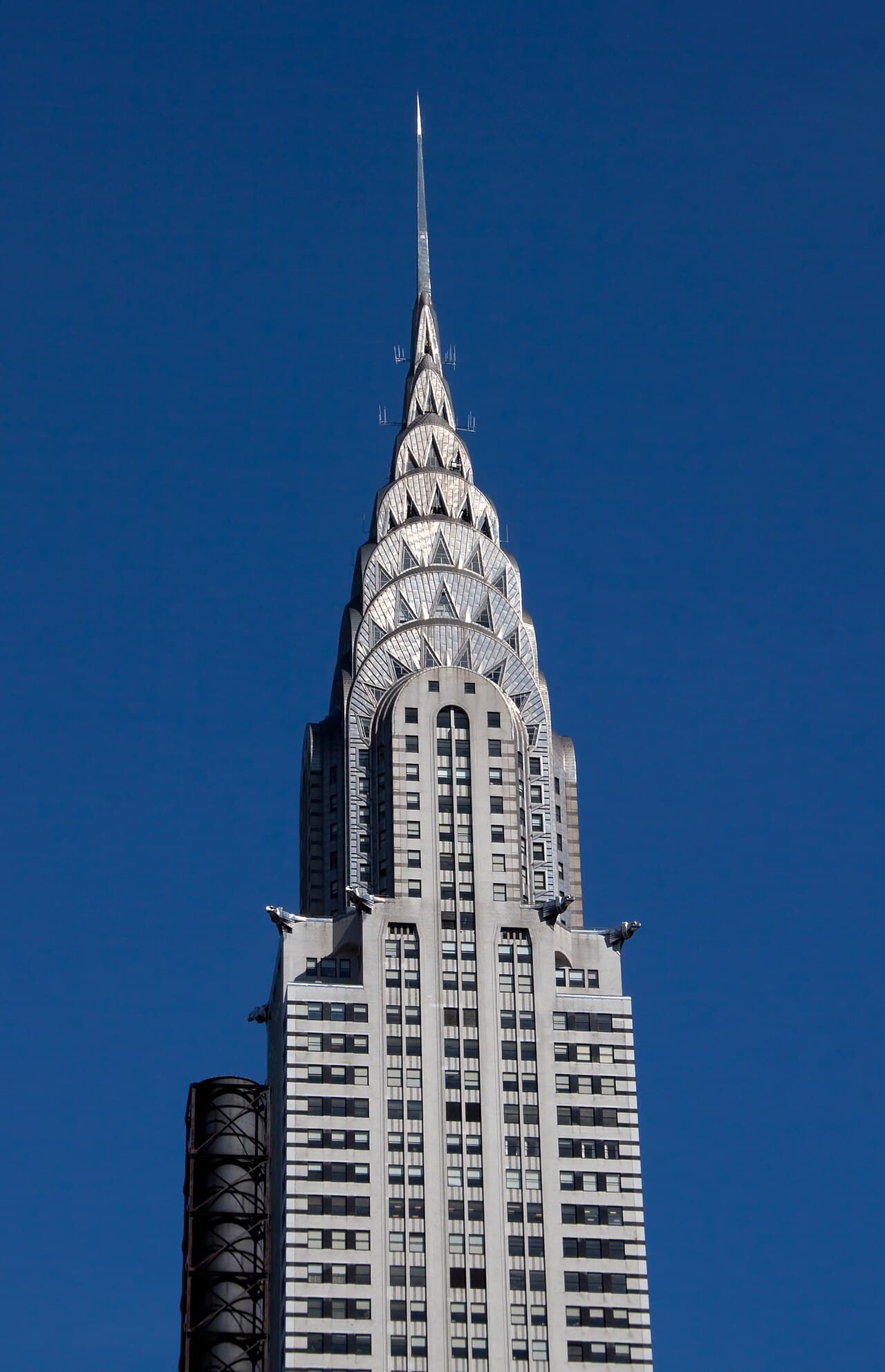
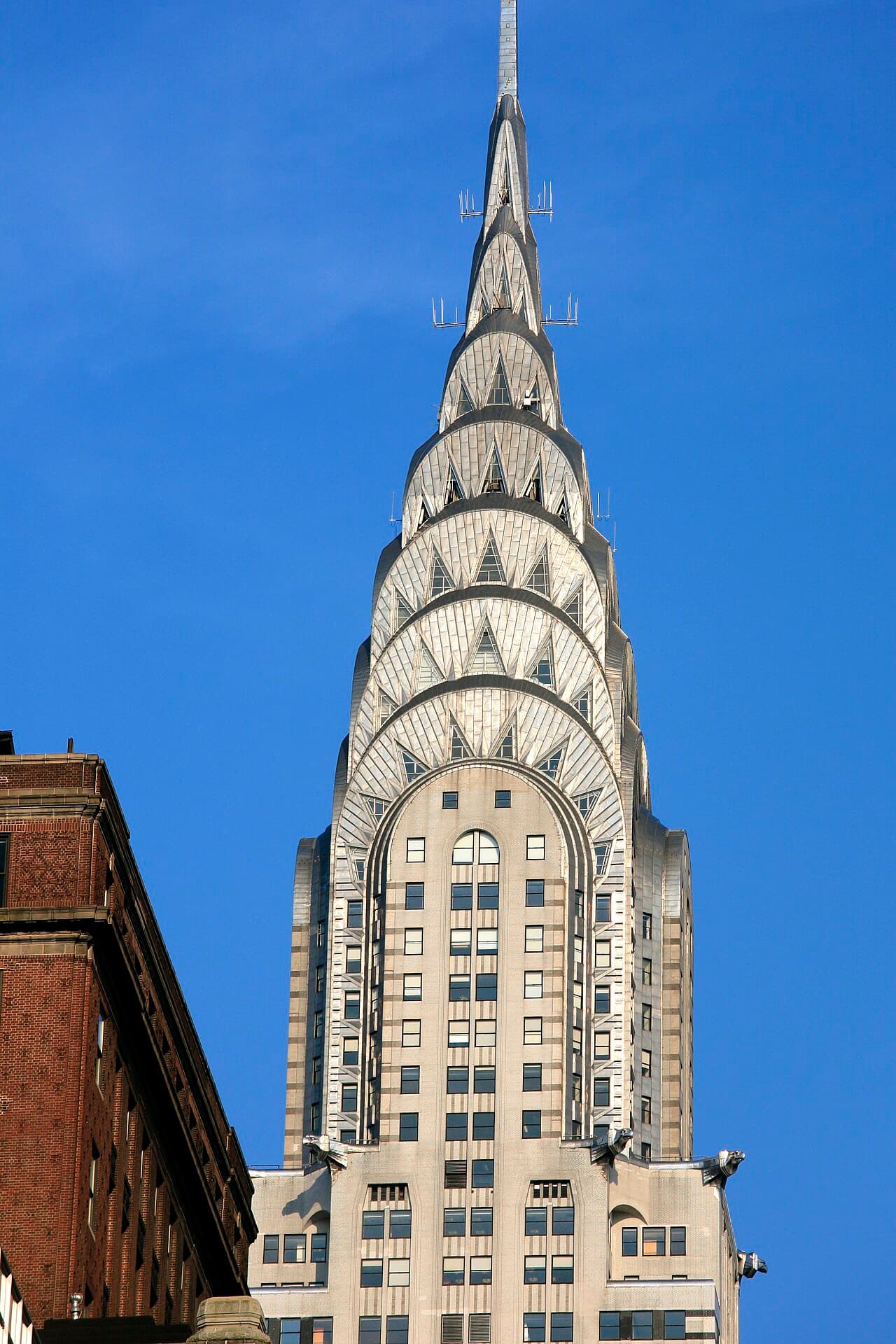
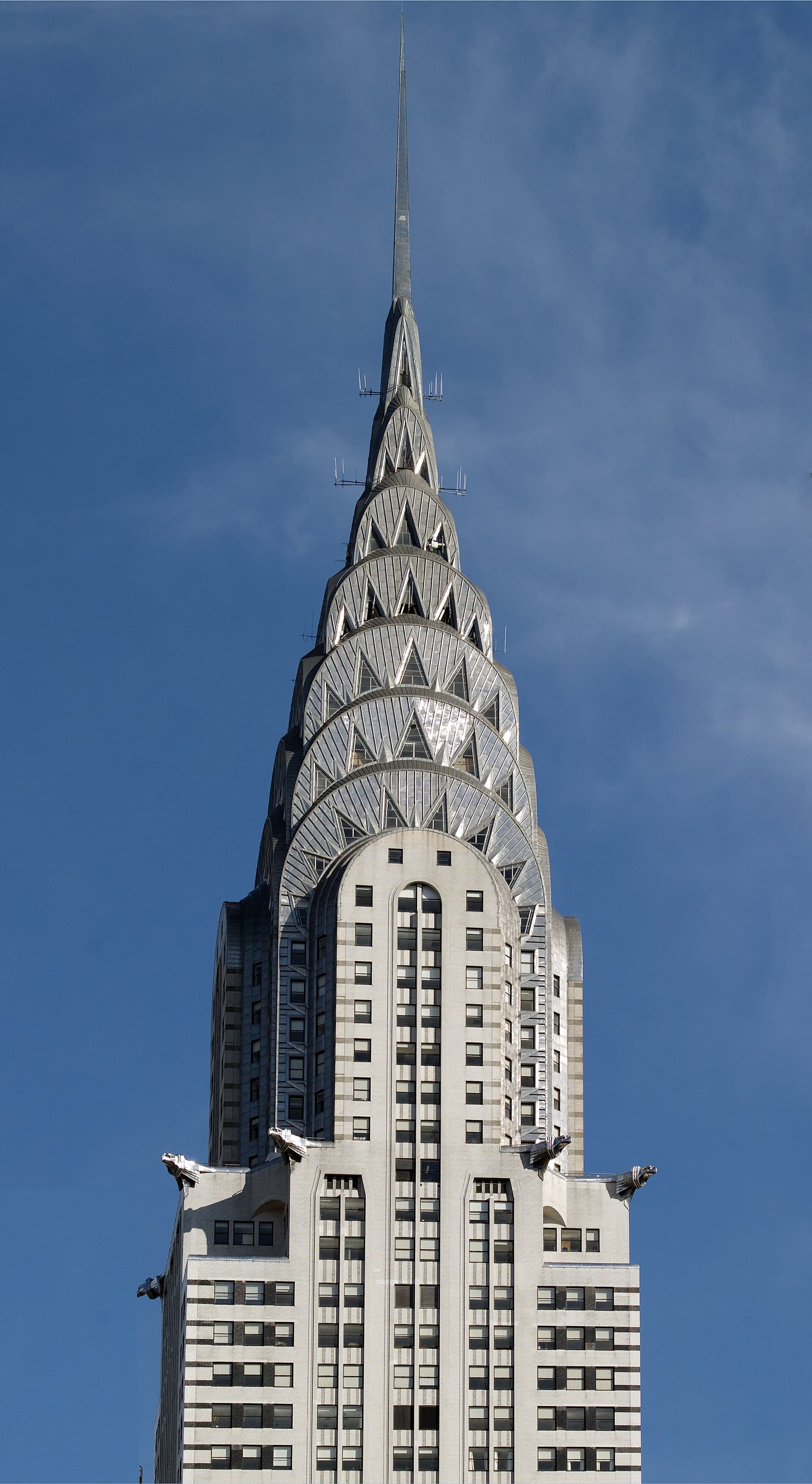
The crown, first: seven arches of gleaming Nirosta stainless steel stacked like a sunrise repeating itself, studded with triangular windows - lit at night, it is the most recognizable jewelry in the Manhattan skyline. Below it, the building wears its patron on its sleeve: the 61st-floor corners carry giant steel eagles modeled on Chrysler hood ornaments; a lower setback is ringed with enormous winged radiator caps and a brick frieze of stylized hubcaps. Walter Chrysler paid for the building personally, not through the corporation - and got a skyscraper that is essentially a 77-story automobile.
What makes it special
It won a race everyone was watching with a move no one saw. The spire gambit remains the most theatrical single moment in skyscraper history - a world record claimed not by out-building the rival but by out-thinking him.
It is Art Deco at maximum confidence. Most skyscrapers of the era dressed in Gothic stone respectability. The Chrysler chose chrome, sunbursts, and speed lines - a building shaped by the optimism of machines. The lobby doubles down: red Moroccan marble, a ceiling mural celebrating transportation, elevator doors inlaid with wood patterns like Egyptian fans. It is the 1920s distilled into a room.
The glory lasted eleven months, and it did not matter. In May 1931, the Empire State Building opened taller. Yet in poll after poll of architects and New Yorkers, the Chrysler - not its conqueror - is named the city's favorite skyscraper. Height is a number; the crown is an image. Images win.
The story behind it
The race had a human core of pure bitterness: Van Alen and H. Craig Severance, architect of 40 Wall Street, were former partners whose firm had dissolved in acrimony. Their buildings finished the argument. But there was no happy ending for the winner: Walter Chrysler, disputing fees, refused to pay Van Alen's full bill; the architect sued, won, and found himself professionally radioactive - the man who designed the world's tallest building barely built anything again, and the Depression buried the style he had perfected.
There is also the quiet heroism of the numbers: nearly 400,000 rivets, some 3.8 million bricks laid by hand, and floors rising at a pace of about four per week at the peak - with, remarkably for the era's races, no workers killed during construction, by contemporary accounts. And one detail history keeps for the top: Van Alen had the spire's pieces made in secret and the press was told nothing until the lift. The stunt was witnessed mostly by confused ironworkers and a few people who happened to look up.
One detail most people miss
The spire that won the race is hollow, and near the very top there is a tiny chamber with small windows - a space almost no one has entered, far above the last office floor. The record-setting meters of the world's tallest building of 1930 were, functionally, empty theater. Nobody minded then. Nobody minds now. Skylines are made of exactly this.
Where to see it
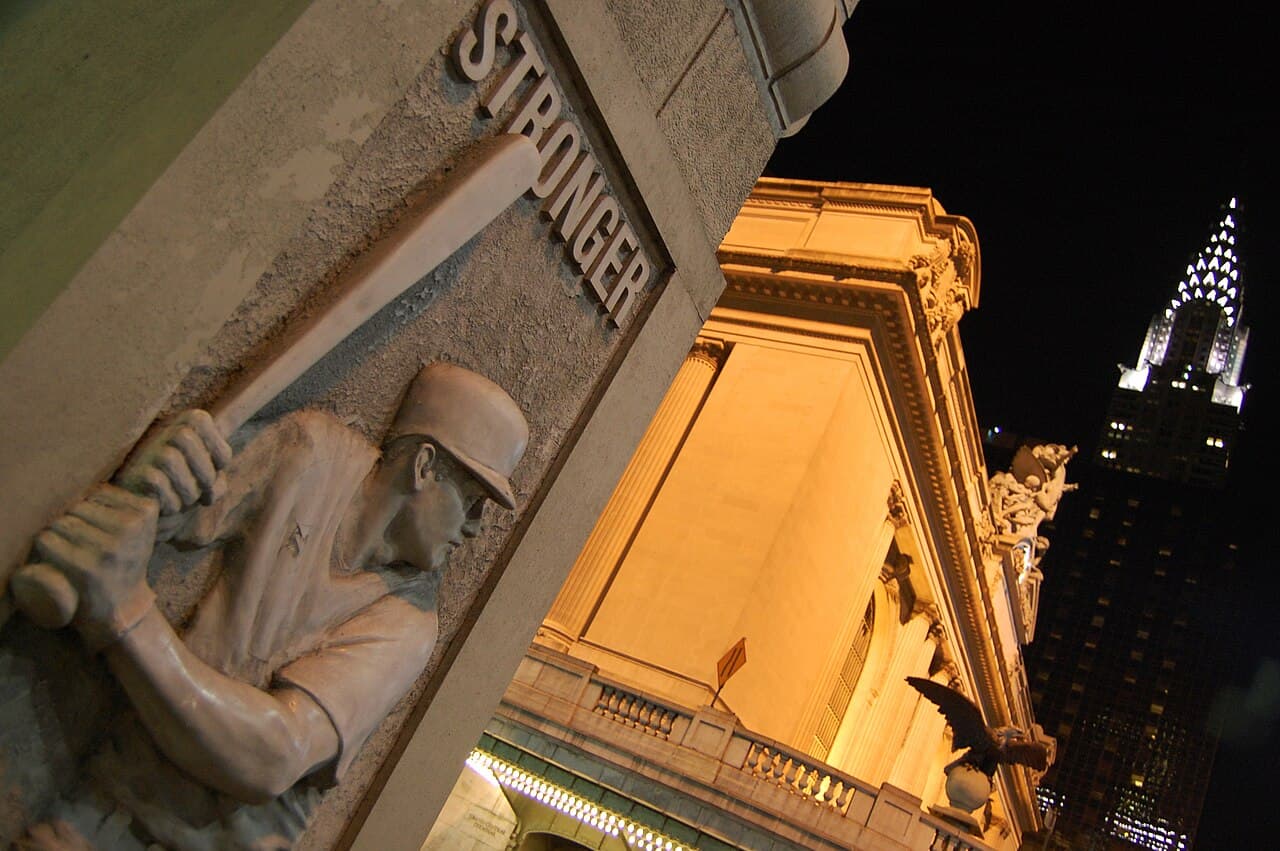
Lexington Avenue at 42nd Street, Manhattan. The building has no public observation deck - the classic viewing spots are from the Empire State Building (the rival returning the compliment) or the Rockefeller Center's Top of the Rock at dusk, when the crown lights up. And do not skip the free part: walk into the lobby during business hours, look up at the ceiling mural, and ride nothing - the elevator doors alone are worth the detour.