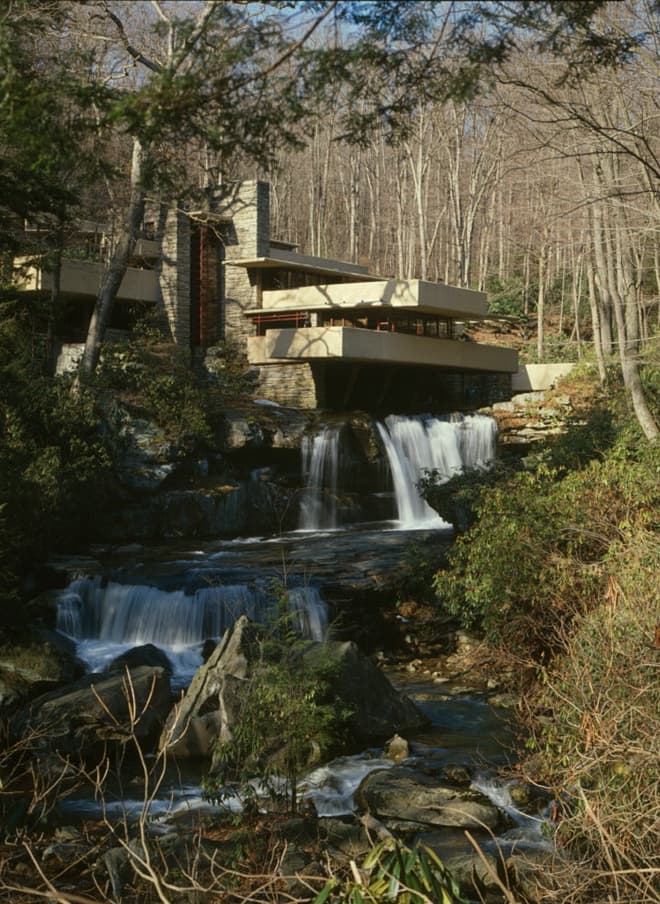
In 1934, a wealthy Pittsburgh family asked the architect Frank Lloyd Wright to design a weekend house in the Pennsylvania forest, on a plot with a small waterfall the family loved. They imagined a house with a nice view of the falls. Wright, then in his late sixties and considered by many to be past his prime, had a different idea. He would not build a house that looked at the waterfall. He would build the house directly on top of it, so that the family would live inside the sound of falling water and never actually see the falls at all. The result, Fallingwater, is regularly named the greatest work of American architecture ever built.
What you're looking at
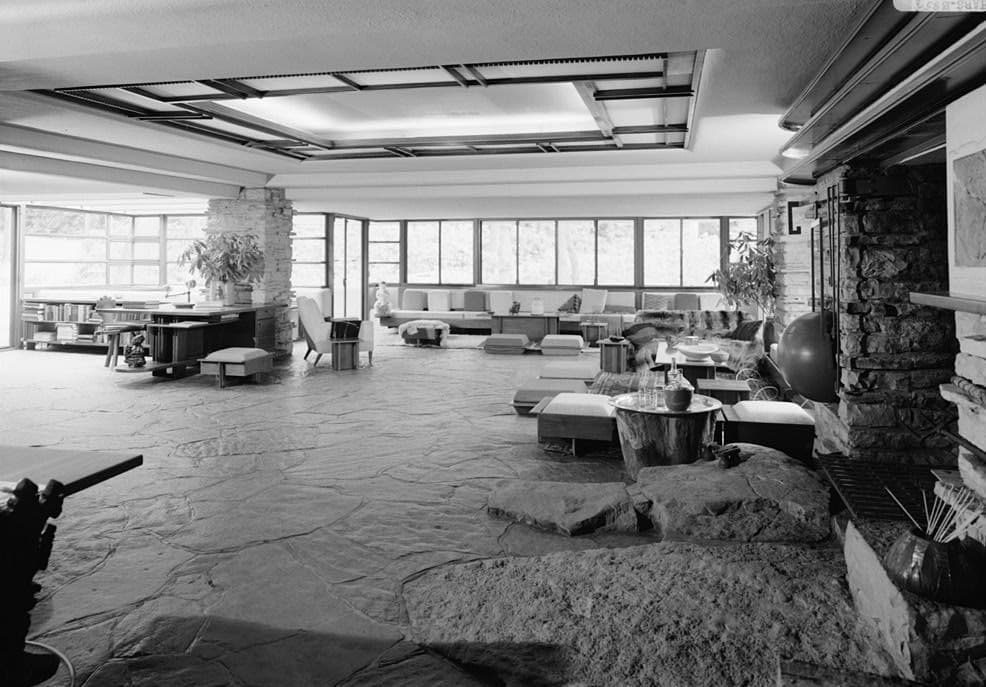
Fallingwater is a house that appears to grow out of a rock ledge and hover over a stream. Broad horizontal terraces of pale concrete cantilever out over the water, stacked and offset like a pile of floating trays, anchored back into the hillside and a core of local stone. The waterfall itself pours out from directly beneath the main terrace, so it is heard everywhere in the house and seen almost nowhere. Inside, the floors are the same rough stone as the cliff, and a boulder that was always there juts up through the living room floor to form the hearth, so the fireplace is a piece of the actual mountain. The house does not sit on the landscape. It is stitched into it.
What makes it special
It floats. The great cantilevered terraces reaching out over the falls are the whole magic of the building: heavy concrete that seems weightless, thrust out into space over rushing water. It is architecture as a held breath.
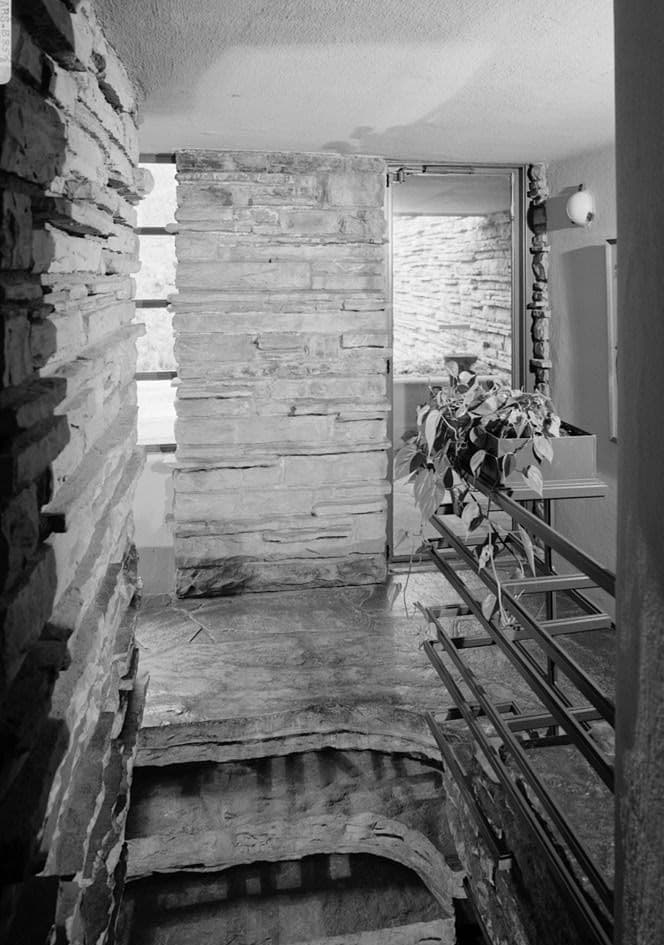
It blurs inside and outside. Wright called his philosophy organic architecture, buildings in harmony with nature rather than imposed on it. At Fallingwater the boundary nearly dissolves: the stream runs under the house, stairs descend from the living room straight down to the water, the stone of the cliff becomes the stone of the floor, and glass corners open so completely that you cannot always tell where the forest ends and the room begins.
It answered a better question. The clients asked for a view. Wright understood that a view is something you eventually stop noticing, framed and static behind glass. By putting them on top of the falls instead, he made the waterfall a permanent presence, felt and heard every hour of every day, part of the house's body. He refused the request and gave them something far greater than what they had asked for.
The story behind it
The most famous story about Fallingwater is about how fast it was born. According to Wright's apprentices, months passed after the commission with Wright drawing nothing at all, insisting he had it all in his head. Then one morning the client, Edgar Kaufmann, telephoned to say he was driving over, about two hours away, to finally see the plans. Wright calmly sat down and, in the roughly two hours before Kaufmann arrived, drew the entire house, plans, elevations, and sections, talking cheerfully the whole time. Whether the legend is exactly true, the drawings do survive, and the confidence is real.
The daring came at a cost. Those beautiful cantilevers worried everyone but Wright. The client's own engineers thought they would fail, and quietly added extra steel against Wright's wishes; Wright was furious when he found out. And they were partly right: over the decades the terraces sagged, drooping measurably under their own weight, until a major structural rescue in 2002 finally arrested the movement with hidden steel cables. The house that looks like it is about to fall really was, slowly, for sixty years. It was saved because too many people loved it to let physics win.
One detail most people miss
Stand where the family would sit in the living room and look for the waterfall. You cannot see it. This is Wright's boldest and least obvious decision. Every instinct says a house built on a famous waterfall should show it off through a giant window. Wright hid it. He knew that a thing constantly on display becomes invisible, and that a thing you can hear but not see stays alive in the mind. So the waterfall at Fallingwater is never a picture on the wall. It is a sound under your feet, and you have to walk down a suspended staircase, through a hatch in the floor, to meet it. The greatest view in the house is the one Wright refused to let you have.
Where to see it
Fallingwater is in the woods at Bear Run, in southwestern Pennsylvania, about ninety minutes from Pittsburgh, and it is open to the public as a museum. Book ahead; tours are timed and limited to protect the house. Go when you can hear the stream running high, and understand what the photographs cannot give you: the constant, quiet roar of water beneath a building that has spent nearly a century pretending to float.