When Emperor Justinian walked into his finished church on December 27, 537, the story goes that he looked up into the largest enclosed space on Earth and said: "Solomon, I have outdone thee." Whether he actually said it, the boast was accurate. Nothing approaching this building existed anywhere, and nothing would surpass its dome for almost a millennium.
Here is the detail that should be impossible: it took five years and ten months to build. Medieval cathedrals routinely took a century or two. The greatest building of late antiquity went up faster than most modern airports.
What you're looking at
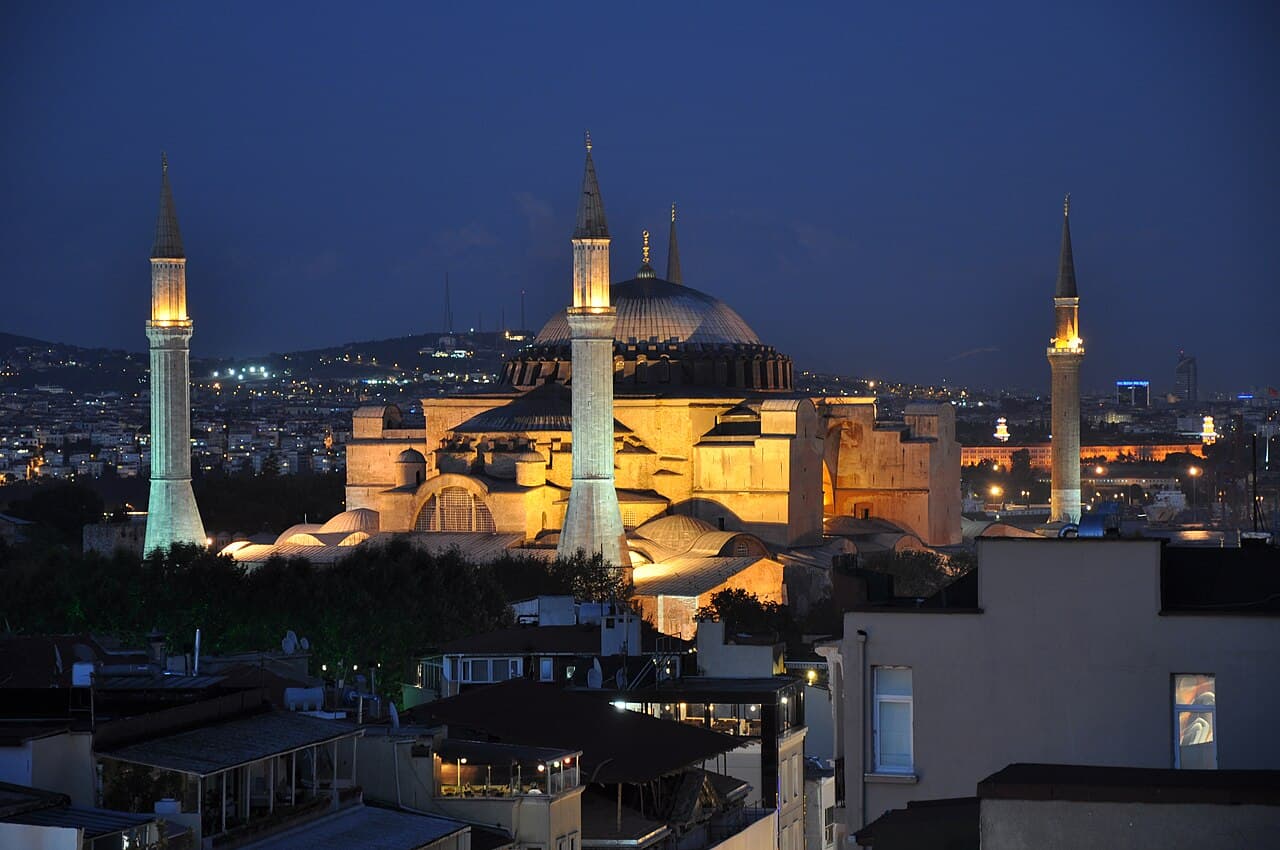
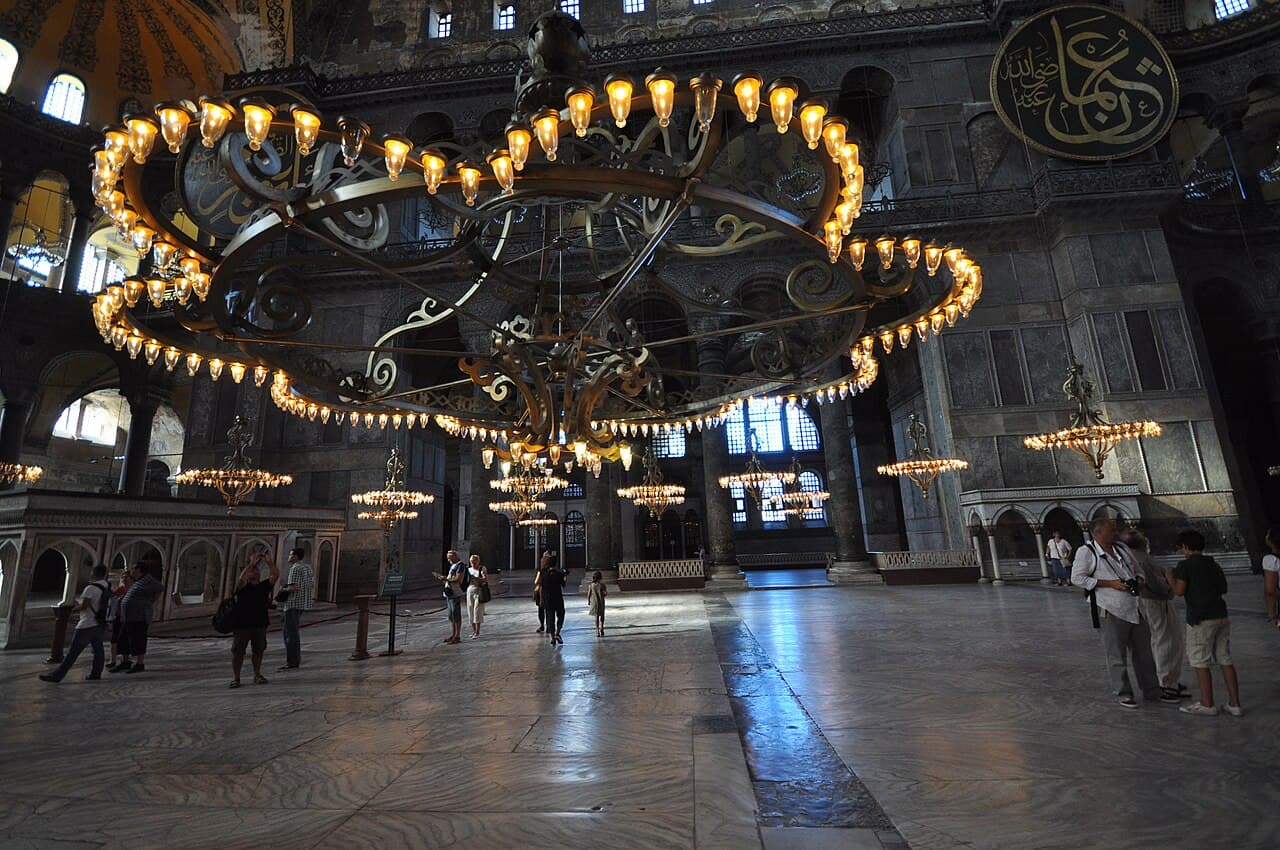
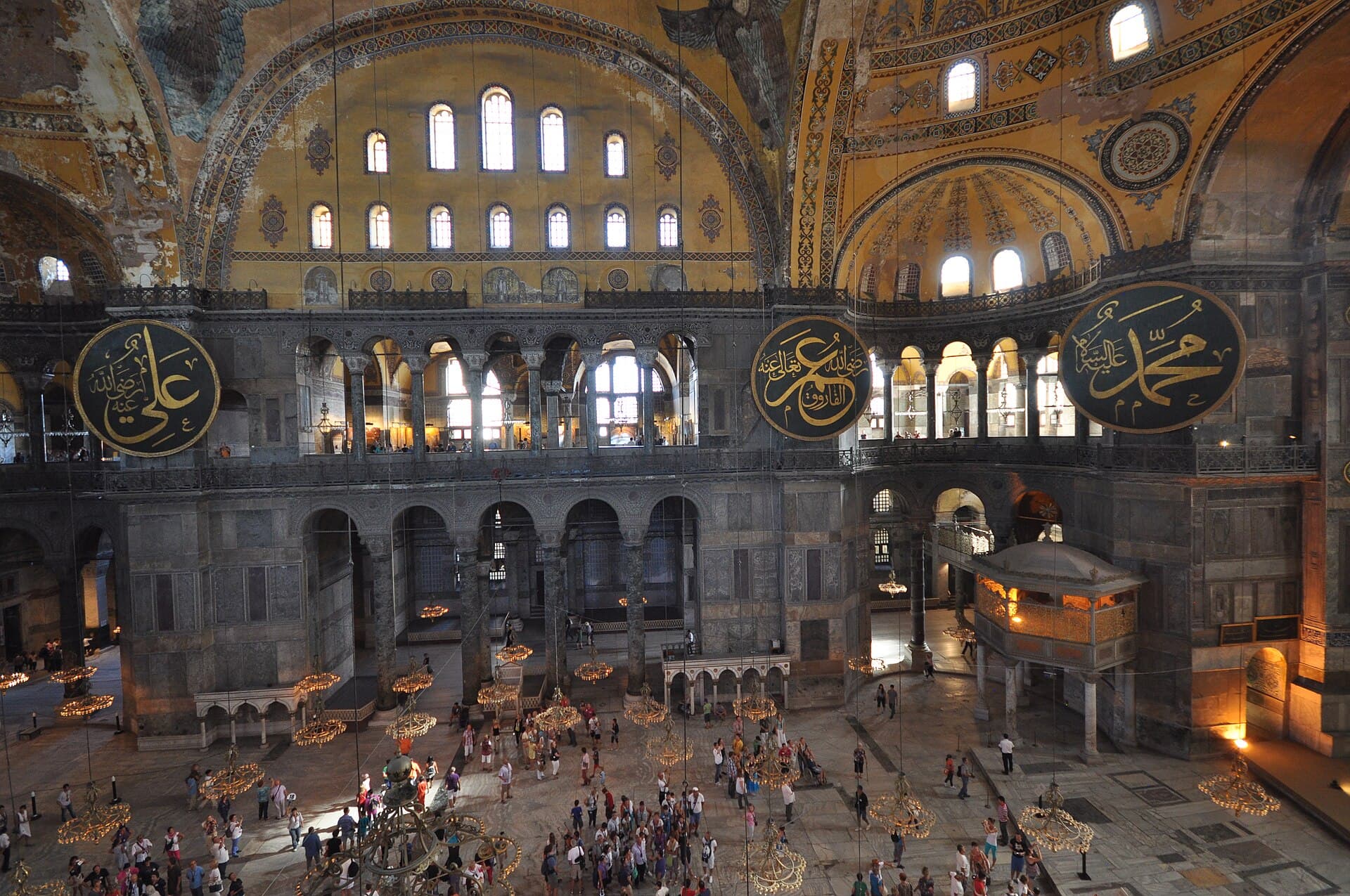
A vast square hall in the middle of Istanbul, crowned by a dome about 31 meters across that floats 55 meters above the floor - roughly a 15-story building of empty air. A ring of forty windows circles the dome's base, so sunlight pours in around its rim and the massive cap appears to hover with no visible support. A court historian of the time wrote that it seemed suspended from heaven by a golden chain. The trick underneath is the pendentive: four great curved triangles that quietly carry millions of kilograms down into the piers, while your eye is busy believing in miracles.
What makes it special
It was designed by mathematicians, not builders. Justinian handed the project to Anthemius of Tralles, a geometer, and Isidore of Miletus, a physicist and editor of Archimedes. They had never built anything of this scale. They treated the dome as a geometry problem, took engineering risks no experienced architect would have signed off on - and mostly got away with it.
It kept the world record for 900+ years. No wider dome was raised until Brunelleschi's in Florence in the 15th century. For comparison: when Hagia Sophia was finished, the prophet Muhammad had not yet been born; when its dome was finally surpassed, Columbus was a child.
It converted twice and survived both times. Church for 916 years, then, after the Ottoman conquest of 1453, a mosque for nearly five centuries - minarets added, mosaics respectfully plastered over rather than destroyed. Secularized into a museum in 1934, it became a mosque again in 2020. The building has outlived two empires and served three regimes of belief with the same silent competence.
The story behind it
The dome you see is not the original. The first, shallower dome cracked in earthquakes and collapsed in 558, twenty-one years after completion. The repair went to Isidore the Younger, nephew of the original designer, who made a decision that saved the building: he rebuilt the dome about six meters taller. The steeper curve pushed the forces more downward than outward, and his version - patched and ribbed over the centuries - has now stood for more than 1,400 years, through a seismic zone's full repertoire.
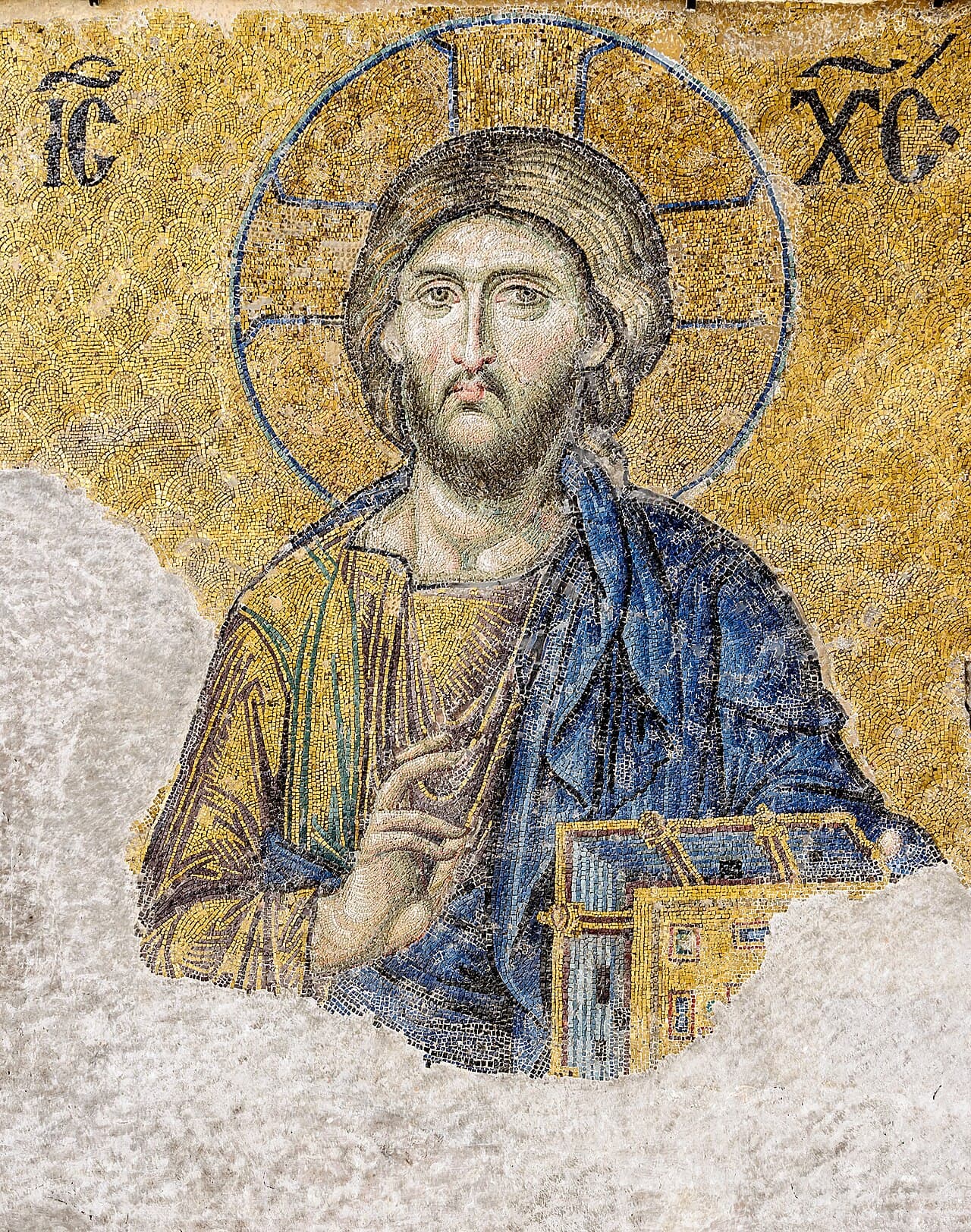
The plastered mosaics had their own resurrection. In the 1840s, the Swiss Fossati brothers, restoring the building for the sultan, uncovered glittering Byzantine figures under the whitewash, documented them, and covered them again. In the 1930s, restorers began the slow unveiling: emperors, empresses, and a Christ whose eyes follow you, emerging from beneath centuries of paint like photographs developing. Today, Christian mosaics and giant Islamic calligraphy panels share the same walls - accidental coexistence that no committee would have dared to design.
One detail most people miss
In the marble parapet of the south gallery, someone in the 9th century scratched a short runic inscription. Scholars can read one word with confidence: a name, Halfdan. He was almost certainly a Viking - one of the Norse mercenaries who served as the emperor's elite guard - and his message, reconstructed from similar finds, amounts to "Halfdan carved these runes." A bored bodyguard defaced the greatest building on Earth during a long ceremony, and became immortal. Tourists now queue to photograph medieval graffiti.
Where to see it
Istanbul, in the old city, facing the Blue Mosque across a park - a staring contest between two domed giants a thousand years apart. It operates as a working mosque: entry is free, shoulders and knees covered, visits outside prayer times. Go early, stand under the center of the dome, and look up for one full minute. Fifteen centuries of engineers are holding that ceiling for you.