In June 1631, Mumtaz Mahal, the favorite wife of the Mughal emperor Shah Jahan, died giving birth to their fourteenth child. She was 38, and had spent nineteen years beside him, including on military campaigns; she died in a war camp, far from the capital. Court chroniclers recorded that the emperor's beard went visibly gray in the months that followed, and that he withdrew from music and festivities for two years.
His answer to the loss was a construction site: some 20,000 workers, a thousand elephants hauling marble from Rajasthan, gem-cutters from as far as Central Asia, and about 22 years of work. The result is the most famous tomb on Earth - a building so serene that most visitors have to be reminded what it is: a grave.
What you're looking at
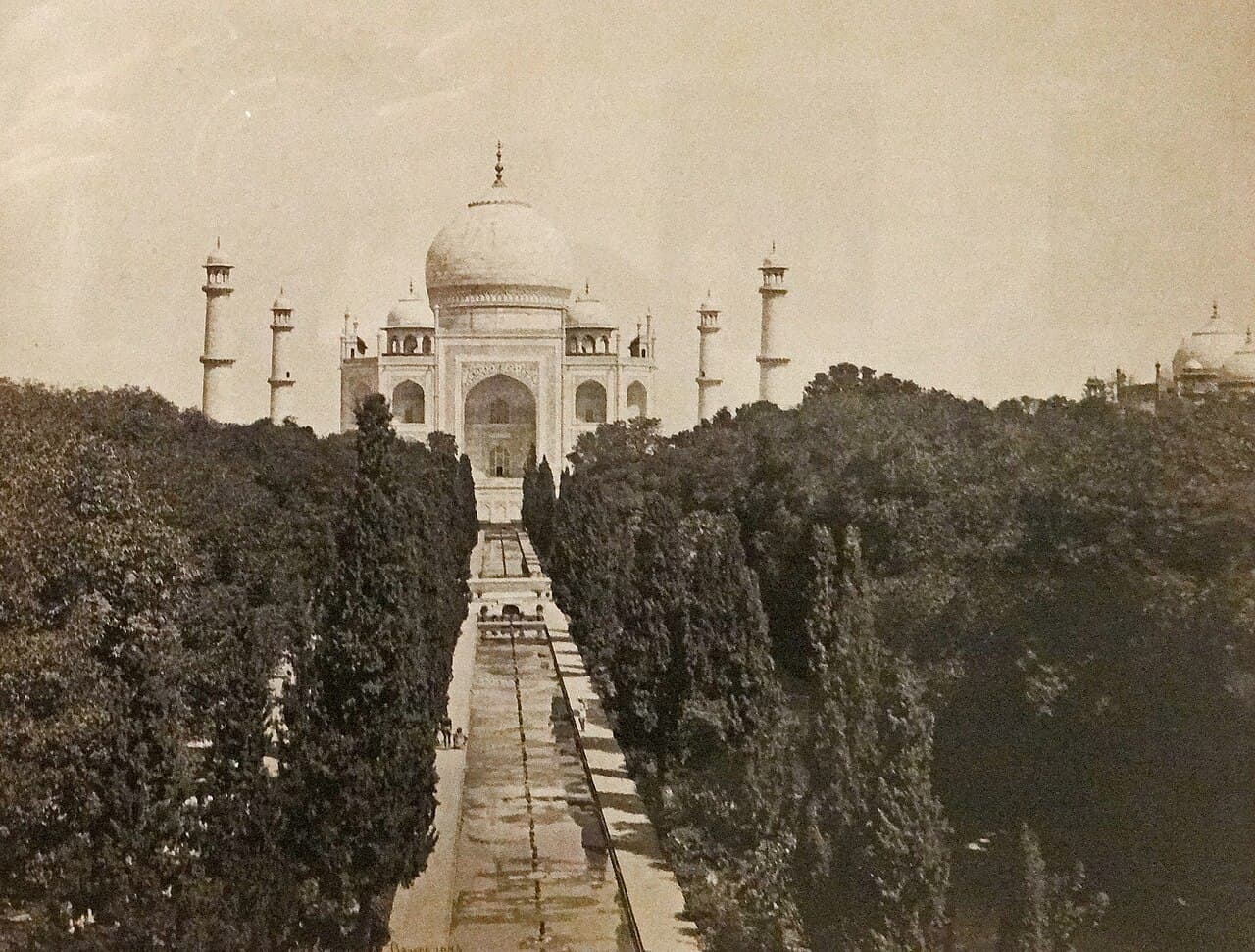
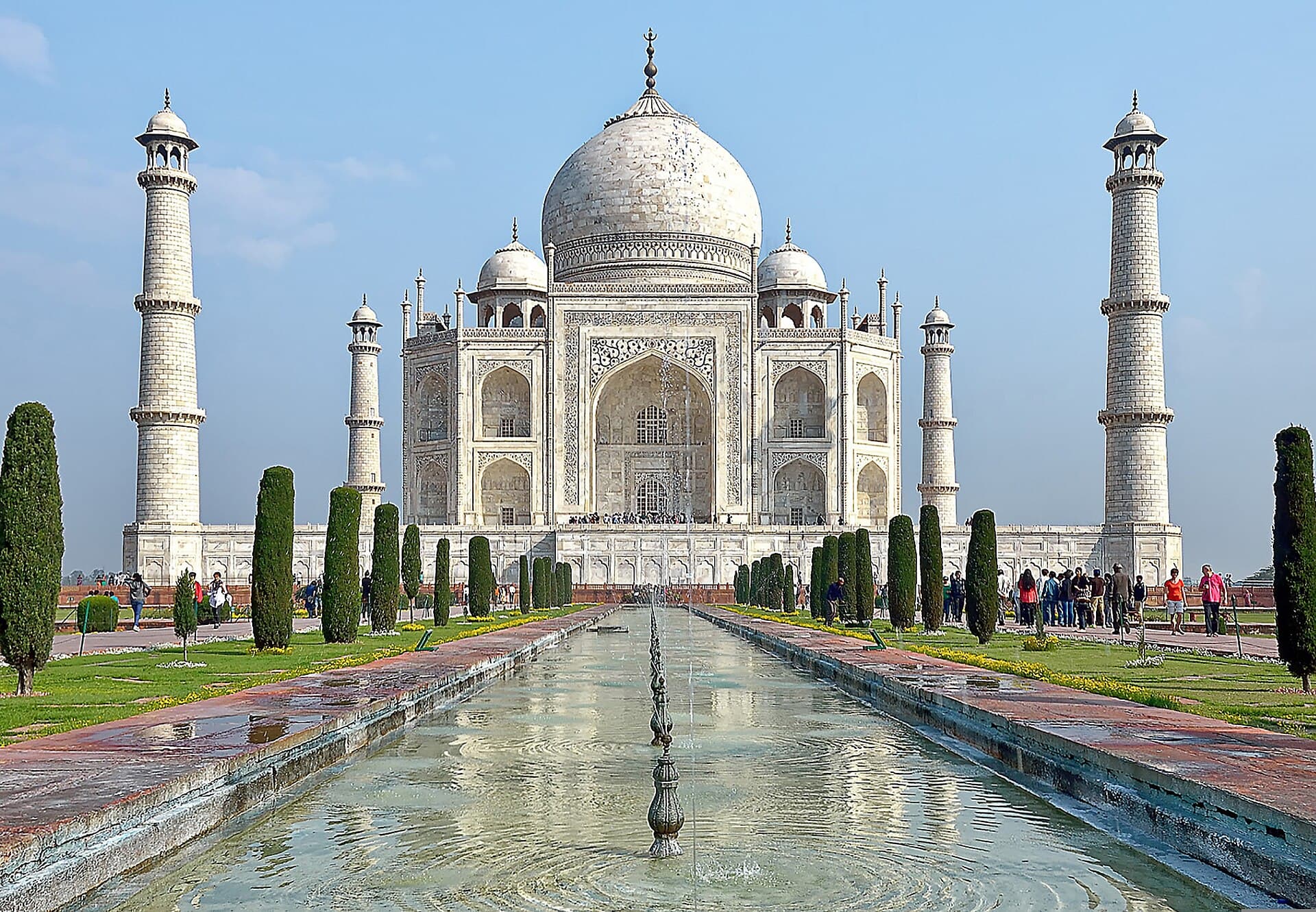
A white marble mausoleum on the bank of the Yamuna river in Agra, finished around 1648, with the surrounding complex completed a few years later. The design - credited to the court architect Ustad Ahmad Lahauri - is an essay in symmetry: a perfect square garden split in four by water channels, the tomb centered on the river end, four minarets framing the dome like a setting frames a stone. The marble is the star: it shifts color with the light - rosy at dawn, blinding white at noon, amber at sunset - because it is slightly translucent, and the building's whole day is a slow light show.
What makes it special
The symmetry is fanatical - with one exception. Every element mirrors across the central axis; even the mosque on one side has a twin on the other built purely for balance, facing the wrong way for prayer. The single asymmetric thing in the entire complex is Shah Jahan's own cenotaph, squeezed in beside Mumtaz's larger, centered one. The emperor who built perfection lies in it as the anomaly.
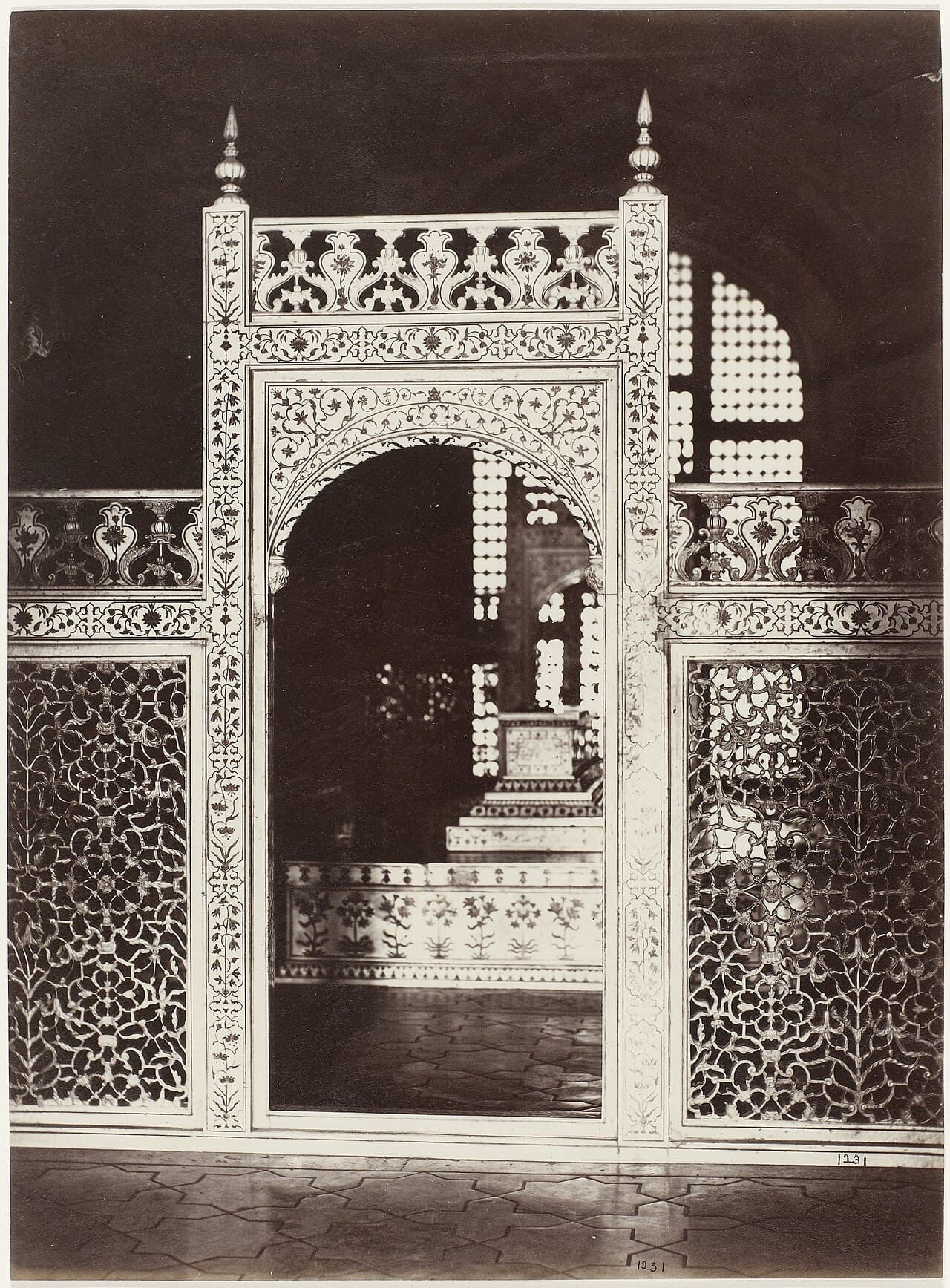
The decoration is jewelry at building scale. The pietra dura flowers, the carved marble screens like lace, the Quranic calligraphy that grows subtly larger with height so it reads evenly from the ground - every trade involved was pushed to its historical maximum. The English word "priceless" gets thrown around; here the accounts survive: the project consumed roughly the annual revenue of several provinces.
The minarets lean outward on purpose. All four tilt a few degrees away from the tomb - insurance. In an earthquake, they would fall away from the dome, not onto it. Seventeenth-century seismic engineering, disguised as elegance.
The story behind it
The ending has a cruel symmetry of its own. In 1658, Shah Jahan fell ill, and his sons fought a war over the succession. The winner, Aurangzeb, executed his brothers and locked his father in Agra Fort - upriver from the Taj. Shah Jahan spent his last eight years as a prisoner in gilded rooms, reportedly gazing down the river at the tomb he had built. When he died in 1666, Aurangzeb buried him beside Mumtaz - creating, with that off-center coffin, the only flaw in the symmetry. Historians debate whether it was a son's economy or a son's spite. The building keeps the question open.
The centuries that followed were not kind: by the 1800s the gardens were overgrown and stones had been picked from the walls. The British administration under Lord Curzon ran a major restoration around 1900 - one of colonial India's few unambiguous gifts - and the 20th century brought new enemies: air pollution yellowing the marble, which is why cars are banned near the site and the building periodically gets a clay-mask facial, the same mudpack treatment used on skin.
One detail most people miss
The calligraphy around the great entrance arch includes a line addressed directly to the dead: verses about the soul at rest, returning to God. But look at the inscription over the garden gateway as you enter: it ends with an invitation - enter thou My Paradise. The garden, in the Mughal mind, was not landscaping. The four water channels are the four rivers of Paradise from the Quran; walking to the tomb, you are walking through a diagram of heaven, and the building at the end is the throne.
Where to see it
Agra, about three hours from Delhi by train. Go at sunrise - gates open before dawn - both for the light and because by mid-morning the crowds average 20,000+ a day. Friday it is closed to tourists. And spend one minute at the exact center of the garden, where the water channels cross: that point is where the architecture assembles itself into the postcard, and where, four hundred years ago, an emperor intended you to stand.