On the evening of April 15, 2019, the world watched Notre-Dame burn. The wooden roof blazed, and the tall spire swayed, buckled, and crashed down through the ceiling in a shower of fire, live on television, as a stunned crowd sang in the streets below. It looked, for a few hours, like the end of an 800-year-old masterpiece.
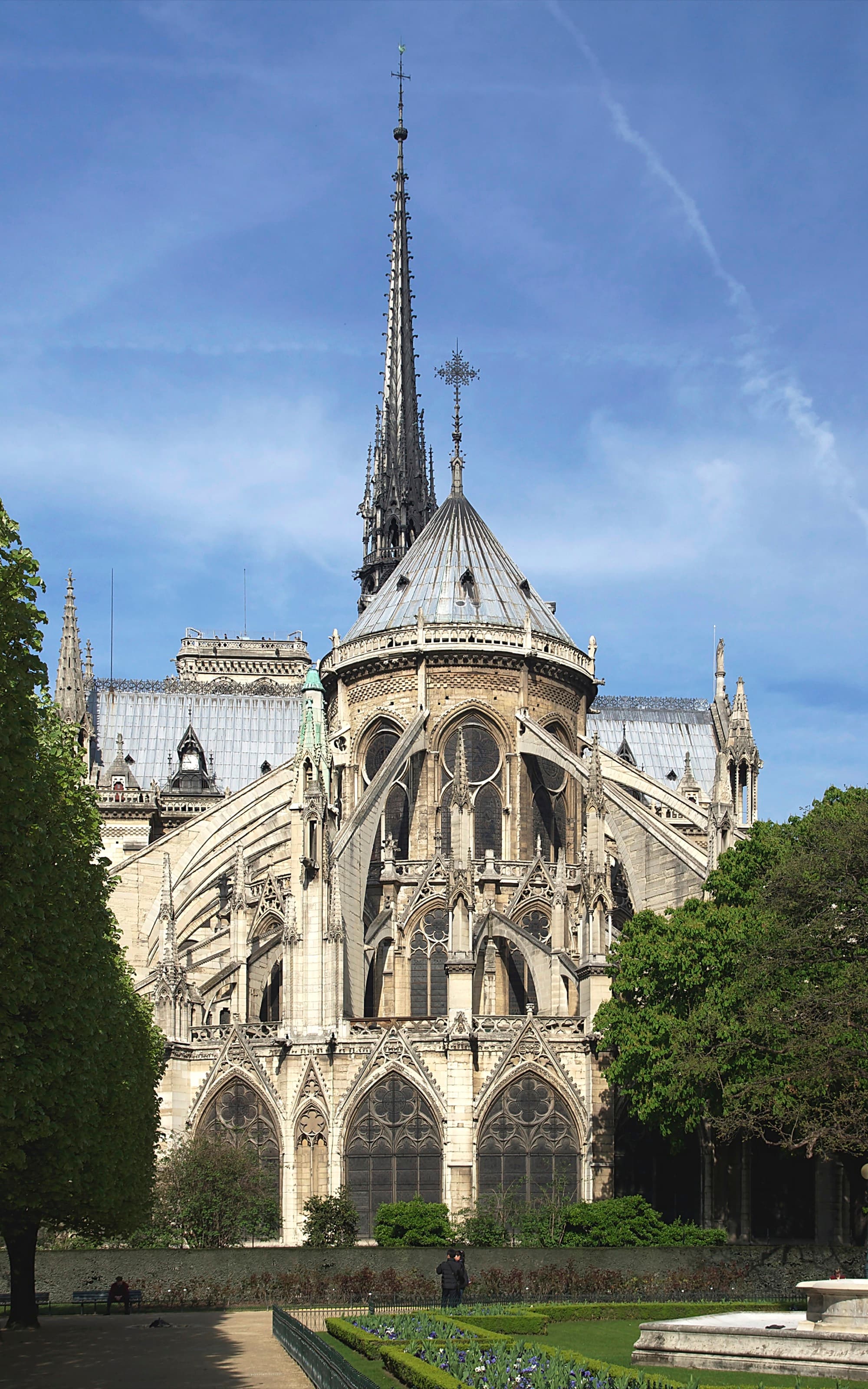
It was not. And the reason the whole cathedral did not collapse into the Seine is written into its very design. Centuries earlier, its builders had braced the enormous stone vaults of the ceiling with a ring of external arches, flying buttresses, that spread the weight outward and down. When the roof above burned away, those stone vaults, held in that web of support, mostly held firm, shielding the interior and keeping the great towers standing.
What you're looking at
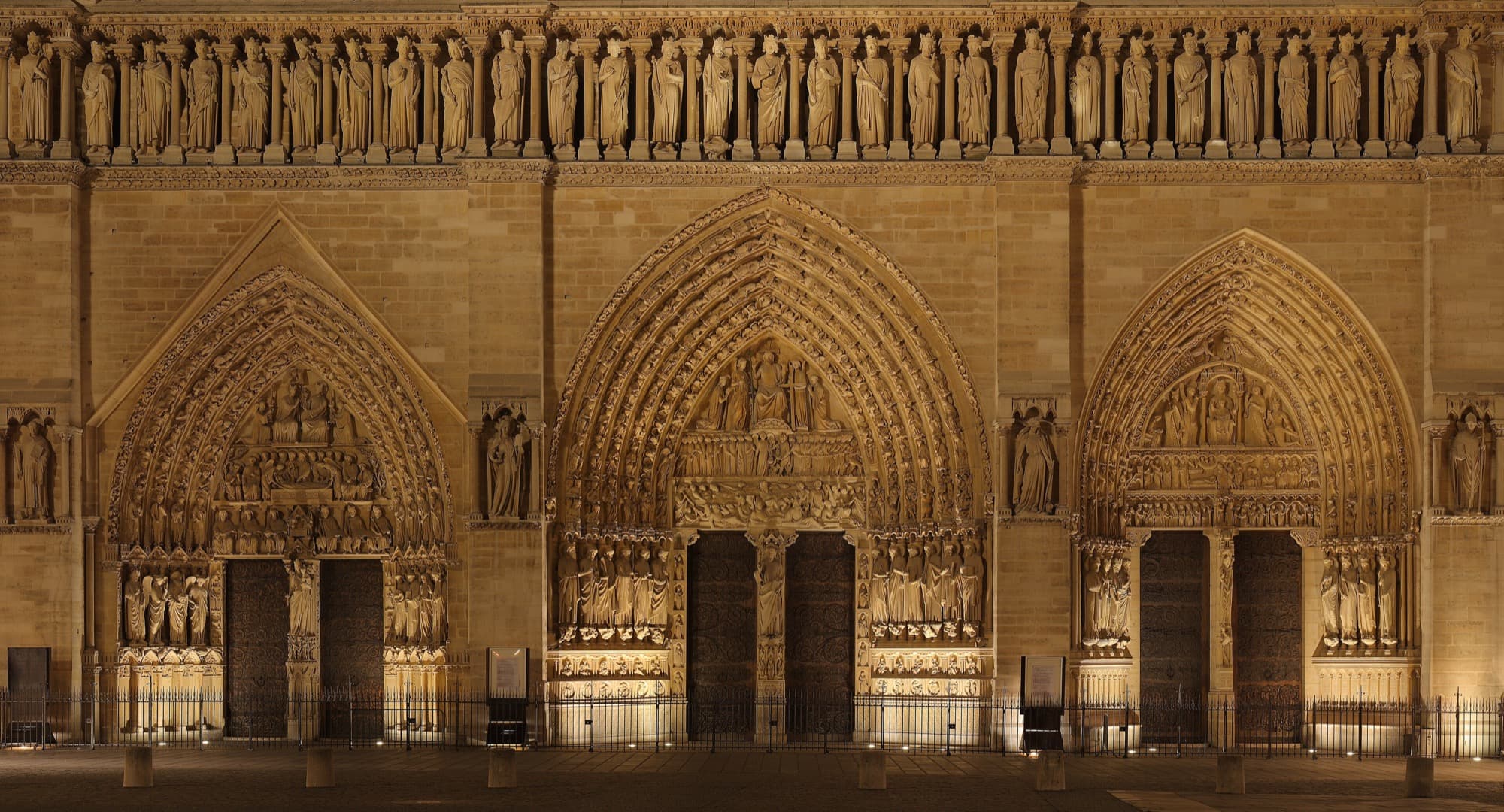
A Gothic cathedral on an island in the river Seine in the heart of Paris, begun in 1163 and worked on for nearly two centuries. Its west front is a balanced composition of two square towers, a huge central rose window, and three deep carved doorways crowded with sculpted figures. Inside, stone columns rise into pointed arches and ribbed vaults, and sunlight pours through walls of stained glass. It is one of the most celebrated examples of French Gothic architecture, and for centuries it has stood at the symbolic center of France.
What makes it special
It is held up from the outside. The flying buttresses are the key. By catching the outward thrust of the high vaults on external arches, the builders freed the walls from having to be thick and solid. That is what let Gothic cathedrals soar so high and open up so much of their walls to glass, trading heavy gloom for height and colored light.
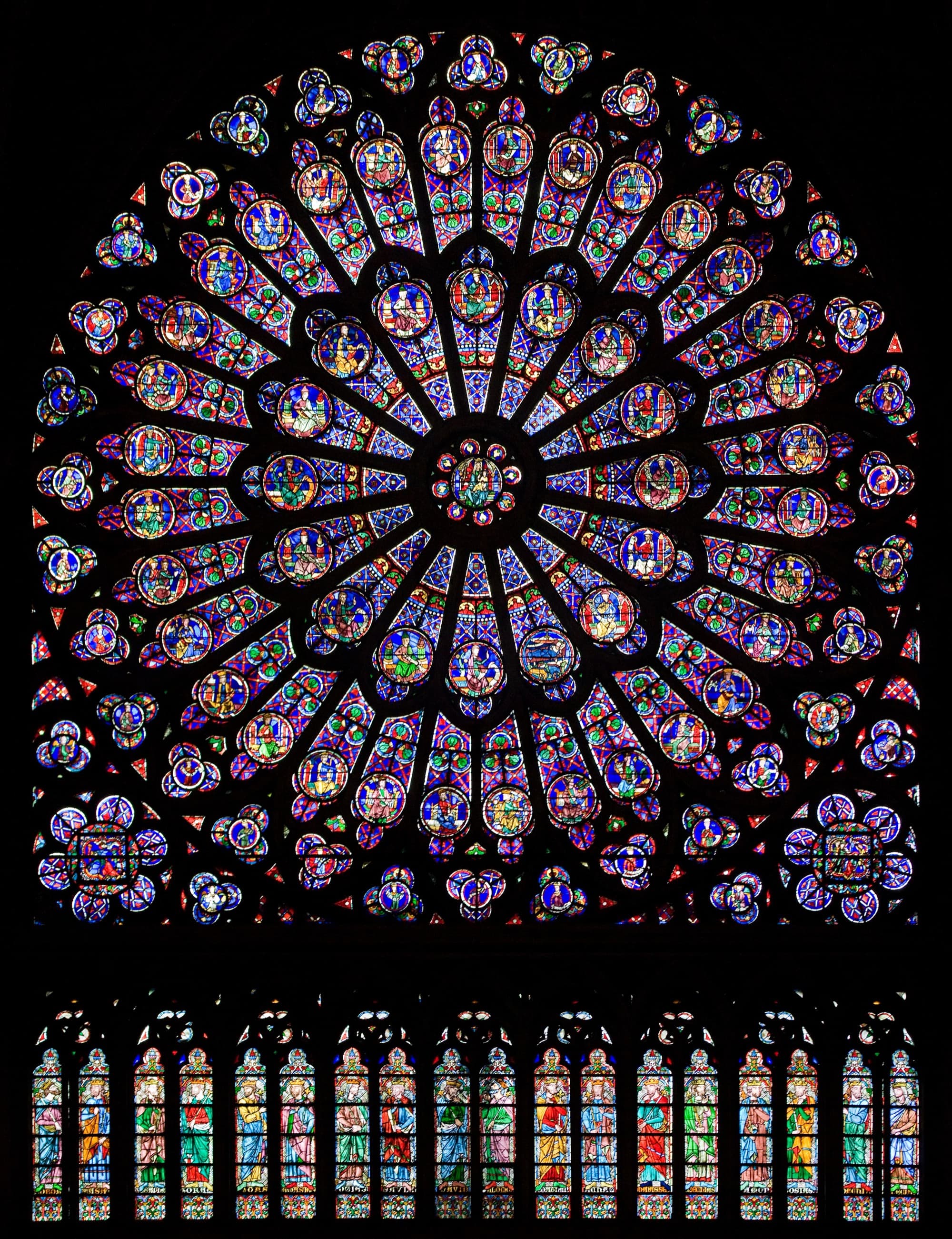
It is a cathedral of light. Those thin, glass-filled walls culminate in the rose windows, vast circular grids of stained glass like frozen kaleidoscopes. On a bright day they throw shifting pools of red, blue, and gold across the stone, turning the interior into something closer to a jewel box than a fortress.
It is carved all over with stories. The doorways and facade swarm with sculpture: saints, kings, biblical scenes, the Last Judgment. For a largely illiterate medieval public, the whole building was a book in stone and glass, teaching faith through images you could read by walking around and looking up.
The story behind it
By the early 1800s Notre-Dame was neglected and crumbling, and might have been lost. It was rescued, oddly, by a novel. Victor Hugo's 1831 book, known in English as The Hunchback of Notre-Dame, made the cathedral itself a central character and stirred public affection for the decaying landmark. That wave of feeling helped launch a major nineteenth-century restoration led by the architect Viollet-le-Duc, who repaired the building and added, among other things, the tall spire that would later fall in the 2019 fire. After years of painstaking work, the cathedral reopened to the public in December 2024.
One detail most people miss
The most famous monsters of Notre-Dame are impostors. The brooding stone gargoyle perched high on the cathedral, chin resting on its hands, gazing moodily out over Paris, is not a medieval demon at all. It and most of the cathedral's celebrated grotesque creatures were designed and added during that nineteenth-century restoration, less than two centuries ago, as Viollet-le-Duc's romantic idea of how a Gothic cathedral ought to look. The genuinely medieval gargoyles are mostly plainer waterspouts. The dreaming monster everyone photographs is essentially Victorian.
Where to see it
Notre-Dame stands on the Île de la Cité in central Paris and, after the long restoration that followed the fire, is once again open to visitors. Entry to the cathedral is free, though the lines can be long. Walk around to the rear to see the flying buttresses that saved it, then step inside at a bright hour to catch the rose windows at their most dazzling, and remember the night in 2019 when the world thought it was gone.