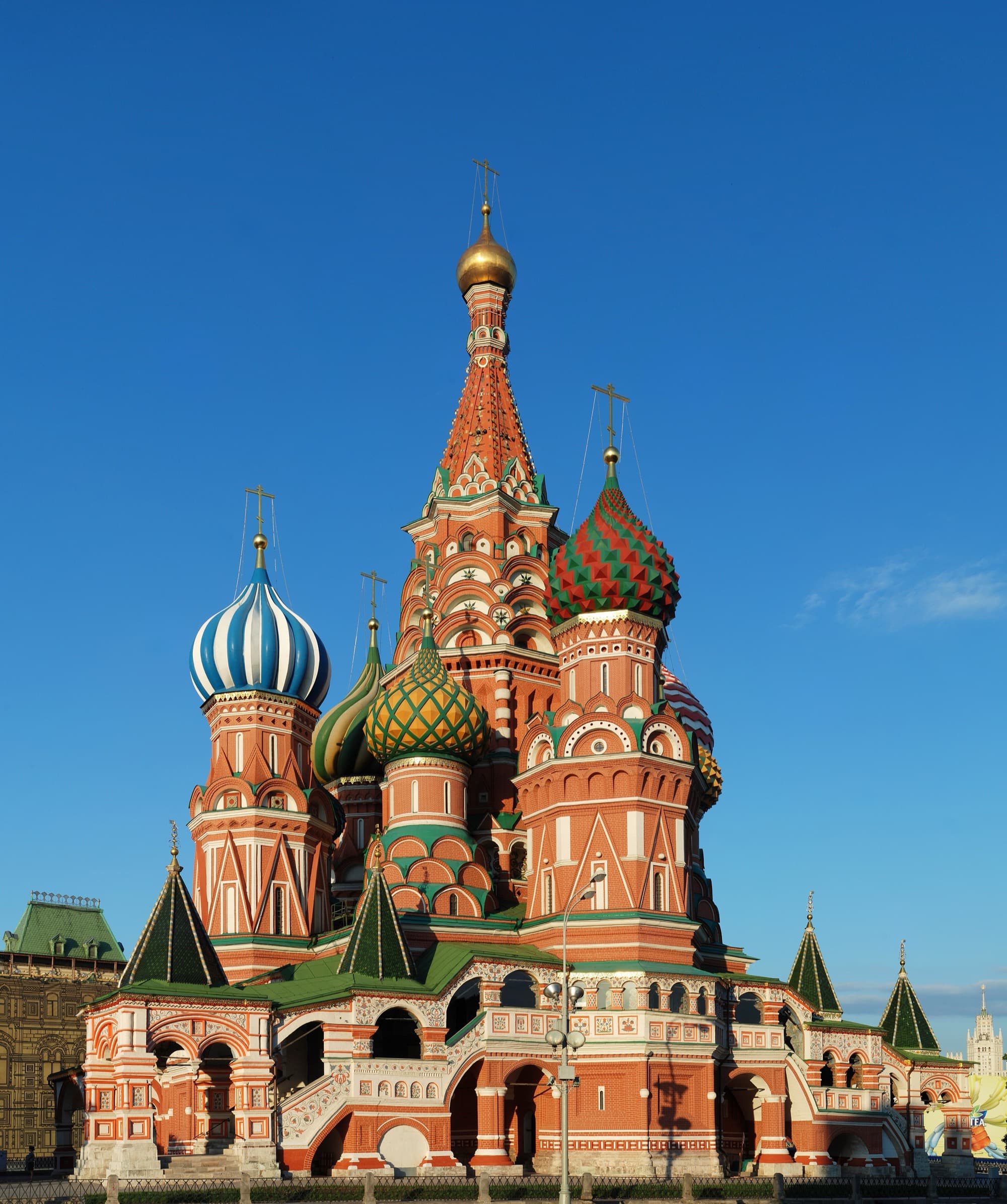
The story everyone tells about St. Basil's is a cruel one. When the cathedral was finished, it goes, Tsar Ivan the Terrible was so overwhelmed by its beauty that he had the architect blinded, so that he could never create anything to rival it. It is a perfect legend for a ruler whose own nickname was "the Terrible," and it is almost certainly not true: the architect generally credited with the building appears to have gone on working for years afterward.
But the legend survives because the cathedral earns it. There is nothing else quite like this pile of flame-shaped, candy-colored domes, which looks less like a serious house of worship than like a fairy-tale castle that wandered onto a real city square and decided to stay.
What you're looking at
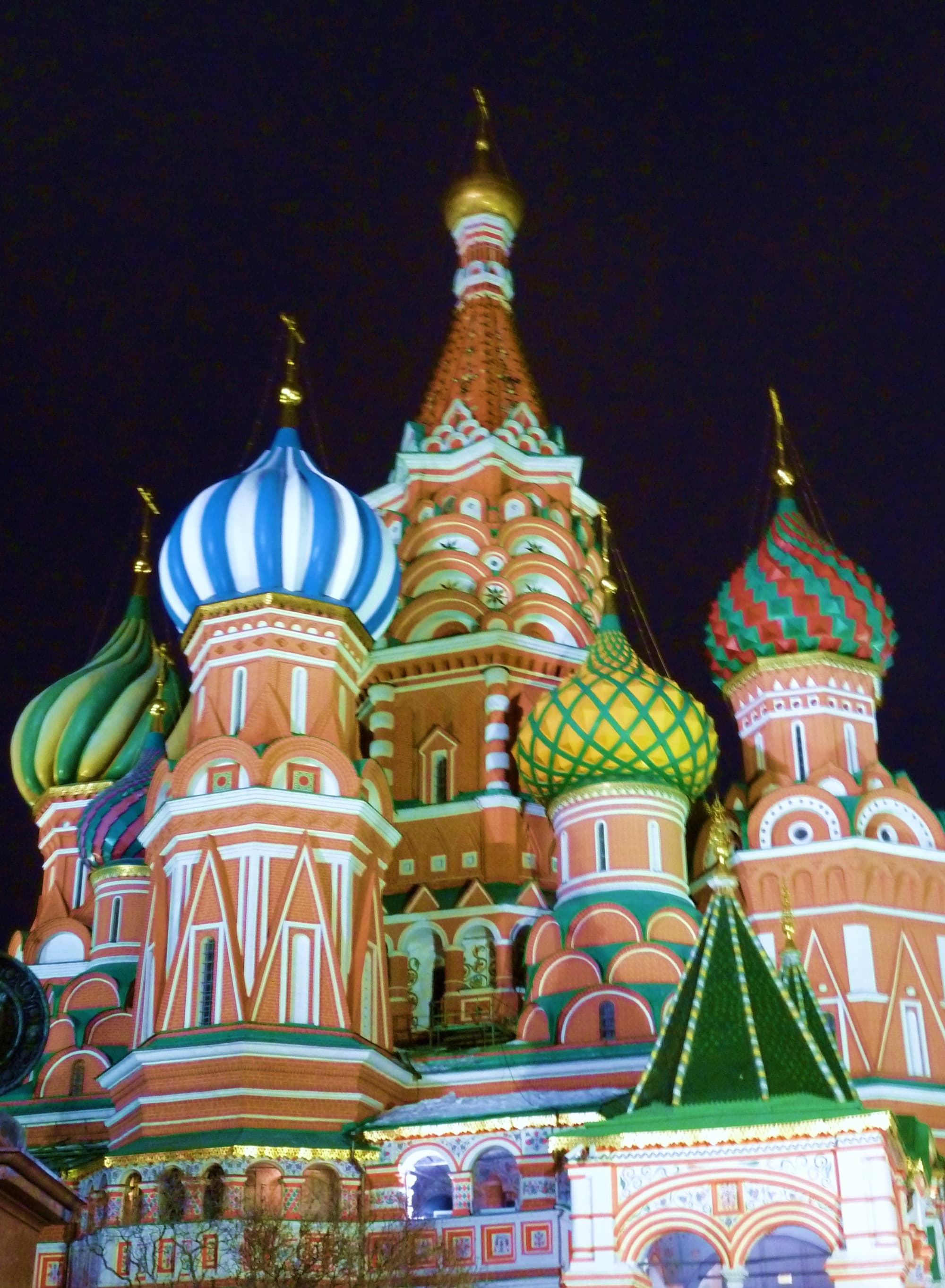
A cathedral on Red Square in Moscow, built between 1555 and 1561 on the orders of Ivan the Terrible to celebrate a great military victory, the capture of the city of Kazan. Its real name is the Cathedral of the Intercession of the Virgin, but it is universally known as St. Basil's, after a holy man buried beside it. The structure is a tight cluster of nine churches: a tall central tower ringed by eight smaller chapels, each capped by its own wildly individual onion dome, no two alike, in a storm of color, spiral, and pattern.
What makes it special
It has no front. Most great churches present a grand facade, a main face to approach. St. Basil's does not. It was designed to be walked around and seen from every side, a three-dimensional sculpture of towers rather than a building with a front door and a back. Wherever you stand, a new arrangement of domes swings into view.
It was meant to look like fire. The design is often described as a bonfire frozen in the act of leaping upward, the domes like tongues of flame. The whole thing strains skyward in a riot of pointed shapes, closer in spirit to a vision or a dream than to ordinary stone-and-brick architecture.
Inside, it hides a maze. For all its enormous outward presence, the cathedral has almost no large interior space. Step inside and you find not one soaring hall but a warren of nine small, tall, narrow chapels, their walls densely painted, connected by low, winding corridors. The grandeur is entirely on the outside.
The story behind it
The cathedral rose at the height of Ivan the Terrible's reign, a monument to conquest and to the growing power of Moscow. Over the centuries it survived threats that destroyed lesser landmarks. Napoleon's troops, occupying Moscow in 1812, are said to have been ordered to blow it up, and it endured. Much later, under Stalin, there were proposals to demolish it entirely to make more room for military parades on Red Square, and it survived that too. Today it is one of the most recognized buildings on the planet and a symbol of Russia itself.
One detail most people miss
Those famous colors are not Ivan's. When the cathedral was first built, it was far plainer, mostly white stone with golden or modest domes, closer to a solemn monument than a carnival. The explosion of reds, greens, blues, and golds, along with the swirling spiral patterns, was added gradually over the following centuries, with much of the vivid color scheme finalized long after Ivan the Terrible was dead. The riot of color we treat as the essence of the place is, in a sense, a later generation's idea of how a fairy-tale church should look.
Where to see it
St. Basil's stands at the southern end of Red Square in the heart of Moscow, now a museum you can go inside. From the square, circle it slowly to watch the domes rearrange themselves, then step in to discover how small and labyrinthine it is within. Few buildings reward walking all the way around them as completely as this one, which was built, from the start, to have no single best view.