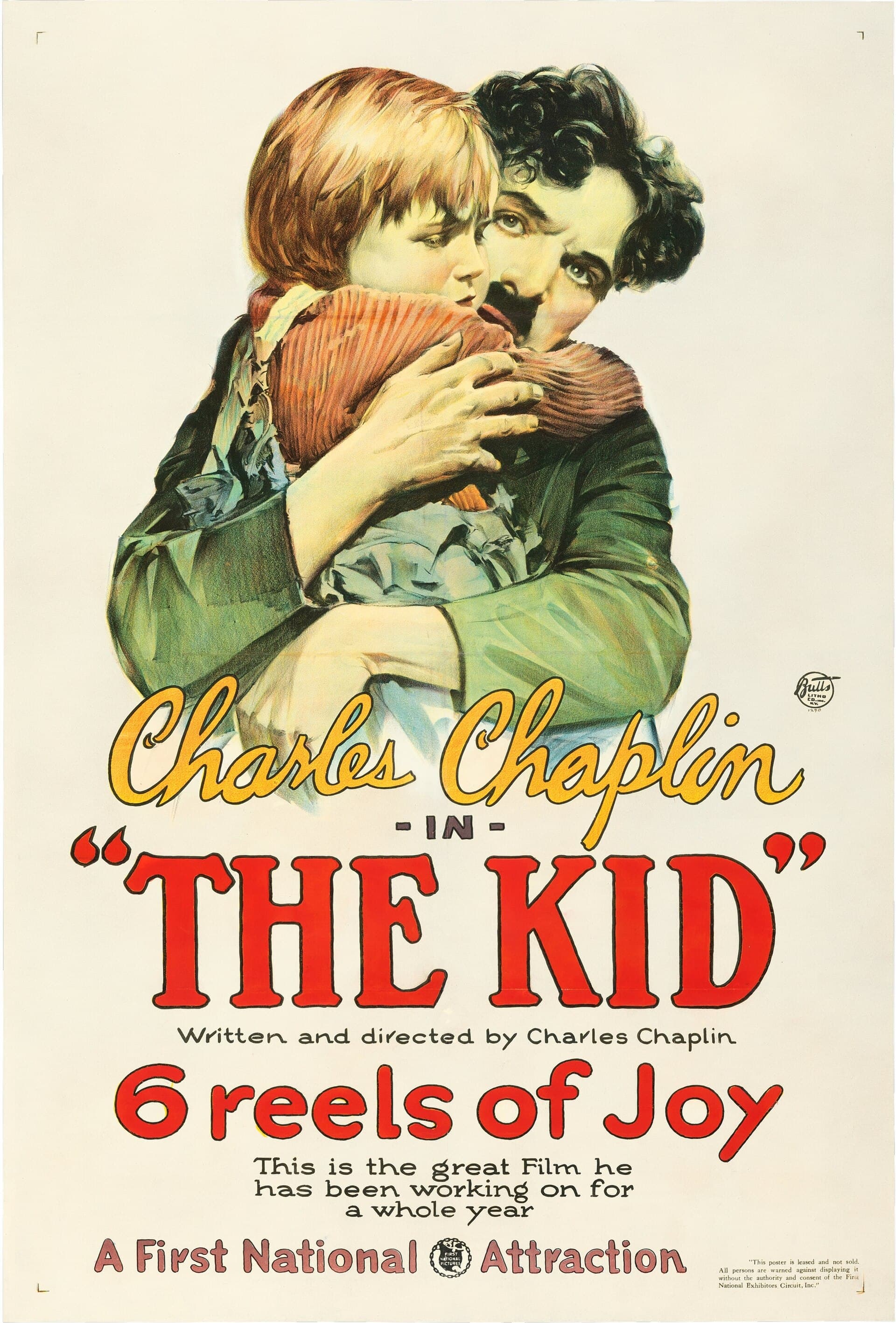
In July 1919, Charlie Chaplin's first child was born with severe deformities and lived three days. Chaplin was 30, the most famous man on Earth, and shattered. About ten days later, at a vaudeville show, he watched a four-year-old performer named Jackie Coogan do an impossibly charming dance. Within weeks, Chaplin was building an entire film - his first real feature - around an abandoned baby and the tramp who cannot bring himself to abandon it again.
He would spend a year on it, an eternity in an era when comedies were shot in days. The result runs under an hour and contains, many would argue, the DNA of every comedy-drama made since.
What you're watching
A single mother, desperate, leaves her baby in the back seat of a limousine with a note: "Please love and care for this orphan child." The car gets stolen; the thieves dump the baby in an alley; the Tramp finds him and, after several sincere attempts to get rid of him, gives up and takes him home. Five years later the two are a seamless small business: the Kid breaks windows, the Tramp arrives moments later, by pure coincidence, as a glazier. Then the authorities discover the boy has no legal guardian, and the film turns into something else entirely.
What makes it special
The rescue scene changed acting. When orphanage officials tear the Kid away and throw him into the back of a truck, Jackie Coogan sobs and reaches out with a rawness no child had ever shown on screen. Chaplin, racing over rooftops, gets him back and buries his face in the boy's neck. Audiences in 1921 were not used to crying at comedies. Nobody had asked them to before.
It invented the child star. Coogan became a global phenomenon - merchandise, tours, one of the highest-paid performers alive by age ten. The film industry learned that children could carry pictures, for better and for worse.
The structure is perfect. Gag, gag, heartbreak, gag - the film alternates registers with a confidence filmmakers still study. Chaplin composed the music himself decades later, and the main theme aches even when the screen is being silly.
The story behind it
The film nearly did not survive its own production. While Chaplin was editing, his divorce from Mildred Harris turned hostile, and her lawyers moved to seize his assets - including the negative of The Kid. Chaplin and his crew packed some 400,000 feet of film into crates, reportedly labeled as coffee tins, and fled to Salt Lake City, where he cut the movie in a hotel room, safe from California court orders. The most tender film of the silent era was edited on the run.
Jackie Coogan's own story completed the film's lesson in the cruelest way. He earned millions as a child; when he came of age, he discovered his mother and stepfather had spent nearly all of it. His lawsuit led California to pass the Child Actors Bill in 1939 - still known as the Coogan Act - requiring that part of a child performer's earnings be protected. Decades later, television audiences met him again, bald and grinning, as Uncle Fester in The Addams Family.
One detail most people miss
Late in the film, the Tramp falls asleep and dreams that his grim alley has become heaven: everyone in white robes and wings, including the neighborhood bully and a flirtatious angel. Critics have argued about this sequence for a century - too strange, too long. But remember what Chaplin had just lived through. A man who had lost a child imagined a place where the poor of his street get wings. It is the film's rawest moment disguised as its silliest.
How to watch
The Kid is in the public domain, and full versions circulate freely on YouTube - press play above. Fifty-two minutes, no dialogue needed. Watch it with a child if you can borrow one; they follow every beat, which tells you everything about how well it was built.